










99.9%
Crash-Free App Performance
50%
Faster MVP Launches
500+
Satisfied Customers
24x7
Live App Monitoring
80%
Fewer Support Tickets
Trusted by Growing Companies and Fortune 500 Firms










Mobile App Development Services for Future-Ready Experiences
We build mobile apps that scale with your business, combining intuitive UX with clean backend integration for high-performing iOS, Android, and cross-platform experiences.
App Prototyping & Wireframing
Turn ideas into clickable prototypes to align stakeholders and fast-track decisions, before development begins.

iOS App Development & Android App Development
Get native iOS and Android apps engineered for platform performance, device-specific UX, and App Store and Play Store compliance.

Cross-Platform & Flutter App Development
Our Flutter app development and React Native development services deliver near-native performance across iOS and Android without duplicating your build cost.

Backend Systems Integration
Connect your mobile app to Salesforce ERPs, payment platforms, and third-party APIs with real-time data sync and secure, governed data flows.

Post-Launch Support & Optimization
Get provide ongoing monitoring, updates, and optimization to keep your mobile experience fast, stable, and aligned to user needs.

Want to Build Disruptive Mobile Experiences Across Devices and Platforms?
Our Technology Stack
We leverage cutting-edge technologies to build scalable, secure, and high-performing mobile apps. Our team is proficient in the following tools and platforms to ensure seamless development.
Awards & Accolades










What We Focus to Ensure Successful Mobile App Development

User-Centric Design
- Prioritize intuitive UX
- Design for engagement and ease
- Prototype, test, and refine quickly
- Prioritize intuitive UX
- Design for engagement and ease
- Prototype, test, and refine quickly

- Sprint-based execution
- Quick iterations, faster releases
- Adapt to evolving business needs

- Seamless API and system connectivity
- Salesforce, ERP, and third-party integrations
- Reduce data silos and enable automation

- Built for future expansion
- Modular codebase and clean structure
- Performance at scale

- End-to-end encryption
- GDPR, HIPAA, SOC 2 readiness
- Secure authentication and access

- Post-launch performance tuning
- Regular updates and maintenance
- Real-time issue resolution

- Flutter, React Native, Android, iOS
- One codebase or native performance
- Tailored approach per business goals

- Built-in usage tracking
- Data-backed UX refinements
- Drive decisions with in-app insights



Why We’re a Trusted Mobile App Development Company
- 14+ years of experience in mobile-first software delivery
- Recognized by global startups and Fortune 500 clients
- Full-spectrum capability across Flutter app development, React Native development, and native builds
- Dedicated enterprise mobile app development practice for complex environments
- Proven track record launching and scaling production-grade apps across 30+ industries
- Strategic blend of UX design, engineering, integration, and post-launch support under one roof
- AI-integrated mobile capabilities for apps that go beyond standard functionality
Read Our AppExchange Reviews

Customer Success That Speaks for Itself
Speed | Support | Scalability

Salesforce Insights & Updates
Stay ahead with the latest insights, expert tips, and industry trends—featuring exclusive tips and tricks from our Salesforce experts to drive innovation and success.
 Salesforce Services
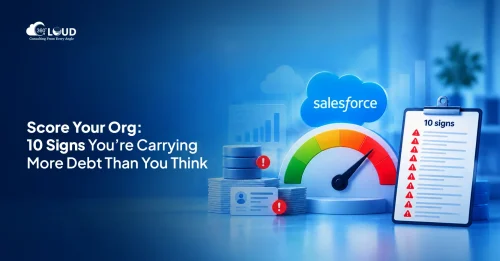
Salesforce Technical Debt 10 Signs Your CRM Needs a Strategic Overhaul (and What to Do About It)
Three years ago, the Salesforce org your team implemented was clean. Logical field names. Documented Flows. A handful of integrations that actually made sense. Today?…
Read More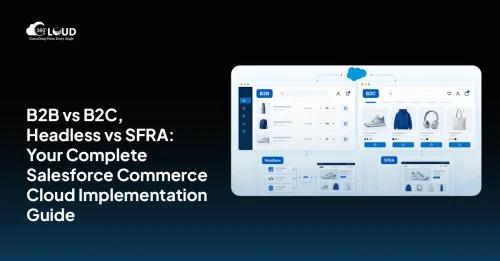 Salesforce Clouds
Salesforce Commerce Cloud Implementation: The 2026 Guide for B2B and B2C Commerce Teams
Commerce has always been competitive. But in 2026, the bar has shifted in ways that are hard to ignore. Whether someone is a consumer checking…
Read More Uncategorized
How Salesforce Agentforce and Google Cloud Integration is Changing Enterprise AI in 2026
Most enterprise AI projects don’t stall because the model is weak. They stall in the plumbing. A sales ops lead wants one agent that can…
Read MoreReady to Develop Mobile Apps that Scale & Succeed?
Frequently Asked Questions
What mobile app development services does 360 Degree Cloud offer?
We deliver end-to-end mobile app development services covering iOS app development, Android app development, cross-platform app development using Flutter and React Native, UX/UI design, backend integration, and post-launch support. Whether you need an MVP built fast or a full enterprise mobile platform, we scope and build to your exact requirements across every major platform.
What is the difference between Flutter app development and React Native development?
Both Flutter and React Native are cross-platform frameworks that let you build for iOS and Android from a single codebase. Flutter uses Dart and delivers pixel-perfect, near-native UI with strong performance consistency. React Native uses JavaScript, making it a natural fit for teams with existing web development capability. We assess your tech stack, team, and product goals before recommending the right framework.
When should I choose native iOS or Android development over cross-platform?
Native iOS app development or Android app development is the right choice when your app requires deep access to platform-specific APIs, hardware features, or peak performance, such as augmented reality, real-time processing, or complex animation. Cross-platform development is better suited when speed to market, budget efficiency, and broad device coverage are the priority. We'll recommend the right approach after reviewing your requirements.
How long does enterprise mobile app development typically take?
Enterprise mobile app development timelines vary based on scope, integrations, and platform complexity. A straightforward MVP typically takes three to four months. Enterprise-grade apps with custom backend systems, third-party integrations, and multi-platform support generally range from six to twelve months. We define a realistic timeline during discovery and maintain sprint-level transparency throughout the build.
Can you integrate a mobile app with Salesforce and other enterprise systems?
Yes. We offer dedicated Salesforce app development capability and can connect your mobile app to Salesforce CRM, Marketing Cloud, ERPs, payment gateways, and other third-party platforms via REST and SOAP APIs. All integrations are designed with real-time data sync, secure authentication, and governance standards built in, not bolted on later.
What makes 360 Degree Cloud a reliable mobile app development company for enterprise clients?
We bring 14+ years of mobile delivery experience, 3,000+ completed projects, and a team that covers design, engineering, backend integration, and post-launch optimisation under one roof. Our enterprise mobile app development practice is built for complex environments – multi-system integrations, compliance requirements, and large-scale user bases. Every engagement runs on sprint governance with defined milestones, not open-ended retainers.
Got a Question? Ask Us!
Ready to Solidify Your Digital Transformation Efforts Using Salesforce? Talk to Us!

Subscribe to our newsletter
Stay ahead with expert insights, industry trends, and exclusive resources—delivered straight to your inbox.