
Table of Contents

Cloud spending keeps climbing every year, but the reasons behind it have quietly changed. Businesses aren’t buying storage and compute anymore. It is not about storage and computing. It is about speed, resiliency, and an opportunity to stay competitive through the paradigm shift brought on by AI across virtually all industries.
If your organization still views cloud computing in terms of where your applications are hosted, then you are already falling behind the curve. Not only does the current landscape include architecture and cost management considerations, but AI has become part of the picture as well. Agility and scalability are essential in today’s world and 2026 looks to be the year when cloud strategy moves to the boardroom level.
Not sure where your cloud strategy stands against these shifts?
Here’s what’s actually driving that change, and what it means for your business.
Table of Contents
Trend 1: AI-Native Cloud Platforms Become Standard
No cloud vendor wants to lag behind in embedding AI directly in its cloud platform and not doing it as an afterthought. The need for AI infrastructure has been more significant than any other cloud category in 2022, from GPU clusters to vector databases and model serving.
There is a rapid development of AI-as-a-service because many firms are not willing to train models themselves. They would prefer to consume them. In addition, cloud platforms offer out-of-the-box embedded AI services for such tasks as search, prediction, and customer support. Moreover, generative AI requires architectural solutions capable of handling unpredictable bursts of computing resources.
The companies that will develop AI-friendly architecture today will save a lot of effort in the future.
Trend 2: Hybrid and Multi-Cloud Become the Default Model
Nobody wants to be locked into one vendor anymore. That fear used to be theoretical. Now it’s a line item in board presentations. A hybrid cloud strategy paired with a multi-cloud strategy gives businesses workload portability, meaning apps can move between environments without a full rebuild.
This isn’t just about avoiding lock-in, though. It’s about resilience. Spreading workloads across multiple clouds and on-prem systems means one outage doesn’t take down the whole business. Regulatory compliance is pushing this too, especially for companies handling sensitive data across borders. Regional deployment requirements, particularly in finance, healthcare, and government, are forcing IT teams to think regionally instead of globally by default.
Trend 3: FinOps Moves Into the Boardroom
Cloud bills used to be an IT problem. Not anymore. FinOps, the practice of managing cloud financial accountability across engineering, finance, and leadership, has become a board-level concern because cloud costs have simply gotten too large to ignore.
Cloud cost visibility is now table stakes. Leadership wants dashboards, not guesses. Consumption governance means setting real limits on who can spin up what, and budget accountability means every team owns its cloud spend, not just IT. Cloud optimization practices, like rightsizing instances and eliminating idle resources, are becoming routine. And cost automation tools are stepping in to catch waste before it ever hits an invoice.
Want to get real visibility into your cloud expenses?
Trend 4: Edge Computing Supports Real-Time Experiences
All the workload do not have the luxury of time when it comes to processing in a cloud environment because of the delay created due to the distance covered from the end point to the central processing facility in the cloud. To solve this challenge, edge computing brings computation to the proximity of the source of data.
This is particularly relevant in industries such as manufacturing and retail where the Internet of Things (IoT) workloads require real-time analytics that can take instant action without delay, as in case of defective items that need to be fixed in time or replenishment of items on the store shelves in real-time.
Trend 5: Cloud Security Evolves Into Continuous Governance
The idea of security was always the perimeter. But that concept is dead. Zero trust architectures have shifted away from the old security assumption that everything within the network can be trusted, to a default of assuming every request might be malicious unless verified otherwise.
Quarterly compliance audits are history; no one’s waiting a quarter to find out they’re non-compliant. The new identity-based security paradigm emphasizes the who behind a request, not the origin of that request. Cloud posture management systems continuously scan the environment for misconfigurations that, in fact, are the cause of most breaches.
Trend 6: Platform Engineering Replaces Infrastructure Management
The subtle revolution here is that developers no longer wish to manage infrastructure. They wish to develop. And platform engineering solves this problem through creating internal developer platforms that abstract all the underlying complexities.
With self-service infrastructure, you don’t have to create tickets and wait for three days to get your infrastructure set up. Instead, you can do it yourself in just a few minutes. The reusability of cloud components saves you the effort of doing the same thing over and over again.
Trend 7: Sustainable Cloud Becomes a Procurement Requirement
The concept of sustainability is no longer only about marketing. Now it is starting to appear in contract agreements between vendors. There are carbon disclosure criteria embedded in the procurement process, and cloud providers who are not able to give numbers do not get their contracts fulfilled.
Efficiency in energy consumption is turning into a factor that determines choice and not an additional one. Sustainable IT infrastructure is being chosen by companies that want to choose data centers with renewable energy sources and optimize their workloads in order to decrease energy losses. ESG disclosure is becoming more and more widespread, both in terms of regulation and investors.
Trend 8: Serverless and Event-Driven Architectures Continue to Expand
Serverless isn’t new, but its adoption curve keeps climbing because the economics keep improving. Reduced operational overhead means teams spend less time patching servers and more time building features that matter.
Faster deployment cycles come naturally when there’s no infrastructure provisioning standing between an idea and production. Scalability improvements happen automatically. Serverless functions scale up and down based on real demand, not projected demand. And the pay-for-use economics mean businesses stop paying for idle capacity they never touch. For event-driven applications, this model just makes financial sense.
Which Cloud Trends Will Deliver the Biggest ROI?
Not every trend pays off equally, and it’s worth being honest about that. AI initiatives tend to deliver the fastest visible ROI, especially in customer service and forecasting use cases. FinOps maturity comes in close behind, since cost savings show up almost immediately once governance is in place.
Hybrid cloud optimization takes longer to pay off but protects the business against outages and vendor risk in ways that are hard to put a number on. Automation investments compound over time. Small efficiency gains stack up across hundreds of workflows. Governance improvements are the least glamorous but arguably the most protective, catching costly security and compliance failures before they happen.
How Businesses Should Prepare for 2026
Begin with a thorough analysis of where you truly are. Measure your cloud maturity levels in terms of cost, security, and architecture before you make any moves toward transformation. Then, find the areas for modernization, those legacy processes and applications that silently drain your budget and increase your risks.
Consider your governance framework early, and don’t wait until you face problems to do that. Develop FinOps capabilities even if it seems that your cloud costs are under control now; things will change. Finally, design your AI-ready architecture, since it will cost and take more time to make one later on.
Adopt These Cloud Computing Trends Smartly
Cloud is evolving from infrastructure into an operating model, and that’s not a small distinction. AI is reshaping cloud priorities across every industry, from how workloads get built to how budgets get approved. Governance and cost optimization, once back-office concerns, are becoming strategic capabilities that leadership teams actually track.
Organizations that modernize early gain a real competitive advantage, not a theoretical one. The businesses winning in 2026 won’t be the ones with the biggest cloud footprint. They’ll be the ones whose cloud strategy can adapt fast and think smart. That’s really what the next phase of cloud growth comes down to: adaptability and intelligence, working together instead of as separate initiatives.
Categories

Solve It with Salesforce. We’ll Show You How.
AI. Apps. Experts. Everything you need to win with Salesforce under one roof.
About the author
Editorial TeamThe Editorial Team at 360 Degree Cloud brings together seasoned marketers, Salesforce specialists, and technology writers who are passionate about simplifying complex ideas into meaningful insights. With deep expertise in Salesforce solutions, B2B SaaS, and digital transformation, the team curates thought leadership content, industry trends, and practical guides that help businesses navigate growth with clarity and confidence. Every piece we publish reflects our commitment to delivering value, fostering innovation, and connecting readers with the evolving Salesforce ecosystem.
Recent Blogs
 Salesforce Clouds
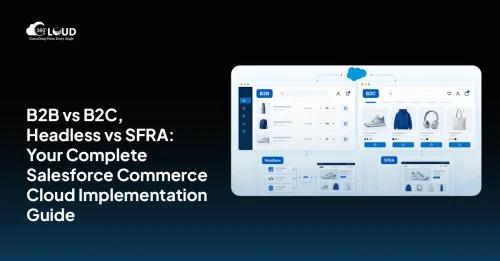
Salesforce Commerce Cloud Implementation: The 2026 Guide for B2B and B2C Commerce Teams
Commerce has always been competitive. But in 2026, the bar has shifted in ways that are hard to ignore. Whether someone is a consumer checking…
Read More Uncategorized
How Salesforce Agentforce and Google Cloud Integration is Changing Enterprise AI in 2026
Most enterprise AI projects don’t stall because the model is weak. They stall in the plumbing. A sales ops lead wants one agent that can…
Read More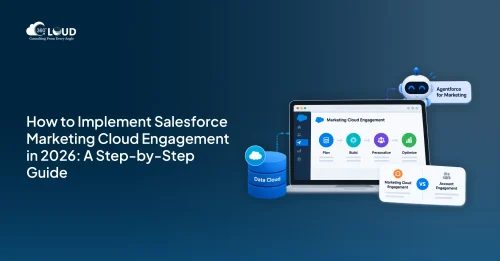 Salesforce Clouds
Salesforce Marketing Cloud Engagement Implementation: The 2026 Guide to Omnichannel Marketing That Converts
Most marketing teams aren’t failing because they lack content. They’re failing because the right message is reaching the wrong person at the wrong time –…
Read MoreReady to Make the Most Out of Your Salesforce Instance?
Our Salesforce aces would be happy to help you. Just drop us a line at contact@360degreecloud.com, and we’ll take it from there!
Subscribe to our newsletter
Stay ahead with expert insights, industry trends, and exclusive resources—delivered straight to your inbox.