
Marketing Cloud Account Engagement (formerly known as Pardot) vs Marketing Cloud: Key Differences Explained
14 May 2026
Table of Contents
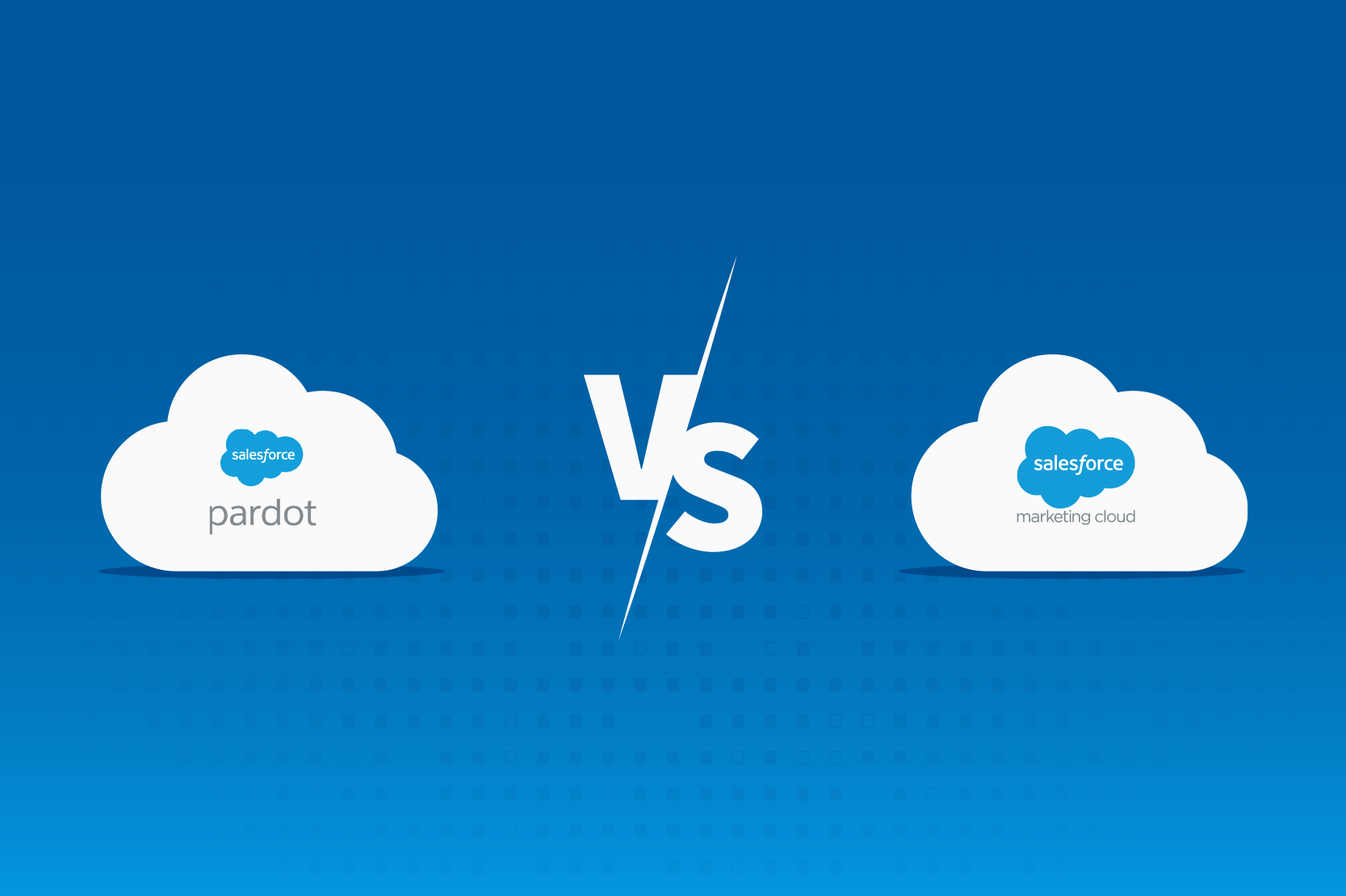
Marketing Cloud Account Engagement (formerly known as Pardot) vs Marketing Cloud has emerged as one of the most important questions that marketing professionals have to grapple with in order to succeed in the Salesforce environment. In view of the changing nature of marketing automation, Salesforce presents marketers with two highly effective platforms for different circumstances. Making the choice between Marketing Cloud Account Engagement (formerly known as Pardot) and Marketing Cloud will have direct effects on revenue streams and profitability.
Marketing automation solutions have gained immense popularity with businesses using advanced tools in an effort to create personalized messaging systems and improve workflow. In this guide, we examine the difference between the two Salesforce marketing automation platforms and help business owners make the best choice for themselves.
Table of Contents
What Is Marketing Cloud Account Engagement (formerly known as Pardot)?
Marketing Cloud Account Engagement (formerly known as Pardot), which was officially rebranded as Marketing Cloud Account Engagement by Salesforce, is a B2B-focused marketing automation tool built specifically for sales-oriented marketing departments.
Key features:
- B2B marketing automation for Salesforce using rule-based drip marketing and nurturing
- Highly integrated with Salesforce Sales Cloud, making seamless hand-offs possible
- Behavioral and demographic lead grading and scoring
- Landing page and form builders specifically designed for B2B lead generation
- Einstein-powered lead scoring and prioritization
Marketing Cloud Account Engagement (formerly known as Pardot) is built for companies that require longer sales cycles and multiple decision-makers, as well as have heavy dependencies on the Salesforce Sales Cloud. Native integration with the platform allows marketing and sales teams to work with the same set of data, thus making collaboration easier and helping make pipeline-related decisions faster.
Additional info: Marketing Cloud Account Engagement (formerly known as Pardot) was rebranded as “Marketing Cloud Account Engagement” by Salesforce in 2022. Both terms are used in the business community today.
What Is Salesforce Marketing Cloud?
Salesforce Marketing Cloud is an advanced marketing software solution that serves companies that need an omnichannel marketing campaign manager for their business purposes. It needs to be noted that, in contrast to Marketing Cloud Account Engagement (formerly known as Pardot), Salesforce Marketing Cloud is oriented towards B2C marketing and allows creating customer journeys within emails, SMS messages, social media, paid campaigns, and websites.
Key features include:
- Journey Builder for building sophisticated customer journeys in multiple stages
- An omni-channel marketing campaign manager for emails, SMS, push, social, and display campaigns
- Personalization based on behavioral data, demographic information, and events
- AI-based data insights via Einstein solutions for predictive analytics and content creation
- Data analysis and audience segmentation with Data Studio and Audience Builder
Marketing Cloud is used by big corporations from retail, banking, entertainment, and other industries that operate millions of customer interactions per day and use marketing software for providing relevant and targeted experience to them.
Already on Salesforce? You may be leaving revenue on the table.

Key Differences: Marketing Cloud Account Engagement (formerly known as Pardot) vs Marketing Cloud
The Marketing Cloud vs Marketing Cloud Account Engagement (formerly known as Pardot) comparison is not simply about features – it reflects a fundamental difference in marketing philosophy. Marketing Cloud Account Engagement (formerly known as Pardot) is sales-centric and relationship-driven; Marketing Cloud is experience-centric and volume-driven.
| Feature | Pardot (Account Engagement) | Salesforce Marketing Cloud |
| Primary Use | B2B marketing automation | B2C & enterprise marketing |
| Target Audience | Sales-aligned marketing teams | Large consumer brands |
| Email Campaigns | Nurture-based sequences | Mass & triggered campaigns |
| Lead Scoring | Advanced scoring & grading | Not natively available |
| Journey Builder | Basic drip campaigns | Advanced multi-step journeys |
| Channels | Email, forms, landing pages | Email, SMS, social, ads, web |
| AI Features | Einstein Lead Scoring | Full Einstein AI suite |
| CRM Integration | Deep Sales Cloud native sync | Standard CRM connector |
| Best For | B2B SaaS, professional services | Retail, eCommerce, enterprise B2C |
Feature Highlights of Marketing Cloud Account Engagement (formerly known as Pardot)
- Lead generation via forms, landing pages, and content gating
- Email automation for personalized nurture programs
- Scoring and grading leads using behavioral criteria and demographics
- In-built CRM integration using Salesforce Sales Cloud
- Lifecycle management of prospects from initial interaction to won
Feature Highlights of Marketing Cloud
- Journey Builder for real-time, event-driven omnichannel campaigns
- Omnichannel campaign creation and management for email, SMS, push, social media, and web
- Dynamic personalization using dynamic content and behavioral information
- Insights driven using Einstein Analytics and Predictive Recommendations
- Transactional messaging, behavioral triggers, and commerce capabilities
When to Choose Marketing Cloud Account Engagement (formerly known as Pardot) over Marketing Cloud
Select Marketing Cloud Account Engagement (formerly known as Pardot) when:
- The organization operates in a B2B scenario where there is a thoughtful approach to buying
- The marketing approach relies heavily on CRM campaigns and pipeline management
- High levels of coordination between sales and marketing teams for lead information
- The sales process is complex, involving multiple touchpoints before reaching a sale
- Salesforce Sales Cloud is currently used as the CRM solution
Ideal use cases include:
- SaaS organizations
- Professional Services organizations
- Financial Services organizations
- Manufacturing organizations
- Technology organizations
Choose Marketing Cloud if:
- Your organization runs in a B2C landscape targeting a wide consumer base
- Campaigns that are big in volume and need to run on several digital platforms are essential
- A highly sophisticated approach for omnichannel marketing at each stage of the customer journey is critical
- AI-based functions for personalized prediction and customer churn are necessary
- The marketing department deals with complicated journeys triggered by events
Ideal for: Retail businesses, e-commerce firms, media and entertainment, healthcare providers, and financial organizations targeting large consumer markets.
Real-World Marketing Use Cases
SaaS Lead Nurturing Using Marketing Cloud Account Engagement (formerly known as Pardot)
In a SaaS company in the B2B industry, the use of Marketing Cloud Account Engagement (formerly known as Pardot) allows a company to nurture their leads from prospective enterprise software buyers. As soon as the user downloads a whitepaper, the system places them into a 6-week nurture track, through which the user receives educational emails, demo sessions, and ROI calculators. Once the potential customer qualifies a certain score within the nurture campaign, Salesforce creates a task for sales representatives to get in touch with them immediately.
Retail Customer Journey Using Marketing Cloud
For a global retailer, the use of Journey Builder within the Marketing Cloud suite allows them to engage with customers after a purchase in a seamless way through various channels, such as email, SMS, and push notifications. When the consumer completes an online transaction, they go through a customized journey that contains several steps including order confirmation, shipping information, tips on care, and cross-sell recommendation using Einstein.
Enterprise Marketing Automation with Both Platforms
A large enterprise technology company uses Marketing Cloud Account Engagement (formerly known as Pardot) for its B2B sales pipeline targeting IT decision-makers, while simultaneously using Marketing Cloud to manage customer success and renewal communications for its existing install base. Both platforms are integrated via Salesforce CRM, creating a unified customer record that powers both acquisition and retention strategies.
Can Businesses Use Both Platforms?
Absolutely, and in many cases, a hybrid stack comprising Marketing Cloud Account Engagement (formerly known as Pardot) and Marketing Cloud is not only possible but also a very effective solution.
Under a hybrid approach, Marketing Cloud Account Engagement (formerly known as Pardot) manages everything before the actual sale process – leads, lead scoring, pipeline management, and sales pass-throughs. Marketing Cloud is responsible for post-sales activities such as onboarding campaigns, cross-selling/up-selling, customer retention efforts, and even trigger-based transactional messaging.
For seamless integration of Marketing Cloud Account Engagement (formerly known as Pardot) and Marketing Cloud, Salesforce provides a powerful Marketing Cloud Connect feature. It ensures that all customer interactions in either Marketing Cloud Account Engagement (formerly known as Pardot) or Marketing Cloud can be seen and acted upon by both platforms due to their connection to the common Salesforce CRM model.
Tip: Clearly define the scope of each tool in your hybrid stack based on the stage and nature of the audience. Marketing Cloud Account Engagement (formerly known as Pardot) takes care of pre-sales; Marketing Cloud takes care of post-sales, while CRM data unifies both.
Upgrade Your Marketing Effort with the Right Tool
Making a choice between Marketing Cloud Account Engagement (formerly known as Pardot) vs Marketing Cloud depends on the target market, sales process, and goals. Marketing Cloud Account Engagement (formerly known as Pardot) works well as a B2B automation Salesforce marketing tool for generating leads, aligning the sales department and nurturing buying committees through lengthy sales processes. On the other hand, Marketing Cloud performs excellently as a comprehensive B2C enterprise solution for marketing automation for Salesforce solution by creating omnichannel customer experiences to many consumers.
Both tools have their unique strengths, especially in the Salesforce marketing software suite. The key consideration is not what solution is better because the most relevant aspect would be what tool is most suitable to a company’s marketing approach and requirements.
Businesses that still find themselves torn about making a choice, considering Salesforce marketing consulting team can be a great approach, ensuring proper implementation, and unlock full Salesforce ROI.
Let’s build the right marketing automation stack for your goals.

Categories

Solve It with Salesforce. We’ll Show You How.
AI. Apps. Experts. Everything you need to win with Salesforce under one roof.Frequently Asked Questions
What is Pardot in Salesforce?
Pardot is the former name of Salesforce Marketing Cloud Account Engagement. It is a B2B marketing automation platform used to generate leads, nurture prospects, score and grade leads, run email campaigns, and align marketing efforts with sales activity inside Salesforce.
Is Pardot the same as Marketing Cloud?
No. Pardot, now called Marketing Cloud Account Engagement, is part of the Salesforce Marketing Cloud ecosystem, but it is not the same as Salesforce Marketing Cloud Engagement. Pardot is mainly built for B2B lead nurturing and sales alignment, while Marketing Cloud is broader and is typically used for personalized, cross-channel customer engagement at scale.
What is Marketing Cloud used for?
Salesforce Marketing Cloud is used to create personalized customer journeys across channels such as email, mobile, advertising, web, and messaging. It helps businesses improve customer engagement, retention, brand loyalty, upselling, cross-selling, and revenue growth through data-driven marketing automation.
Which is better: Pardot or Marketing Cloud?
Neither is universally better. Pardot/Marketing Cloud Account Engagement is better for B2B companies focused on lead generation, lead scoring, nurturing, and sales-marketing alignment. Marketing Cloud is better for B2C or large-scale customer engagement where businesses need advanced segmentation, multi-channel journeys, and personalized lifecycle marketing.
Can Pardot and Marketing Cloud work together?
Yes. Pardot and Marketing Cloud can work together when a business needs both B2B lead nurturing and broader customer engagement. For example, Pardot can manage prospect scoring, lead nurturing, and sales handoff, while Marketing Cloud can support larger-scale customer journeys, SMS, WhatsApp, personalization, and lifecycle campaigns. Salesforce also offers Account Engagement+ capabilities that connect Account Engagement customers with Marketing Cloud Next features.
What businesses should use Pardot?
Pardot is best suited for B2B businesses with longer sales cycles, sales-led buying journeys, and a need to nurture leads before handing them to sales. It works well for SaaS companies, consulting firms, financial services, education providers, manufacturing businesses, and any company where lead qualification, account-based marketing, and Salesforce CRM alignment are important.
What businesses should use Marketing Cloud?
Marketing Cloud is ideal for businesses that need to engage large customer audiences across multiple channels and touchpoints. It is commonly used by B2C brands, retailers, healthcare organizations, travel companies, financial institutions, and enterprises that need personalized customer journeys, retention campaigns, loyalty programs, and cross-channel marketing automation.

About the author
Sonia GuptaSonia Gupta, VP of Marketing at 360 Degree Cloud, brings 18 years of experience in shaping brand positioning, driving inbound growth, and building cross-functional alignment. She partners closely with CXOs and senior leaders to craft strategies that turn complex technology into compelling stories, delivering marketing outcomes that fuel engagement, trust, and business growth.
Recent Blogs
 Salesforce Clouds
Salesforce Commerce Cloud Implementation: The 2026 Guide for B2B and B2C Commerce Teams
Commerce has always been competitive. But in 2026, the bar has shifted in ways that are hard to ignore. Whether someone is a consumer checking…
Read More Uncategorized
How Salesforce Agentforce and Google Cloud Integration is Changing Enterprise AI in 2026
Most enterprise AI projects don’t stall because the model is weak. They stall in the plumbing. A sales ops lead wants one agent that can…
Read More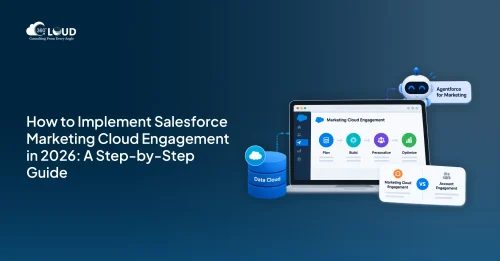 Salesforce Clouds
Salesforce Marketing Cloud Engagement Implementation: The 2026 Guide to Omnichannel Marketing That Converts
Most marketing teams aren’t failing because they lack content. They’re failing because the right message is reaching the wrong person at the wrong time –…
Read MoreReady to Make the Most Out of Your Salesforce Instance?
Our Salesforce aces would be happy to help you. Just drop us a line at contact@360degreecloud.com, and we’ll take it from there!
Subscribe to our newsletter
Stay ahead with expert insights, industry trends, and exclusive resources—delivered straight to your inbox.