
The 2026 Salesforce Outlook: From Reactive CRM to the Sentient Nervous System
13 Jan 2026
Table of Contents
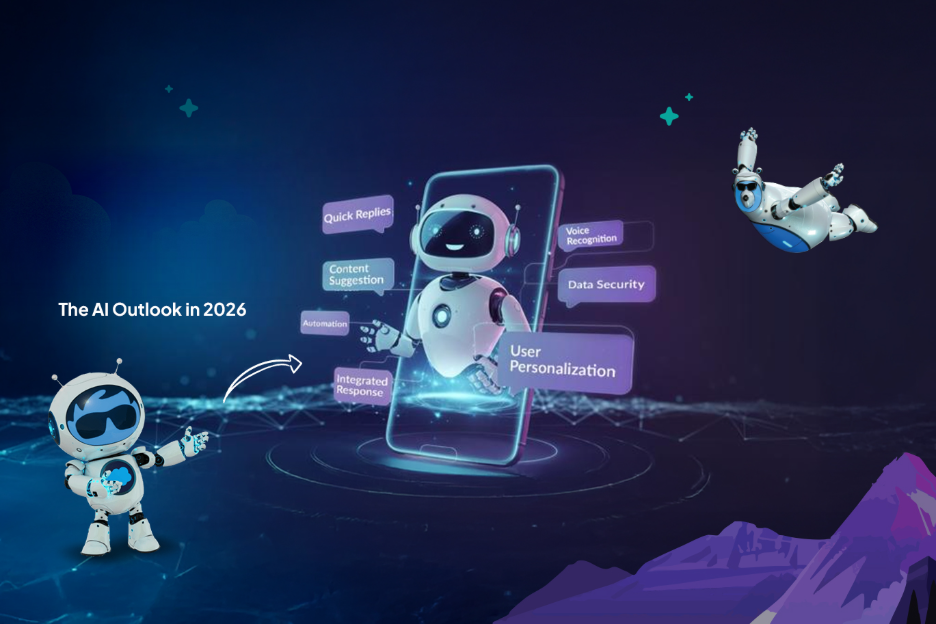
As we enter 2026, the “AI hype” has settled into a hard corporate reality. Having spent over 13 years living and breathing the Salesforce ecosystem, I’ve seen every “next big thing,” but this shift is different. We are no longer talking about Digital Transformation; we are talking about Digital Labor ROI.
For years, I watched my clients view AI as a luxury sidecar, a chatbot to deflect tickets or a tool to draft emails. But looking at the boardrooms I advise today, the mandate has moved.
We are no longer impressed by software that answers questions; we are demanding systems that execute outcomes.
The shift is tectonic. After a decade of building Reactive Software (tools that sit idle waiting for a human click), we are finally architecting Sentient Systems (software that independently senses environmental shifts, interprets business intent, and acts without being prompted).
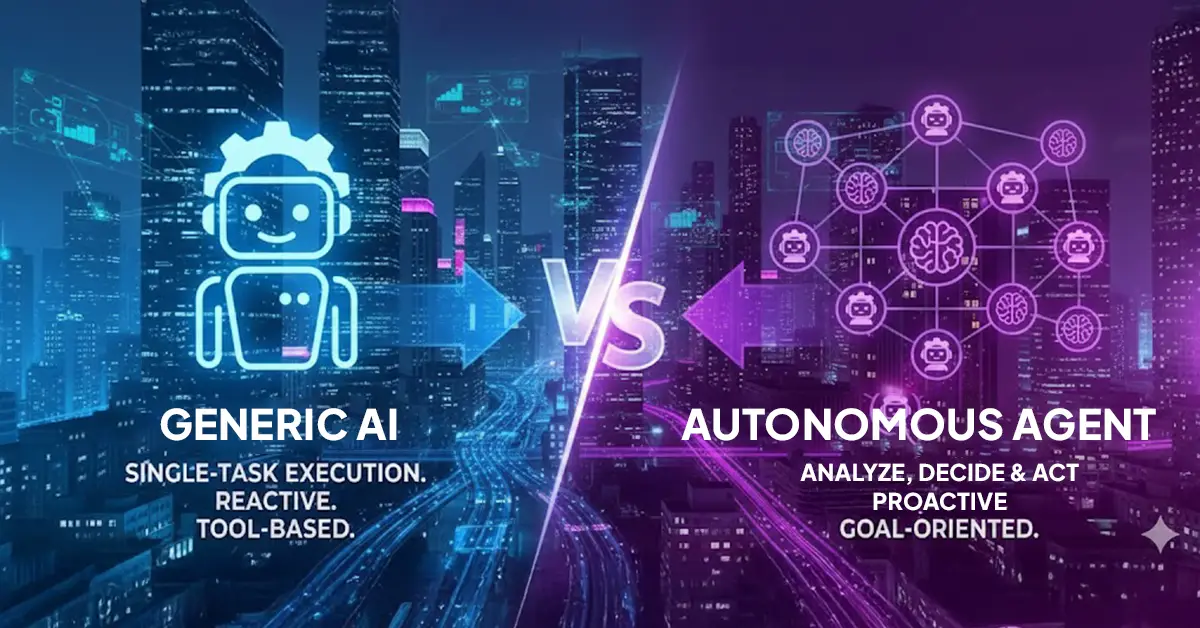
As a CEO, my focus has changed: I am no longer enabling software users; I am orchestrating an autonomous digital workforce.
Table of Contents
The End of the “User” Era
For years, “User Adoption” was the holy grail of my implementation projects. We measured success by how many people logged in and clicked buttons. But as I lead my own organization into 2026, I’ve realized that the “User” is often the bottleneck. When your systems are sentient, you don’t use them; you coexist with them.
Salesforce has evolved from a System of Record into what I call an Ambient Nervous System. It no longer just stores your data; it feels the pulse of your business.
For years, we built systems to help people work. In 2026, we are starting to build systems that do the work.
I’ve seen firsthand how leadership changes when you stop worrying about whether your team logged their hours and start architecting the autonomous outcomes that Agentforce 360 delivers. In the coming months, your goal shouldn’t be more logins; it should be more background resolutions.
The Sensory Revolution
One of the most persistent frustrations I’ve encountered in a decade of consulting is the “data entry gap”, the friction of moving real-world information into a digital field. In 2026, the “Sensory Revolution” is finally closing that gap, giving enterprises their ears and eyes.
- Agentic Voice: This isn’t the robotic IVR we’ve been working with for years. In my own daily routine, I no longer “type” into Salesforce. I have strategic dialogues with our enterprise intelligence while in transit. I can interrupt, clarify, and redirect. The system understands my vibe, not just my keywords.
- Ambient AI: For years, I told clients that if it isn’t in Salesforce, it didn’t happen. Now, Salesforce finds the data itself. Through Ambient AI, sensors on retail floors and warehouses feed into Data Cloud, the system “hears” a verbal agreement in a meeting room or “sees” a temperature spike in a warehouse. This Zero-Interface Experience is the most profound change I’ve seen in my career; work is no longer interrupted by the need to document it.
The New Economy: Agent-to-Agent (A2A) Communications
The most profound realization I’ve had this year is that my company’s growth is no longer limited by how many emails my sales team can send. It is governed by Agentic Velocity.
In years of sales cycles, I’ve observed that the bottleneck was always Human Latency, waiting for a person to read an email or redline a contract. By allowing agents to handle discovery and technical verification, we’ve reduced sales cycles that used to take months down to mere seconds.
In this A2A economy, the winner isn’t the company with the loudest marketing; it’s the company with the most autonomous and trusted agents.
The Biological Enterprise: Security & Resilience
I’ve sat through countless security audits over the years where we treated security like a “static wall.” But in the world of Agentic AI, threats are fluid. I now advise my clients to adopt a Biological Security Model.
- Proactive Cybersecurity: The “detect and notify” loop I used for years is now too slow. Using the Einstein Trust Layer, the system now anticipates vulnerability patterns before data is compromised.
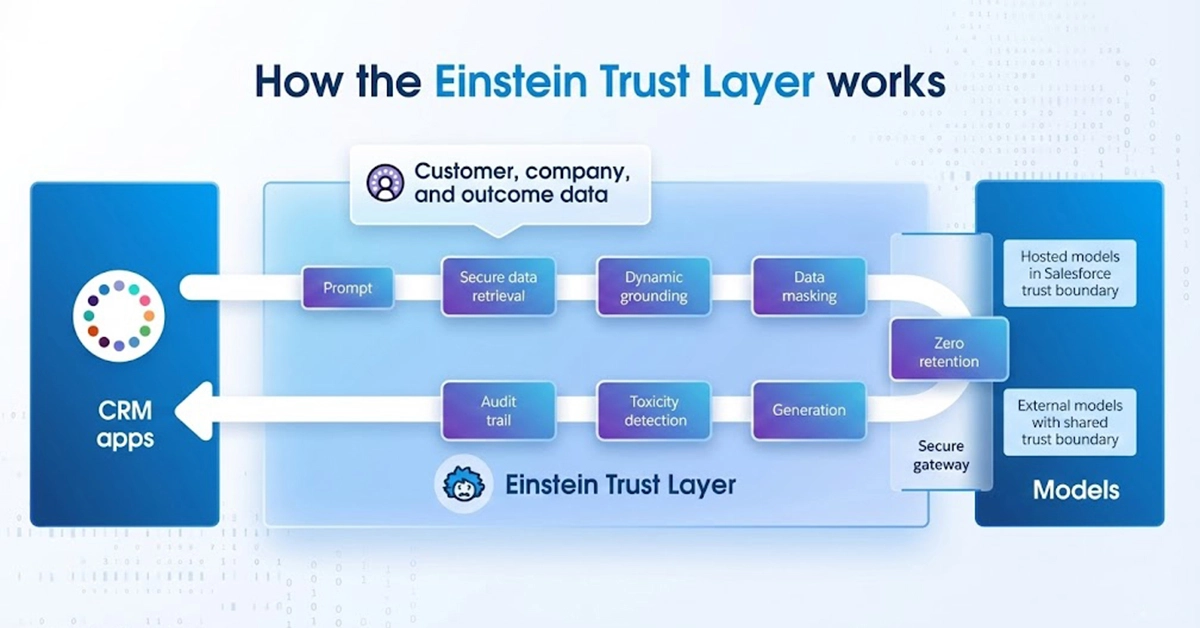
- Self-Healing Systems: Taking inspiration from the human immune system, digital infrastructures now “scab over” anomalies, isolating a compromised node and deploying a fix without the IT team ever having to wake up at 2 AM.
Democratized Innovation
One of the most rewarding shifts I’ve witnessed is the end of the “IT Bottleneck.” For years, I saw my clients’ great ideas die in a backlog because they didn’t have enough developers.
In 2026, teams don’t write Python or Apex; they describe intent, thanks to Vibe Coding. If a regional manager needs a tool, they describe the “vibe” and the logic to Agentforce. Within seconds, it is generated and deployed.
My Advice to IT Leaders: Bringing in AI doesn’t mean your department is disappearing; your role is simply becoming more strategic. I’ve seen my own IT team transition from “builders of buttons” to “governors of the Trust Layer.” By shifting the burden of creation to the front lines, we’ve created a growth engine more responsive than any top-down strategy I’ve ever implemented.
The Great Shift
| Category | Until 2025: The Copilot | 2026 & Beyond: The Sentient Enterprise |
| Interface | Dashboards & Keyboards | Natural Voice & Ambient Sensing |
| Workflow | Human-Led Automation | Autonomous & Self-Healing |
| B2B Interaction | Email & Human Negotiation | Agent-to-Agent (A2A) Handshakes |
| Security | Static Threat Detection | Biological Immune Systems |
| Development | Chronic IT Backlogs | Employee-Led “Vibe Coding” |
| Primary Metric | Efficiency (Faster Humans) | Autonomy (Independent Outcomes) |
The Executive Mandate for 2026
2026 is the year we finally move from Efficiency to Autonomy.
For the last decade, our goal was to make humans faster, to give them better tools to sort data, send emails, and close tickets. But as we’ve seen, “faster” eventually hits the ceiling of human capacity. The Sentient Enterprise breaks that ceiling. By offloading the administrative tax of business to an autonomous agentic layer, we are freeing our people to do what only they can do: dream, strategize, and build relationships.
The most successful leaders of this era will be those who stop looking at screens and start listening to the pulse of their ambient organization. We must stop managing processes and start architecting environments where intelligence flows naturally.
Don’t wait for your IT roadmap to catch up. Start by identifying one high-friction handshake in your business, whether it’s a procurement cycle or a service escalation, and empower an Agentforce pilot to own the outcome, not just the task.
Final Thoughts
As a CEO, my perspective on our roadmap has shifted. The 2026 leader must pivot from Process Management to System Architecture.
Traditionally, we managed people to follow a process. In 2026, we design the system (the architecture) so that the agents can navigate the process autonomously. This requires a high degree of trust, not just in the technology, but in the Einstein Trust Layer that Salesforce has built to keep our data sovereign and our ethics intact.
My advice for our B2B and B2C Ecosystems:
- For B2B: Prepare your metadata now. Your agents are only as good as the “context” they have. If your data is siloed, your A2A negotiations will fail.
- For B2C: Focus on “Personality Design.” In a world of ambient voice, your brand is no longer a logo; it is the tone, empathy, and reliability of your agent’s voice.
- For the Salesforce Journey: Move beyond “Implementation” and toward “Orchestration.” Use Data Cloud as the central nervous system that feeds your agents the “senses” they need to act on your behalf.
The transition to a Sentient Enterprise is a journey from “doing” to “being.” Let’s build an organization that doesn’t just work harder, but one that actually thinks and evolves alongside us.
Categories

Solve It with Salesforce. We’ll Show You How.
AI. Apps. Experts. Everything you need to win with Salesforce under one roof.
About the author
Siddharth SehgalSiddharth Sehgal is the CEO of 360 Degree Cloud and 360 SMS App, bringing over 15 years of experience in Salesforce innovation and enterprise communication. A recognized thought leader, he has led the creation of more than seven flagship Salesforce applications that empower businesses to connect smarter and grow faster. As the author of Cracking the SMS Conversion Code, Siddharth continues to shape the future of customer engagement with vision, expertise, and a passion for transformative impact.
Recent Blogs
 Salesforce Services
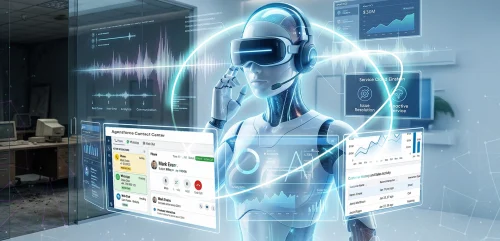
Your Current Contact Center is Obsolete- Salesforce Proves It
We’ve all been there: explaining a complex issue to a chatbot, being transferred to a human, and then hearing those dreaded words: “How can I help you…
Read More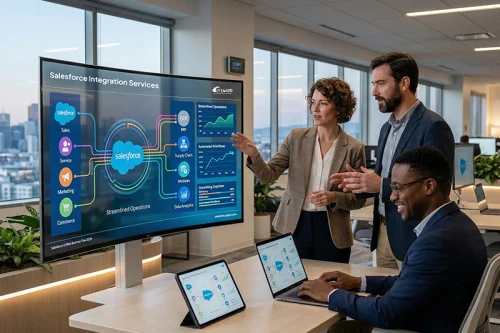 Salesforce Clouds
Top 10 Salesforce Integration Services to Streamline Your Business in 2026
Disconnected systems represent one of the largest silent killers of business efficiency in 2026. Employees spend a significant portion of their workday switching between apps, manually re-entering data, or searching…
Read More Salesforce Services
Agentforce 360: Salesforce’s AI-Powered Service Console for the Agentic Enterprise
In the last few months, Agentforce 360 has been the gold standard for companies aiming to deliver on the vision of the agentic enterprise. Too often, support…
Read MoreReady to Make the Most Out of Your Salesforce Instance?
Our Salesforce aces would be happy to help you. Just drop us a line at contact@360degreecloud.com, and we’ll take it from there!
Subscribe to our newsletter
Stay ahead with expert insights, industry trends, and exclusive resources—delivered straight to your inbox.