

Talk to Us

How to Eliminate Productivity Bottleneck with Spring ‘26 Release 

For firms built on the Salesforce ecosystem, Spring ’26 Release is more than just a software update. It is a strategic pivot point that directly affects how fast teams move, how cleanly they operate, and where friction shows up day to day. 

Every growing company has felt the “performance ceiling.” Sales reps stop following up on leads because the volume is too high. Service agents lose a customer because they didn’t have the context of a previous call. It’s the silent error that  stack up without IT ever knowing. 

Spring ’26 isn’t about more features. It’s about removing friction. In practice, most organizations end up adopting less than 30% of what each major release introduces, focusing only on the updates that remove real bottlenecks.

In this guide, we’ve bypassed the 800-page release notes to focus on the claims, pains, and gains of your 5 core departments, mapped to the Spring ’26 features that actually matter. 

1. The Sales & Strategy Team: Fighting Lead Fatigue 

Sales Development Reps (SDRs) are losing the race against time. High-quality prospects often go cold because reps are buried under a mountain of low intent “Contact Us” queries and manual research tasks. 

Solution #1: Agentforce Sales (The Autonomous SDR) 

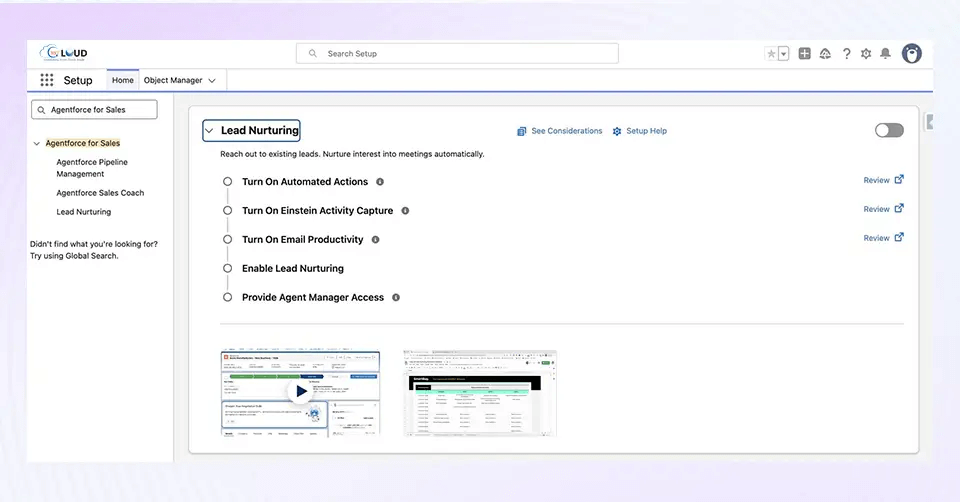
In the Spring ’26 release, Sales Cloud officially matures into Agentforce Sales. The standout Lead Nurturing Agent researches prospects 24/7 and engages in two-way conversations via email and SMS.  

  • Research 24/7: Automatically research a prospect’s company and industry signals from the web to personalize outreach. 
  • Engage Authentically: This isn’t a “bot” that just sends links; it acts as a Sales-Native Chat assistant that can answer pricing questions and book meetings directly into your team’s calendar based on real-time availability. 
Sales-Native Chat assistant

The Benefit: This enables team to achieve a 100% lead follow-up rate without increasing headcount, ensuring your human sellers spend their day closing deals, not chasing “shadow” leads. 

Solution #2: Setup with Agentforce (The “Co-Admin” Experience) 

To solve the “Admin Tax“, the endless clicking required to configure the system, Spring ’26 introduces Setup with Agentforce (Beta). This is a conversational interface built directly into the Setup Home page that acts as a co-pilot for configuration. 

  • Natural Language Architecture: Instead of toggling between five screens to build a new object, an Admin can simply type: “Create an object called Project Expense with a Currency field and a validation rule for negative amounts.” 
  • Instant Navigation: You can ask the agent to “Show me all changes made to queues in the last 7 days” or “Navigate to the MFA settings,” bypassing the need to hunt through the Setup tree. 

The Benefit: This drastically reduces “click-fatigue” and speeds up complex org configuration by up to 50%, keeping your sales infrastructure as agile as your strategy. 

2. The Operations Team: Eliminating Manual Bottlenecks 

Internal processes like employee onboarding or partner vetting often feel clunky and unbranded, leading to “UX rejection” where users avoid the system. Furthermore, document-heavy workflows, like signed contract approvals, often sit unnoticed in the system, creating a silent stall where files are uploaded but the next action remains purely manual. 

Solution #1: Native Screen Flow Styling & Kanban Boards 

In Spring ’26, Salesforce Flow is receiving its biggest “makeover” to date. Admins can finally move away from the “standard gray” look and build professional, app-like experiences natively. 

  • Component-Level Styling: Using the new Style Tab in Flow Builder, you can now customize borders, background colors, and button shapes (like corner radius) to match your firm’s branding, no custom CSS or code required. 
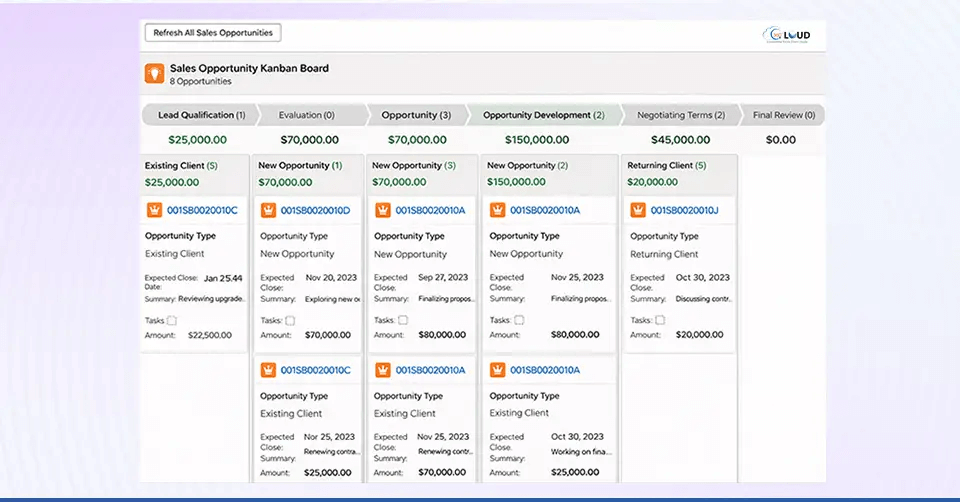
  • Kanban Screen Component (Beta): You can now embed a Kanban Board directly inside a Flow. This allows users to visualize onboarding tasks or project milestones as cards and drag them through columns like “To Do” and “Done.” 
Kanban Screen Component

The Benefit: This provides a bespoke, professional feel that increases user adoption. When tools look and feel like modern apps, teams spend less time fighting the interface and more time moving the needle. 

Solution #2: Record-Triggered Flows on Files (ContentDocument) 

One of the most requested features in Salesforce history is finally here: the ability to trigger automation the moment a file is uploaded or deleted. 

  • Immediate Action: Previously, you needed complex Apex code to “watch” for new files. Now, you can build a Flow that triggers when a ContentDocument is created. 
  • Automated Bridges: Automation can now trigger the moment a file is uploaded. For example, when a client sends a signed contract via your Salesforce-native chat & messaging app, a Flow can instantly scan the file and alert the Legal team via Slack. 

The Benefit: It helps eliminate document lag by automating the manual bridge between file storage and business processes. It ensures that no contract or ID ever sits unreviewed. 

3. The Customer Service Team: Closing the “Context” Gap 

Customers are frustrated by rigid, dead-end phone menus (IVR), and human agents often lack a clear, consolidated history of customer interactions. This leads to the dreaded “Context Amnesia,” where a customer has to repeat their story three times before getting an answer. 

Solution #1: Agentforce Voice & Enhanced Chat v2 

Spring ’26 introduces Agentforce Voice & Enhanced Chat v2, a significant upgrade to traditional IVR systems. It replaces “Press 1 for Sales” with an AI that actually listens. 

  • Natural Dialogue: The AI understands intent and sentiment. If a customer says, “I’m really frustrated because my order hasn’t arrived,” the AI detects the urgency, checks the shipping status in Data Cloud, and provides an answer, all in a natural, human-like voice. 
  • Searchable Call Data: Every conversation is transcribed and turned into searchable data, allowing you to report on customer sentiment trends just as easily as you do on case numbers. 

The Benefit: The feature provides 24/7 human-like support that resolves simple queries autonomously, freeing your human agents to handle only the most complex emotional escalations. By offloading these routine interactions to an intelligent agent, you aren’t just cutting costs; you are modernizing your Digital Engagement strategy. This ensures that every touchpoint, whether it’s a late-night chat or a voice call, becomes a proactive moment of customer engagement that builds loyalty rather than just a ticket to be closed. 

Solution #2: Case Timeline (Visual Event Stream) 

Agents now see a chronological, social-media-style feed of a case’s life story. If a customer started a conversation on your Salesforce Native Messaging App, switched to a phone call, and then back to chat, the agent sees the entire history in one unified view. 

  • Unified Storytelling: Instead of digging through five different related lists (Emails, Calls, Chat Logs, and Field Changes), agents see one interactive timeline. 
  • Seamless Handoffs: When a human takes over from an AI agent, they can see exactly what the AI already discussed.  

The Benefit: Agents can resolve cases faster because they stop asking, “How can I help you today?” and start saying, “I see you were just talking to our AI assistant about your order, let me finalize that for you.” 

4. The Development Team: Handling Massive Scale 

As firms grow, their data often outgrows their code. Developers are frequently caught between “Governor Limits” that crash large integration jobs and the “Boilerplate Burden”, writing hundreds of lines of Apex code just to handle simple UI updates or data mutations. 

Solution #1: Apex Cursors (Now Generally Available) 

Spring ’26 Release finally brings Apex Cursors out of beta to solve the “Batch Apex” headache. Traditionally, processing millions of records required heavy Batch jobs that were difficult to chain and often hit memory limits. 

  • Large-Scale Traversal: Developers can now use the Cursor class to traverse datasets of up to 50 million records. 
  • Flexible Chaining: Cursors can be passed between chained Queueable jobs, allowing for sophisticated, multi-step data processing that is far more flexible than the rigid Start-Execute-Finish lifecycle. 

The Benefit: It ensures stable, “crash-proof” data processing for enterprise-scale integrations. It allows your developers to handle massive data volumes with cleaner code and less risk of transaction timeouts. 

Solution #2: GraphQL Mutations in LWC 

For years, Lightning Web Components (LWC) were great at reading data via the Wire Service, but writing data often required a middle-man Apex Controller. This added layers of “technical debt” to every project. 

  • Direct Client-Side Updates: Developers can now perform Mutations (Create, Update, Delete) directly within an LWC using the GraphQL API. 
  • Declarative Power: By using GraphQL, you skip the need to write, test, and maintain a server-side Apex class for basic record operations. 

The Benefit: Reduces technical debt and makes the custom UI faster to build and easier to maintain. It simplifies the “developer’s path,” allowing them to build complex interfaces in hours instead of days. This is also critical for Bulk Messaging Apps and Voice apps like 360 CTI. It means your custom UI can now handle thousands of simultaneous chat updates with zero lag, ensuring the conversation feels “live” and responsive. 

5. The IT & Security Team: Managing AI-Era Risks 

In a “secure-by-default” world, legacy integration methods are becoming liabilities. Furthermore, IT teams are often the last to know when a page is broken; they rely on frustrated user complaints rather than proactive logs to catch “silent” client-side failures. 

Solution #1: The Mandatory Move to External Client Apps 

Salesforce is drawing a line in the sand with Spring ’26 Release. To enhance the security of the “Agentic Enterprise,” the creation of new traditional Connected Apps is now disabled by default. 

  • External Client App Framework: All new integrations must now use this modernized framework. It offers enhanced security through “secret-splitting” (keeping client secrets out of the metadata) and better alignment with modern DevOps pipelines. 
  • Migrate, Don’t Panic: While existing Connected Apps will continue to work, Salesforce is nudging firms to migrate to this more robust framework to protect their data in the age of AI agents. 

The Benefit: Provides enhanced security and a more disciplined integration strategy, ensuring that as you connect more external AI tools to Salesforce, your front door remains locked tight. Also, if your native messaging and chat integrations are not migrated to this more secure framework, you risk “Technical Freeze.” You won’t be able to update your secure connections or scale your AI’s access to external data sources. Legacy integrations will eventually become security liabilities that can’t support modern OAuth flows. 

Solution #2: Centralized Error Console & Shield Hub 

One of the most requested “visibility” tools is here: the Error Console. It ends the era of “silent killers”, non-fatal errors that degrade the user experience without ever hitting a server log. 

  • Silent Error Capture: Admins can now access a live log of every client-side and page-level error occurring across the entire org in one dashboard. 
  • Proactive Shielding: For firms using Salesforce Shield, the new Shield Hub centralizes Data Detect, Event Monitoring, and Encryption settings into a single, unified command center. 

The Benefit: Enables proactive troubleshooting. Your IT team can now identify a recurring UI bug or a failing integration and fix it before a single user has the chance to submit a support ticket. 

Final Word: Turn Spring ’26 Release Friction into Functional Flow 

As we approach the February release weekends, the best way to ensure a seamless transition is through proactive testing and targeted adoption. By focusing on how these Spring ’26 features solve specific departmental friction, you can de-bottleneck your administrators, empower your developers, and provide your service teams with the visual context they need to excel. 

However, translating release notes into a functional roadmap is a significant undertaking. We are here to help you bridge that gap. Whether you need to audit your current environment for “silent errors,” configure your first Agentforce autonomous agent, or modernize your legacy workflows into high-adoption Screen Flows, our team can help you leverage every update to its full potential. Let us help you turn these new features into a strategic advantage, ensuring your firm doesn’t just stay current, but stays ahead. 

Master the Spring ’26 Release with a custom-built strategy. 

Master the Spring '26 Release with a custom-built strategy


Beyond the Copilot: Why 2026 is the Year of the Agentic AI Enterprise 

The year 2024 and 2025 were all about Copilots; and these reactive assistants did deliver, helping us draft emails and summarize meetings. But is it enough? As we enter 2026, firms are noticing a new pattern; productivity gaining plateau and humans remaining to be the execution bottleneck. The next move for transformation isn’t about implementing better and advanced chatbots; it’s about becoming an Agentic AI Enterprise. This year marks the rise of the Agentic AI, where AI no longer waits for a prompt to be useful; it takes the initiative to get work done. 

We are now leaving behind the reactive “input-output” model of chatbots and moving into the era of the Agentic Enterprise in 2026, where autonomous AI agents operate as digital coworkers that perceive, reason, and execute multi-step workflows without constant human handholding. This blog will explore why 2026 is the inflection point for this transformation, the strategic value of moving from assistance to delegation, and how your organization can bridge the gap between today’s point-automation and a future of governed, autonomous execution. You will learn not just what these agents are, but how to deploy them as the new backbone of your operational velocity. 

From Copilots to Autonomous AI Agents 

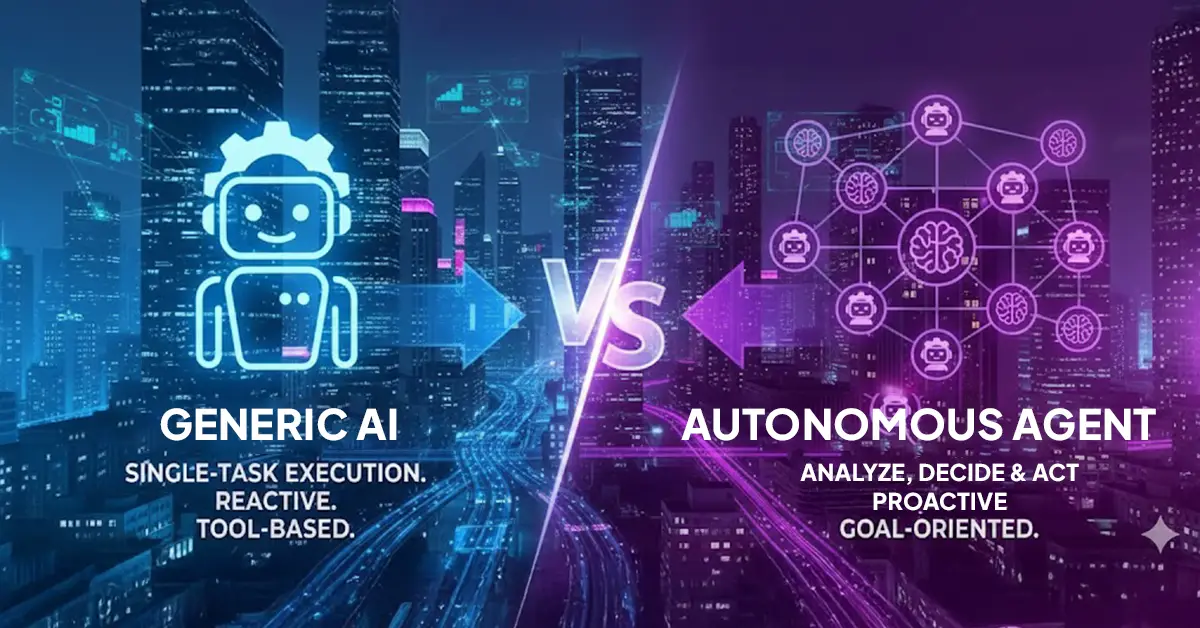
In 2024, Copilots were heralded as the ultimate productivity hack. However, their utility was strictly bounded by the Human-in-the-Loop (HITL) requirement. A Copilot is reactive; it possesses a “stateless” intelligence that resets with every new chat window. If you wanted to move a lead through a pipeline, you had to prompt the Copilot to draft the email, then you had to send it, then you had to update the CRM. 

By contrast, Autonomous AI Agents possess “stateful” memory and goal-oriented reasoning. Instead of following a rigid script, an agent is given a mission. The agent then creates its own plan and moves through the “OODA loop” (Observe, Orient, Decide, Act) independently. 

The Comparison: Assistance vs. Autonomy 

FeatureCopilot (Assistive AI) Agent (Autonomous AI) 
Initiative Reactive (Waits for a prompt) Proactive (Acts on a goal/trigger) 
Workflow Linear (Single-task focus) Multi-step (Orchestrates complex paths) 
System Interaction Read-only / Suggestion based Read-Write (Can execute actions in apps) 
Human RoleThe Pilot / Driver The Manager / Auditor 
Goal Improve Individual Efficiency Scalable Operational Velocity

Start building your autonomous future today. 

Start building your autonomous future today

What Is an Agentic Enterprise? 

An Agentic Enterprise is an organization where human employees and AI agents work together in a collaborative ecosystem. This model enables agents that are deeply integrated into the tech stack, calling APIs, and coordinating with other agents. These “digital workers” have defined roles, responsibilities, and even performance metrics. 

AI agents are taking work to the next level as they have the ability to reason, adapt, and act on their own. They are capable to handle time-consuming repetitive tasks on their own without the need for human intervention. The Agentic Enterprise model has allowed AI to become a powerful partner, augmenting human potential. These AI agents can now take decisions and actions to meet desired outcomes while freeing employees to focus on more important and revenue-generating tasks.  

The Strategic Value of Agentic AI 

The strategic value of Agentic AI has moved beyond mere “time-savings.” It has become the primary lever for structural competitive advantage. For the modern enterprise, the goal is no longer just to work faster, but to fundamentally alter the unit economics of growth. 

Here is a deeper look at the four pillars of strategic value in the Agentic era: 

1. Operational Velocity 

In traditional organizations, the “speed of business” is limited by the speed of human coordination. A simple change in a supply chain, such as a port delay, usually requires a human to spot the alert, analyze the impact, email stakeholders, and manually update inventory levels. Autonomous agents can monitor live data streams and execute responses in milliseconds. 

2. Hyper-Personalization at Scale 

Historically, personalization was expensive. You could only provide a “white-glove” experience to your top 1% of customers because of the human labor involved. Agentic AI allows for “Agent-to-Customer” interaction at a granular level. These agents act as Brand Twins, maintaining a deep, persistent memory of every individual customer’s preference, past hurdles, and future needs. 

3. Cross-Functional Orchestration 

The biggest strategic hurdle for the last 20 years has been “Data Silos.” Marketing doesn’t know what Sales is doing; Finance doesn’t see the Support tickets. 

Agentic AI serves as the “connective tissue.” Because these agents can navigate any interface and call any API, they act as an orchestration layer that sits above your existing software. 

Don’t just take our word for it. See the ROI for yourself. 

gentic AI serves as the “connective tissue

Use Cases Transforming Agentic AI Enterprises in 2026 

The “Agentic Enterprise” has moved past experimental pilots into full-scale production. Agents are no longer just answering questions; they are owning outcomes. Here are the specific use cases of Agentic AI Enterprise that have redefined industry standards this year. 

1. Intelligent Supply Chain Orchestration 

Traditional supply chains are reactive, relying on human intervention to solve disruptions that have already occurred. Supply Chain Agents now act as autonomous “traffic controllers.” They monitor global weather patterns, geopolitical shifts, and real-time port telemetry. 

2. Finance & Treasury 

Monthly “closing of the books” is a labor-intensive process prone to human error and delayed insights. Financial Agents now perform Continuous Accounting. Instead of waiting for month-end, agents monitor every transaction in real-time across global entities. Agents autonomously reconcile invoices, and flag anomalies that suggest fraud or tax non-compliance. 

3. Customer Success 

Customer Success Managers (CSMs) are often overwhelmed, only reaching out to clients when a renewal is due, or a fire needs to be extinguished. Agentic CSX (Customer Success Experience). Agents monitor product usage patterns and “sentiment signals” across support tickets and emails. 

4. Hyper-Personalized Marketing 

Segment-based marketing still feels generic and often misses the mark on timing. Dynamic Intent Agents build using Agentforce act as a bridge between a brand’s inventory and an individual customer’s real-time intent. They help to generate 1-to-1 offers, negotiate the price within a set of pre-approved margins, and executes the transaction across the customer’s preferred messaging platform. 

Enterprise AI Workflows: Beyond Point Automation 

To understand how an Agentic AI Enterprise functions, you have to look at the “Agentic Loop”, the four-stage engine that allows an AI to move from a vague goal to a completed business outcome. 

1. Goal Decomposition & Planning 

Earlier workflows used to begin with the simple “If-This-Then-That” logic, but now they begin with Decomposition. When given a high-level objective, the agent uses “Chain-of-Thought” reasoning, using which the AI agent breaks the decided goal into logical sub-tasks. It identifies necessary data points, anticipates potential obstacles, and prioritizes actions, building its own project roadmap before taking action. 

2. Tool-Augmented Execution 

Unlike earlier AI that only “talked” about data, agents are now equipped with the ability to call APIs, navigate browser interfaces, and even write and run their own code in secure sandboxes to transform data. This allows the agent to move seamlessly between siloed systems to execute the actual work required to meet the goal. 

3. Multiple AI Agent Orchestration 

As enterprise operations become complex, they hardly depend on a single AI agent; what they need is Multi-Agent System, where these digital workers collaborate and act together to get the tasks done without any human supervision. This kind of AI agent orchestration work helps to ensure high output accuracy. 

4. Reflection & Self-Correction 

The final, most critical stage is the Self-Critique Loop, where the agent reviews its own work before completion. The agent evaluates its drafted actions against the original constraints, asking, for example, “Does this procurement order actually maintain the required 15% margin?” If it fails its own test, the agent autonomously iterates, corrects the error, and optimizes the solution. Once finished, it logs the “lesson learned” into its long-term memory to ensure even faster execution in the future. 

It’s Time to Become an Agentic AI Enterprise 

As we move through 2026, the distinction between market leaders and laggards is no longer defined by who has the best “AI assistant,” but by who has built the most robust Agentic Enterprise in 2026. It’s high time companies should move beyond the “Copilot plateau” and enter the new era of autonomous execution. Organizations are finally realizing the true promise of digital transformation by delegating complex, multi-step enterprise AI workflows to a coordinated workforce of AI agents. 

It’s time for you to make the move, too. Don’t let your AI strategy stall at the “assistant” phase, reach out to our experts today for a strategic consultation. Let’s build your digital workforce together and transform your business into a truly Agentic AI Enterprise. 

Future-proof your business with autonomous agents that deliver real ROI.

It’s Time to Become an Agentic AI Enterprise

The 2026 Salesforce Outlook: From Reactive CRM to the Sentient Nervous System 

As we enter 2026, the “AI hype” has settled into a hard corporate reality. Having spent over 13 years living and breathing the Salesforce ecosystem, I’ve seen every “next big thing,” but this shift is different. We are no longer talking about Digital Transformation; we are talking about Digital Labor ROI

For years, I watched my clients view AI as a luxury sidecar, a chatbot to deflect tickets or a tool to draft emails. But looking at the boardrooms I advise today, the mandate has moved. 

We are no longer impressed by software that answers questions; we are demanding systems that execute outcomes.

The shift is tectonic. After a decade of building Reactive Software (tools that sit idle waiting for a human click), we are finally architecting Sentient Systems (software that independently senses environmental shifts, interprets business intent, and acts without being prompted).  

As a CEO, my focus has changed: I am no longer enabling software users; I am orchestrating an autonomous digital workforce. 

The End of the “User” Era 

For years, “User Adoption” was the holy grail of my implementation projects. We measured success by how many people logged in and clicked buttons. But as I lead my own organization into 2026, I’ve realized that the “User” is often the bottleneck. When your systems are sentient, you don’t use them; you coexist with them.  

Salesforce has evolved from a System of Record into what I call an Ambient Nervous System. It no longer just stores your data; it feels the pulse of your business. 

For years, we built systems to help people work. In 2026, we are starting to build systems that do the work.

I’ve seen firsthand how leadership changes when you stop worrying about whether your team logged their hours and start architecting the autonomous outcomes that Agentforce 360 delivers. In the coming months, your goal shouldn’t be more logins; it should be more background resolutions. 

The Sensory Revolution 

One of the most persistent frustrations I’ve encountered in a decade of consulting is the “data entry gap”, the friction of moving real-world information into a digital field. In 2026, the “Sensory Revolution” is finally closing that gap, giving enterprises their ears and eyes

  • Agentic Voice: This isn’t the robotic IVR we’ve been working with for years. In my own daily routine, I no longer “type” into Salesforce. I have strategic dialogues with our enterprise intelligence while in transit. I can interrupt, clarify, and redirect. The system understands my vibe, not just my keywords. 
  • Ambient AI: For years, I told clients that if it isn’t in Salesforce, it didn’t happen. Now, Salesforce finds the data itself. Through Ambient AI, sensors on retail floors and warehouses feed into Data Cloud, the system “hears” a verbal agreement in a meeting room or “sees” a temperature spike in a warehouse. This Zero-Interface Experience is the most profound change I’ve seen in my career; work is no longer interrupted by the need to document it. 

The New Economy: Agent-to-Agent (A2A) Communications 

The most profound realization I’ve had this year is that my company’s growth is no longer limited by how many emails my sales team can send. It is governed by Agentic Velocity. 

In years of sales cycles, I’ve observed that the bottleneck was always Human Latency, waiting for a person to read an email or redline a contract. By allowing agents to handle discovery and technical verification, we’ve reduced sales cycles that used to take months down to mere seconds.  

In this A2A economy, the winner isn’t the company with the loudest marketing; it’s the company with the most autonomous and trusted agents. 

The Biological Enterprise: Security & Resilience 

I’ve sat through countless security audits over the years where we treated security like a “static wall.” But in the world of Agentic AI, threats are fluid. I now advise my clients to adopt a Biological Security Model. 

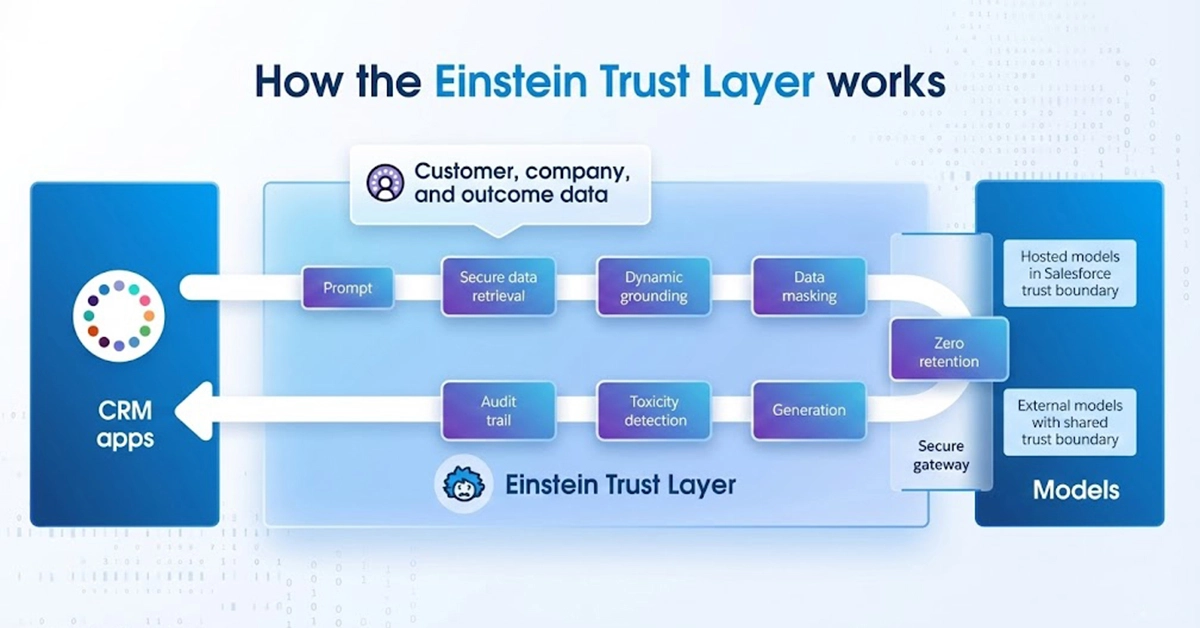
  • Proactive Cybersecurity: The “detect and notify” loop I used for years is now too slow. Using the Einstein Trust Layer, the system now anticipates vulnerability patterns before data is compromised. 
  • Self-Healing Systems: Taking inspiration from the human immune system, digital infrastructures now “scab over” anomalies, isolating a compromised node and deploying a fix without the IT team ever having to wake up at 2 AM. 

Democratized Innovation 

One of the most rewarding shifts I’ve witnessed is the end of the “IT Bottleneck.” For years, I saw my clients’ great ideas die in a backlog because they didn’t have enough developers. 

In 2026, teams don’t write Python or Apex; they describe intent, thanks to Vibe Coding. If a regional manager needs a tool, they describe the “vibe” and the logic to Agentforce. Within seconds, it is generated and deployed. 

My Advice to IT Leaders: Bringing in AI doesn’t mean your department is disappearing; your role is simply becoming more strategic. I’ve seen my own IT team transition from “builders of buttons” to “governors of the Trust Layer.” By shifting the burden of creation to the front lines, we’ve created a growth engine more responsive than any top-down strategy I’ve ever implemented. 

The Great Shift 

CategoryUntil 2025: The Copilot2026 & Beyond: The Sentient Enterprise
InterfaceDashboards & KeyboardsNatural Voice & Ambient Sensing
WorkflowHuman-Led AutomationAutonomous & Self-Healing
B2B InteractionEmail & Human NegotiationAgent-to-Agent (A2A) Handshakes
SecurityStatic Threat DetectionBiological Immune Systems
DevelopmentChronic IT BacklogsEmployee-Led “Vibe Coding”
Primary MetricEfficiency (Faster Humans)Autonomy (Independent Outcomes)

The Executive Mandate for 2026

2026 is the year we finally move from Efficiency to Autonomy

For the last decade, our goal was to make humans faster, to give them better tools to sort data, send emails, and close tickets. But as we’ve seen, “faster” eventually hits the ceiling of human capacity. The Sentient Enterprise breaks that ceiling. By offloading the administrative tax of business to an autonomous agentic layer, we are freeing our people to do what only they can do: dream, strategize, and build relationships. 

The most successful leaders of this era will be those who stop looking at screens and start listening to the pulse of their ambient organization. We must stop managing processes and start architecting environments where intelligence flows naturally. 

Don’t wait for your IT roadmap to catch up. Start by identifying one high-friction handshake in your business, whether it’s a procurement cycle or a service escalation, and empower an Agentforce pilot to own the outcome, not just the task. 

Final Thoughts

As a CEO, my perspective on our roadmap has shifted. The 2026 leader must pivot from Process Management to System Architecture.  

Traditionally, we managed people to follow a process. In 2026, we design the system (the architecture) so that the agents can navigate the process autonomously. This requires a high degree of trust, not just in the technology, but in the Einstein Trust Layer that Salesforce has built to keep our data sovereign and our ethics intact. 

My advice for our B2B and B2C Ecosystems: 

  • For B2B: Prepare your metadata now. Your agents are only as good as the “context” they have. If your data is siloed, your A2A negotiations will fail. 
  • For B2C: Focus on “Personality Design.” In a world of ambient voice, your brand is no longer a logo; it is the tone, empathy, and reliability of your agent’s voice. 
  • For the Salesforce Journey: Move beyond “Implementation” and toward “Orchestration.” Use Data Cloud as the central nervous system that feeds your agents the “senses” they need to act on your behalf. 

The transition to a Sentient Enterprise is a journey from “doing” to “being.” Let’s build an organization that doesn’t just work harder, but one that actually thinks and evolves alongside us. 

How Salesforce Data 360 Fuels Context-Aware AI Agents 

The core issue crippling most enterprise AI projects is fragmented, incomplete, and outdated data. Customer records are often scattered across the CRM, ERP systems, data lakes, and web logs, each telling only a piece of the story. Without a centralized, trustworthy source of truth, AI agents are forced to guess, leading directly to the most critical failure points: ‘hallucinations,’ inaccurate recommendations, irrelevant customer interactions, and ultimately, a breakdown in customer trust. The current state is one where the promise of AI is held back by the persistence of siloed data. This is the chasm that Salesforce Data 360 is engineered to bridge. It is the enterprise data engine that fuels context-aware AI agents, ensuring they operate not just with general knowledge, but with an accurate, unified, and governed understanding of your company’s reality. 

Data 360 solves this by acting as the unified, real-time memory layer for your entire organization. It seamlessly connects all structured and unstructured data sources—including modern data lakes via Zero-Copy integration—and harmonizes them into a single, Golden Record for every customer and business entity. This unified, governed data is then fed directly into your AI agents via technologies like Retrieval-Augmented Generation (RAG). By grounding the AI in trusted, real-time, enterprise-wide context, Data 360 transforms guesswork into reasoning, enabling agents to execute complex workflows, provide hyper-personalized service, and drive growth with accuracy and confidence. 

What Is Salesforce Data 360 (Data Cloud)? 

To truly understand the power of context-aware AI agents, we must first define their foundation. Salesforce Data 360 (formerly Data Cloud) is Salesforce’s definitive real-time data platform, purpose-built to unify, harmonize, and activate all of your customer and enterprise data. It is the modern evolution of the Customer Data Platform (CDP), designed not just for marketing activation, but to serve as the unified data backbone for the entire Agentforce 360 ecosystem. 

The Essential Foundation for AI Agent Deployment 

Why is this unified, real-time data essential for AI agent deployment? In the realm of Generative AI, agents rely on a process called Retrieval-Augmented Generation (RAG) to ground their responses in specific, trusted data. Data 360 serves as the authoritative source for this grounding. 

When an AI agent needs to answer a customer’s complex query (e.g., “What is the status of my recent order, and can you apply my loyalty points to it?”), it doesn’t just rely on general knowledge. Instead, Data 360 provides the agent with: 

  1. Trusted Identity: The single Golden Record showing the customer’s verified identity. 
  1. Real-Time Context: The live order status from the ERP and the current loyalty points balance. 
  1. Enterprise Understanding: The correct business definitions and policies (metadata) from across the organization. 

By ensuring the agent is armed with this definitive, governed context, Data 360 replaces guessing with reasoning, transforming brittle, generic AI into agents that are accurate, trustworthy, and deeply personalized. This is why Data 360 is non-negotiable for building AI automation you can actually trust. 

Assess your current data readiness and integration requirements for AI.

The Real Problems Businesses Face with AI Agents Today 

Even though it is alluring to run an intelligent, autonomous workforce, it can certainly be challenging to accurately run it and deliver sustained value. Let’s have a look at some of these challenges that can affect the usage of AI agents for businesses. 

AI Agents Give Generic, Wrong, or Out-of-Context Responses 

This is the most visible failure point. An AI agent is trained on vast amounts of public data, but it needs specific, private, enterprise knowledge to be useful. When a customer asks, “What is the status of my return?”, a generic LLM might answer with general policy, not the customer’s actual status, leading to frustration. This phenomenon is often called hallucination—when the agent confidently generates inaccurate information because it lacks the necessary grounding in your specific business data and definitions. Over 80% of enterprise AI projects fail to advance past the demo stage precisely because they are not grounded in trusted, real-time context. 

Customer Data Lives Across Siloed Systems 

The fundamental organizational challenge is data fragmentation. Customer information is often split between: 

  • CRM (Sales Cloud): Contact history, opportunities. 
  • ERP (Finance): Billing, order status, inventory. 
  • Marketing Automation: Campaign history, email clicks. 
  • Web/Mobile: Clickstreams, behavioral data. 
  • External Data Lakes: Historical records and unstructured text. 

Since AI agents cannot natively connect these disparate systems, they can only access one “island” of information at a time. This results in an incomplete customer view, forcing the agent to make uninformed decisions. 

No Single Source of Truth for Interactions 

In the absence of a unified data layer, different systems often define the same customer or business entity differently. Identity resolution fails without a central authority. This lack of a Golden Record means that even if the AI agent could query every system, it wouldn’t know which interaction history belongs to the same person, leading to inconsistent, non-personalized, and often repeated interactions. 

Manual Data Syncs Create Delays in AI Insights 

Traditional data integration relies on complex, time-consuming Extract, Transform, Load (ETL) processes. These processes move data from one system to another, introducing latency and increasing administrative overhead. For an AI agent, a 24-hour data refresh rate means any decision it makes is based on information that is already irrelevant in a fast-moving business environment. This constant delay significantly diminishes the value of real-time operational insights. 

Compliance and Security Challenges Block Adoption 

Giving an AI agent access to sensitive customer data raises major security and compliance risks. Without centralized governance: 

  • It’s impossible to ensure the agent only accesses data relevant to its task (data masking). 
  • It’s difficult to enforce global privacy laws (like GDPR or CCPA) that track and manage customer consent. 

Salesforce Data 360 helps to transform fragmented and siloed data into real-time, unified data to be used by AI agents. Let’s have a look at how exactly the platform helps to overcome the above-mentioned challenges. 

How Salesforce Data 360 Solves These Issues 

Salesforce Data 360 helps to transform fragmented and siloed data into real-time, unified data to be used by AI agents. Let’s have a look at how exactly the platform helps to overcome the above-mentioned challenges. 

Real-Time Customer Profiles 

One of the most talked about capabilities of Data 360 is its ability to create Unified Individual Profile. It uses Identity Resolution rules to match and merge data related to customers whether it’s a website visitor, a contact, or a lead. This helps in eliminating any possibility of duplicate data, thus providing teams with a single source of truth. 

Zero-ETL Integration Across Salesforce and Beyond 

Data 360 supports two key architectural breakthroughs over any kind of delay caused by manual data sync. 

  • Native Integration: It enables data to flow seamlessly from all Salesforce Clouds and external systems using near real-time ingestion pipelines. 
  • Zero-Copy (Zero-ETL): Data 360 enables data federation for large external data lakes, which enables the system to query the external data in place without the need to move, copy, or duplicate it. This eliminates latency, reduces cost and complexity, and enable AI agents to access live data. 

Ready to map your enterprise data to the Agentic AI vision?

Rich Context for AI Prompting (The Agent’s Working Memory) 

The unified profile provides a rich, deep context that transforms a generic LLM into a hyper-contextual AI agent. Data 360 aggregates key information points, which are then used to ground AI agents through Retrieval-Augmented Generation (RAG). This context includes: 

Data 360 Context Provided to AI Value for the AI Agent 
Purchase History & Preferences Drives accurate product recommendations and personalized offers. 
Service Cases & Channel Behavior Allows agents to understand the customer’s full journey and prioritize urgent issues. 
Product Usage Enables proactive support and cross-sell opportunities based on adoption. 
Predictive Insights Surfaces Calculated Insights (e.g., Propensity to Churn, Customer Lifetime Value) to guide the agent’s next-best action. 

Granular Segmentation to Personalize AI Agent Actions 

Data 360 allows the creation of highly precise segments and audiences based on any combination of real-time, unified data. This capability is used not just for marketing, but to personalize AI agent actions. For example, a segment of “High-Value Customers who have a pending Service Case” can be prioritized, triggering a specialized AI workflow that uses a more empathetic tone and offers VIP service resolutions. This ensures agents are always acting with maximum relevance. 

Privacy and Governance Built In 

Data 360 provides centralized governance and consent management to address the critical challenge of compliance. It is the single point of control that enables data use policies across the firm, including: 

  • Data Lineage and Catalog: It enables the systems to trace where data came from and how it was unified. 
  • Consent Management: It enables maintaining customer consent preferences across every channel and system. This helps to make sure that AI agents only use data they are authorized to use. 
  • Controls for Safe AI Use: Data 360 helps mitigate the risk of using non-compliant information by grounding the AI in trusted, governed data. 

Benefits of Combining Data Cloud with AI Agents 

Unifying real-time data from Salesforce Data 360 with the power of AI agents can’t be stated as just an upgrade; instead, it is a complete transformation of the way a business carries out its functions. Let’s have a look at exactly how this union looks like for a business. 

  1. Hyper-Personalization and Superior Customer Experiences 

When your AI agent is grounded on unified customer data, it’s not just personalization; it is hyper-personalization, and that’s what businesses seek to achieve to upgrade their customer service quality. 

  • Context-Rich Interactions: AI agent helps firms gather the data related to the live browsing of the customer, purchase history and other details. This helps teams to work on tailored service and recommendations for customers. 
  • Better Customer Experiences (CX): As the AI agent maintains the complete history of customers, it can enable faster case resolutions with human-like interactions, without customers having to repeat their concerns again and again to a different rep. 

See how Data 360 powers real-time service summaries and sales lead prioritization.

  1. Faster Decisions and Increased Automation 

Real-time data ingestion and processes are the foundation of Data 360 that helps to eliminate latency challenges. 

  • Faster Decisions: Real-time insights provided by AI to marketing managers, sales leaders, and service reps enable them to make quicker data-driven decisions and take quick action related to any lead or customer. 
  • Increased Automation: AI agents backed by Data 360 are able to maintain current and historical data due to which they can take action autonomously. This helps businesses achieve true autonomy. 
  1. Improved Operational Efficiency and Reduced Costs 

Having unified data eliminates the cost of manually cleaning and synthesizing it. That’s what Data 360 makes possible. 

  • Reduced Manual Work: AI agents, created on the unified data by Data 360 help to conduct all repetitive and tedious tasks across different departments. This frees human agents to focus on more strategic and revenue-generating activities. 
  • Improved Operational Efficiency: Data 360 ensures automation and accuracy of data, leading to streamlined processes, higher productivity, and overall lower operational costs. 

Data 360—The Foundation of Trustworthy AI 

We stand at the cusp of the Agentic Enterprise, where AI agents are poised to take over vast amounts of operational work. However, as we have explored, the effectiveness of these agents will always be governed by one immutable truth: AI agents are only as smart, accurate, and relevant as the data behind them. 

The pervasive problems of fragmentation, latency, and compliance have historically trapped AI in a cycle of generic, error-prone performance. Salesforce Data 360 (formerly Data Cloud) is the necessary paradigm shift that breaks this cycle. In short, Data 360 is the essential enterprise data engine that makes AI trusted, personalized, real-time, and impactful. The future of AI in business is not just about the model—it’s about the data foundation that grounds it. By investing in Data 360, businesses are not just adopting a CDP; they are building the critical infrastructure required to fully realize the promise of context-aware, autonomous AI. 

See the context-aware AI agents in action deployed by our experts.


Agentforce 360: Salesforce’s Next-Gen Service Console 

Customer service sector is currently undergoing a continuous transformation, driven by customer’s expectations for personalized, quick, and relevant responses. Salesforce made a move here, taking a step toward an AI-first service operation model, Agentforce 360. This is no longer just about automating simple tasks; it’s about infusing predictive intelligence, comprehensive data, and generative capabilities directly into the hands of the service agent, making every interaction smarter and faster. Salesforce’s goal is clear: to move contact centers from cost centers to proactive value drivers. 

Introduced as the next-gen Service Console, Agentforce 360 is Salesforce’s blueprint for unifying the agent experience. The platform has been designed keeping in mind the need to improve both customer experience (CX) and agent experience (AX).  

What is Agentforce 360? 

Agentforce 360 is not merely an updated user interface; it represents Salesforce’s fundamental shift toward AI-powered, unified service delivery. 

Agentforce 360 is the formal name for the completely re-imagined, next-generation Service Console built by Salesforce. Its primary goal is to centralize every tool, data point, and AI capability an agent needs into one cohesive workspace. 

Salesforce’s vision for next-gen AI service is simple: to transform every service agent into a super agent. This means using Data Cloud and generative AI to surface perfect, context-aware information before the agent even needs to search, thereby shortening resolution times and increasing agent satisfaction. The vision is to make customer service predictive, personalized, and efficient enough to dramatically increase Customer Lifetime Value (CLV). 

Difference from Traditional Service Console 

The traditional Service Console, while effective, largely acted as a single-view container for existing tools and data tabs. Agentforce 360, by contrast, is a unified workspace that actively uses AI to orchestrate the workflow. 

FeatureTraditional Service ConsoleAgentforce 360 (Next-Gen)
Agent FocusMulti-tasking, manual data gatheringFocused resolution, workflow automation
Data SourceSeparate related list views, manual searchSingle view powered by Data Cloud
SummarizationManual text entry by agent
AI-generated summary/wrap-up
GuidanceStatic scripts and knowledge articlesReal-time agent coaching

Key Components of Agentforce 360 

Salesforce Agentforce 360 is made of various capabilities, specially crafted to maximize output for agents while minimizing friction. 

  1. Unified Workspace: This is a single, customizable screen and a foundational component that unifies all information from different sources into one contextual view. 
  1. AI-Generated Insights (The Service GPT Layer): Agentforce 360 has got the power of generative AI that helps to process raw customer data, real-time sentiment, and chat history to provide reps with quick answers and suggestions for the next-best actions. 
  1. Automated Workflows (Intelligent Automation): This helps to automatically trigger repetitive, multi-step administrative tasks according to the conversation history, thus helping agents to focus on the problem and reduce Average Handle Time (AHT). 
  1. Real-Time Agent Coaching: AI maintains a constant monitor over any conversation, chat or voice, helping agents with instant guidance. It can help with knowledge articles, suitable tone, or compliance reminders.  
  1. Predictive Case Routing: Salesforce Agentforce 360 is backed by the power of AI and machine learning, which enables it to access historical data and real-time sentiment to route the case to the most suitable agent with the needed skill set. 

Strategize your move to the next-gen console now.

Why Salesforce Launched Agentforce 360 

The launch of Agentforce 360 is not a spontaneous upgrade; it’s a strategic response to overwhelming pressure from market dynamics, evolving customer behavior, and technological maturation. Salesforce recognized that the existing Service Console model was simply not equipped to handle the demands of the modern, digital-first contact center. 

1. Rising Customer Expectations for Instant Support 

Today’s customers have zero tolerance for waiting. Thanks to the convenience offered by giants like Amazon and Google, the expectation for service is now instant, accurate, and available 24/7 across any channel. When a customer reaches out, they expect the agent to already possess full context and history. This “now” culture demanded an AI-powered system that could instantly surface context and accelerate resolution, rendering the legacy, manual-search model obsolete. 

2. Surge in Digital Channel Volume 

Service interactions can occur over multiple digital channels, whether it is SMS, chat, social media, call, or WhatsApp, making it different for service agents to keep track of all channels simultaneously. They need a promising tool that can automate conversation summaries across all channels and provide agents with response suggestions in real-time. This is the kind of Salesforce AI automation that traditional service consoles miss out on.  

3. The Critical Need to Reduce Agent Burnout 

Agent attrition is one of the single biggest costs facing contact centers. When agents spend half their day manually searching systems, logging data, and summarizing cases (the “swivel-chair” effect), stress and burnout skyrocket. Agentforce 360 was launched with a massive focus on Agent Experience (AX) that helps to automate administrative burdens using AI-driven workflows, significantly boosting job satisfaction and reducing costly turnover. 

4. The AI Evolution and the Agentforce Ecosystem 

The maturation of Generative AI provided Salesforce with the necessary technological muscle to power this new console. The Agentforce ecosystem leverages the Data Cloud for unified data storage and the Einstein GPT layer for intelligence. This combination allows for capabilities that were previously science fiction, such as auto-summarizing entire chat transcripts or generating complex code snippets for technical support. Salesforce built Agentforce 360 specifically to maximize the utility of these new AI capabilities directly within the service workflow. 

Want to ensure your AI investment delivers measurable ROI and agent satisfaction?

Across industry sectors like Retail, BFSI, and Healthcare, regulatory demands and consumer expectations are forcing companies to adopt AI-native service models.  Salesforce Agentforce 360 is Salesforce’s definitive statement to the market, ensuring their customers can lead this trend by deploying a solution designed from the ground up to be intelligent, predictive, and adaptable to rapidly changing industry compliance requirements. 

Essential Features of Agentforce 360 

Agentforce 360 is built upon a matrix of features that leverage Salesforce AI automation to solve the critical pain points of the modern contact center. These capabilities transform the console from a passive data viewer into an active, intelligent assistant for the service agent. 

1. Core Intelligence and Guidance 

The intelligence layer is the heart of Agentforce 360, providing real-time, context-aware assistance throughout the interaction: 

  • AI-Driven Salesforce Agent Assist: This feature helps in maintaining a track of the conversation history and the live chat, providing agents with prescriptive guidance in real-time. It helps agents with instant replies and a concise summary of customer issues, enabling them to analyze the issues and provide a quick resolution. 
  • Knowledge Recommendations: This feature helps agents by providing suggestions of relevant articles whenever they have to solve a case, saving them spending time searching through massive knowledge bases.  
  • Conversation Intelligence: This is a crucial monitoring tool provided by Agentforce 360. It is powered by NLP to quickly detect customer tone and sentiment in real-time, enabling agents to access the right cues to manage situations during chats or calls with customers. 

2. Workflow Automation and Efficiency 

The idea behind these features is to cut repetitive, manual tasks that end up in agent burnout. Here are some of the key features: 

  • AI Case Classification & Auto-Fill: Whenever a new case is created, AI predicts key case fields and classifies them according to the kind of product, service, department, or urgency. It then auto-fills all the necessary data points required by the agent, thus boosting case routing speed while eliminating the need to manually enter data points. 
  • Automated Case Summaries + Next-Best Actions: AI instantly monitors any interaction with customers and automatically generates a concise summary of the conversation and customer issue along with providing the agent with suggestions for the next best actions, helping them to act faster on cases.  
  • Smart Macros + Flow Automation: This feature enables agents to trigger complex workflows just with a single click. These intelligent macros help agents by automating tasks like updating customer data across different Salesforce clouds, saving them time for resolving customer cases. 

3. Unified Workspace and Predictive Service 

The workspace brings everything together, making data access immediate and service delivery strategic: 

  • Intelligent Workspace with Unified Customer 360: This acts as the single dashboard in which data from Commerce Cloud, Service Cloud, and Data Cloud is consolidated, thus providing a unified view. This helps to reduce tab fatigue, enabling agents to get complete context of cases within seconds. 
  • Omni-Channel 2.0: This is the next-gen routing, backed by the power or AI, unlike the skill-based routing, helping agents by dynamically routing cases based on several predicted metrics like agent load and agent that has the highest likelihood to resolve a case. 
  • Agentforce Bots (AI Agents): Salesforce Agentforce 360 has brough these powerful self-service bots with the capability to handle bulk of repetitive, tier-one queries. This helps in deflecting case traffic away from human agents, freeing them to handle more crucial and high-priority cases. 

Get the complete blueprint for unifying your service data with AI.
How Agentforce 360 Improves Agent Efficiency 

Agentforce 360 helps agents to deliver proactive customer experience through several tangible improvements: 

  1. Significant Reduction in Handle Time (AHT): Agentforce 360 has enabled agents to work with automated case summarization, providing them with a quick brief on customer issues, thus resolving issues quickly and achieving a potential reduction in Average Handle Time (AHT). 
  1. Faster Onboarding: It is no longer required to manually train new agents. Having quick access to real-time coaching and knowledge articles can enable new agents to get onboard quickly and meet performance targets. 
  1. Dramatic Improvement in Data Accuracy: Accuracy can take a serious hit when agents have to manually type summaries and case fields. Agentforce 360 features like Automated Case Summaries and AI Case Classification help to ensure the data is consistent and accurate across the system. 
  1. Higher First-Contact Resolution (FCR): Agents can now have quick access to all customer information and Knowledge Recommendations whenever they need to resolve cases. This helps in the percentage boost of first-contact resolution.  

The Era of AI-Powered Service Has Arrived 

With Agentforce 360, Salesforce has declared the end of manual, time-taking, and fragmented customer service. The platform is not just another service console, but a much-needed strategic shift that can make the service team intelligent and proactive. It’s a big move from manual support operations to AI-powered, guided case resolution. 

While Agentforce 360 provides the blueprint for this next-gen experience, its full potential is realized through expert strategic deployment. A specialized partner ensures these proprietary AI pipelines are configured for maximum accuracy, orchestrates complex automated flows, and provides the essential change management framework necessary to ensure agent adoption, guaranteeing that your investment translates directly into measurable ROI. 

How a leading global telecom firm cut AHT by 52%?

Agentic Enterprise: Salesforce’s Vision for AI at Work in 2026 

This year has definitely become a pivoting point for business transformations. We have now gone ahead of task automation and reached the stage of intelligent, autonomous systems. This is the core of AI transformation, demanding a fundamental redesign of how work gets done. But why the sudden, widespread shift? Because traditional automation can’t handle complexity or decision-making. Companies are now moving toward agentic workflow automation because they offer true scale and proactive intelligence. Leading this monumental movement is Salesforce, who has defined the architectural model for this new reality as the Agentic Enterprise.  

The vision is more than just product features; it’s the realization that AI must be grounded in trusted, unified customer data and built to collaborate directly with people. With the launch of the Agentforce 360 platform, Salesforce is providing the blueprint for how companies can seamlessly connect humans, intelligent agents, and data in one trusted ecosystem, making the Agentic Enterprise the default operating model for growth and customer success in the modern era. 

What Is an Agentic Enterprise? 

When we say Agentic Enterprise, we simply think of a business that uses AI for their operations, but it is actually way more than that. It’s a fundamental and strategic shift by businesses in how they get their work done.  

AI agents are becoming highly popular as they have the capability to reason, adapt, and act by themselves. AI agents are better than automation as they can make decisions by evaluating the data and take relevant action to get the needed outcome. Considering the agentic enterprise model, AI is the key partner in it. The goal of this model is to streamline operations and boost efficiency, enabling employees to focus on more important and complex tasks. 

The Shift from Prompt to Autonomous Workflow 

Traditional generative AI for business is prompt-based. A user types a command, and the AI executes that task. The Agentic Enterprise is more than that. 

It relies on Autonomous AI Agent, which is actually a software built not just to respond to a prompt, but to pursue complex goals, break them down into multi-step actions, and perform end-to-end tasks. 

Start building your autonomous, revenue-driving workforce today.

 
Machine-Driven Decisions with Human Oversight 

A key characteristic of this model is human-AI collaboration. The AI agents are given the authority to execute tasks and make minor, high-velocity decisions (such as when to send a follow-up email or assign a lead). This is the machine-driven decision-making component. 

However, humans retain control and oversight for strategy, ethics, and complex exceptions. They set the high-level goals, approve final creative materials, and monitor the agent’s performance through centralized dashboards. The human workforce shifts from performing repetitive tasks to becoming supervisors and strategists, leveraging the agentic workforce for scale and speed. This collaboration ensures that productivity soars while maintaining trust, compliance, and strategic direction. 

The Real Problems Businesses Face Today 

Before we move ahead to read what Agentic Enterprise has to promise business, let’s think of the current reality of the working sector. Despite so many digital transformation efforts, many firms still struggle with inefficiencies and less productivity. Here are some of the real-world challenges that you might relate to. 

1. Repetitive Manual Work is Slowing Teams Down 

The concept of automation isn’t always as effective as we expect. There are times when automation only picks easy tasks, leaving out the complex and tedious ones. The result is the same; sales reps are stuck with admin tasks. This not only leads to the waste of time, but also cause lost revenue and poor customer experience. 

2. Fragmented Data Across Systems 

It has become quite common for firms to rely on multiple applications to manage their work, but sometimes intead of helping, it just ends up in data sprawl. As a result, they fail to achieve a unified single source of truth that can be followed by the team members. Due to this, whenever a sales rep tries to access customer data, chances are he won’t be able to access accurate and update information. This would lead to delays in decision making and would also affect customer experience. 

3. Too Many Tools, Not Enough Unified Automation 

Tools used these days are just a stack of specialized apps that don’t actually speak the same language. Teams have to constantly work through switching screens, sometimes working on CRM, ERP, email, or Slack, which consumes a lot of time. These isolated systems never provide teams with a unified layer of automation, causing bottlenecks to take proactive actions. 

4. Teams Want AI, But Can’t Implement It Safely 

It has become a universal need for firms to work with AI but actually implementing it can be a daunting task. Most organizations don’t have internal skills to safely implement and customize AI models. Also, they lack an understanding of security and governance that can affect sensitive customer data.  

Salesforce’s Vision: The Era of the Agentic Enterprise 

Salesforce is not just participating in the AI race; it is defining the track. The company’s vision for the Agentic Enterprise is rooted in the belief that AI must be integrated directly into the flow of work, fueled by trusted data, and governed by enterprise-grade security. This strategic approach ensures that AI is not a separate project, but the operating system of the entire company. 

What Salesforce Means by “AI Agents” 

For Salesforce, an AI Agent (powered by the Agentforce 360 platform) is far more capable than a simple chatbot or script. These agents are intelligent, proactive entities designed for the CRM ecosystem. They are distinct because they have three core capabilities: 

  1. Reasoning: AI agents have the ability to analyze huge volumes of data (structured or unstructured) with the help of Salesforce Einstein 1 platform. 
  1. Memory: These agents have a record of all previous decisions and interactions through which they learn and take relevant decisions. 
  1. Action: These agents have the capability to take over autonomous tasks across different sections like sales or marketing, executing accurate end-to-end processes. 

Want to see Agentforce in action?

 
Unified Data Powering End-to-End Automation 

Unified data is the foundation of the Agentic Enterprise model. The unique advantage of Salesforce lies in Data Cloud, which helps to unify data from every source, whether it is in Salesforce or out of it. 

Unifying all the customer data is necessary for organizations as it helps to ensure that every AI-powered decision is grounded, accurate, and in accordance with the customer information. When an AI agent is assigned a task, it analyzes data from this unified pool of information and takes necessary actions to run end-to-end automation.  

AI-Driven Decisions with Einstein 1 

The intelligence layer in Agentic Enterprise is provided by Salesforce Einstein 1 Platform. It is embedded with different AI models supported by Salesforce, which helps in taking AI-driven decisions. Instead of using traditional and generic logic, Einstein 1 works on the grounds of generative AI for business and decides how the goal can be achieved on the basis of past successes, real-time data, and probability. 

How Salesforce AI Agents Actually Work 

The power of the Agentic Enterprise lies in its ability to transform complex business goals into executed outcomes, moving from static data logs to dynamic, autonomous action. Salesforce achieves this through the Agentforce platform, which acts as the operating system for this new digital workforce. 

Autonomous Task Execution and Multi-step Workflows 

Unlike simple automation that stops after one action, Agentforce-powered AI agents are designed for Autonomous Task Execution. This means you assign them a high-level objective, and they determine the necessary sequence of steps, reasoning through dependencies and executing them without human input. 

This capability is essential for Multi-step Workflows that span multiple systems and departments. For example, a single goal like “Onboard a new high-priority customer” can trigger an agent to handle the entire chain: 

  • Conversation Handling: Respond to the initial inquiry in Slack or Service Cloud. 
  • Case Creation & Data Update: Automatically create the onboarding case and update all relevant customer records in the CRM. 
  • Scheduling: Find a suitable time with the customer and schedule the implementation manager. 
  • Approvals: Initiate an internal approval process for discounted professional services. 
  • Follow-Ups: Schedule and send personalized follow-up emails, dynamically adjusting the tone based on the customer’s response history. 

Agentforce: The Enterprise Agent Platform 

Agentforce, the dedicated AI Agent Platform by Salesforce, is the power behind intelligent collaboration. Here are all the tools it provides to enable agents to work on scale. 

  • Agent Builder: It is a low code tool that helps developers and admins to create agents and grant them permissions to work on needed processes across different Salesforce clouds. 
  • Skills Library: This catalog consists of pre-built process flows and actions for agents to work with. 
  • Guardrails and Safe Execution: This is Salesforce’s trust layer. It involves security and governance rules, which are embedded directly into the agent’s logic. This helps to ensure agents don’t take any unapproved actions in violation of data privacy policies. 
  • Monitoring and Optimization: Agentforce provides a central Command Center, so leaders can observe the performance and efficiency of every deployed agent. 

Get the blueprint for transforming it into proactive AI actions.

 
The Central Role of Salesforce Data Cloud 

No AI agent can act intelligently on fragmented, inconsistent data. This is why integration with Salesforce Data Cloud is non-negotiable for the Agentic Enterprise. 

Data Cloud ingests, cleans, and unifies all customer data—from website clicks to transactional history—into a single, trusted source. The AI agents rely on this foundation: 

  • The agent reads data (e.g., discovering a customer hasn’t bought a specific product yet). 
  • It makes suggestions (e.g., recommending a personalized upsell campaign). 
  • It updates records (e.g., logging the interaction and changing the lead score). 

This continuous cycle of reading, reasoning, and writing ensures that every autonomous action an agent takes is accurate, relevant, and directly aligned with the company’s single source of customer truth. 

How to Prepare Your Business for an Agentic Enterprise Model 

The Agentic Enterprise isn’t something you install overnight; it’s a future state you architect toward. Simply follow these five actionable steps to prepare your organization for the autonomous world and move towards becoming an Agentic Enterprise. 

Step 1: Fix Data Quality First 

AI agents are only efficient when they are working on a solid foundation of clean data. If your data is incomplete or fragmented, it will end up in agents making poor decisions. 

When you plan on deploying AI workflow automation, make sure to work on data cleansing and unification, ensuring you have a single source of accurate data. Work with Data Cloud to unify all your customer data, so all autonomous processes will be grounded on accurate data. 

Step 2: Identify Repetitive, High-Volume Tasks 

Many users make the mistake of automating all processes at once. Make a small start and automate such processes that help you save more time. Consider going for repetitive and time-consuming sales or service tasks. 

Automating simple and predictable tasks like case routing or lead qualification process can immediately free up your most valuable human assets for strategic work. 

Step 3: Implement Guardrails Before Deployment 

Trust is paramount when you are considering working with autonomous AI. This is why it is highly necessary to establish guardrails. These are the security and governance rules that define what an agent can and cannot do. 

Define strict permissions for your AI agents. What data can they read? What approvals must they obtain? Salesforce’s Agentforce platform provides these built-in governance features to ensure agents operate within your compliance boundaries, making safe execution a non-negotiable part of the process. 

Step 4: Upskill Teams for AI Adoption 

When you work with an Agentic Enterprise model, your role shifts from task performer to strategist. Your employees need new skills to manage, monitor, and optimize agents rather than just interacting with the CRM. 

Launch internal training programs focused on “agent management” and “prompt engineering goals.” You should encourage team members to learn to trust their new digital partners to achieve successful AI adoption. 

Step 5: Partner with a Certified Salesforce Consultant 

When moving to an Agentic Enterprise model, you need to focus on making complex decisions related to security, data structure, and process re-engineering. That’s where having a certified expert can help. 

Consider bringing a certified Salesforce consultant onboard who specializes in Agentforce and Data Cloud. They have the relevant knowledge and experience to accelerate your roadmap, ensure your architecture is scalable, reducing risk and maximizing your time-to-value. 

Agentic Enterprise: Your Future Operating Model 

Becoming an Agentic Enterprise shouldn’t be seen as just an upgrade, but a strategic move that can help a company grow in a competitive ecosystem, where customer experiences should be the prime focus. It’s time to move away from fragmented, manual processes towards a unified and intelligent system. 

Salesforce’s vision, powered by Agentforce 360 and grounded in Data Cloud, offers the only roadmap that connects this autonomous intelligence directly to your most valuable assets: your customer data and your CRM. By adopting this model, you don’t replace your people; you empower them to focus on strategy, relationships, and innovation, while the agents handle high-volume, cross-functional execution. 

The time to prepare is now. The early movers who commit to cleaning their data, implementing smart governance, and training their teams will secure a massive competitive advantage. Don’t let your business be defined by the old era of task automation. Embrace the future where every interaction is intelligent, every decision is informed, and every employee is amplified. 

Want to know Agentforce capabilities that orchestrate complex tasks?


logo Live Chat