
Talk to Us

Agentforce 360: Salesforce’s Next-Gen Service Console 

Customer service sector is currently undergoing a continuous transformation, driven by customer’s expectations for personalized, quick, and relevant responses. Salesforce made a move here, taking a step toward an AI-first service operation model, Agentforce 360. This is no longer just about automating simple tasks; it’s about infusing predictive intelligence, comprehensive data, and generative capabilities directly into the hands of the service agent, making every interaction smarter and faster. Salesforce’s goal is clear: to move contact centers from cost centers to proactive value drivers. 

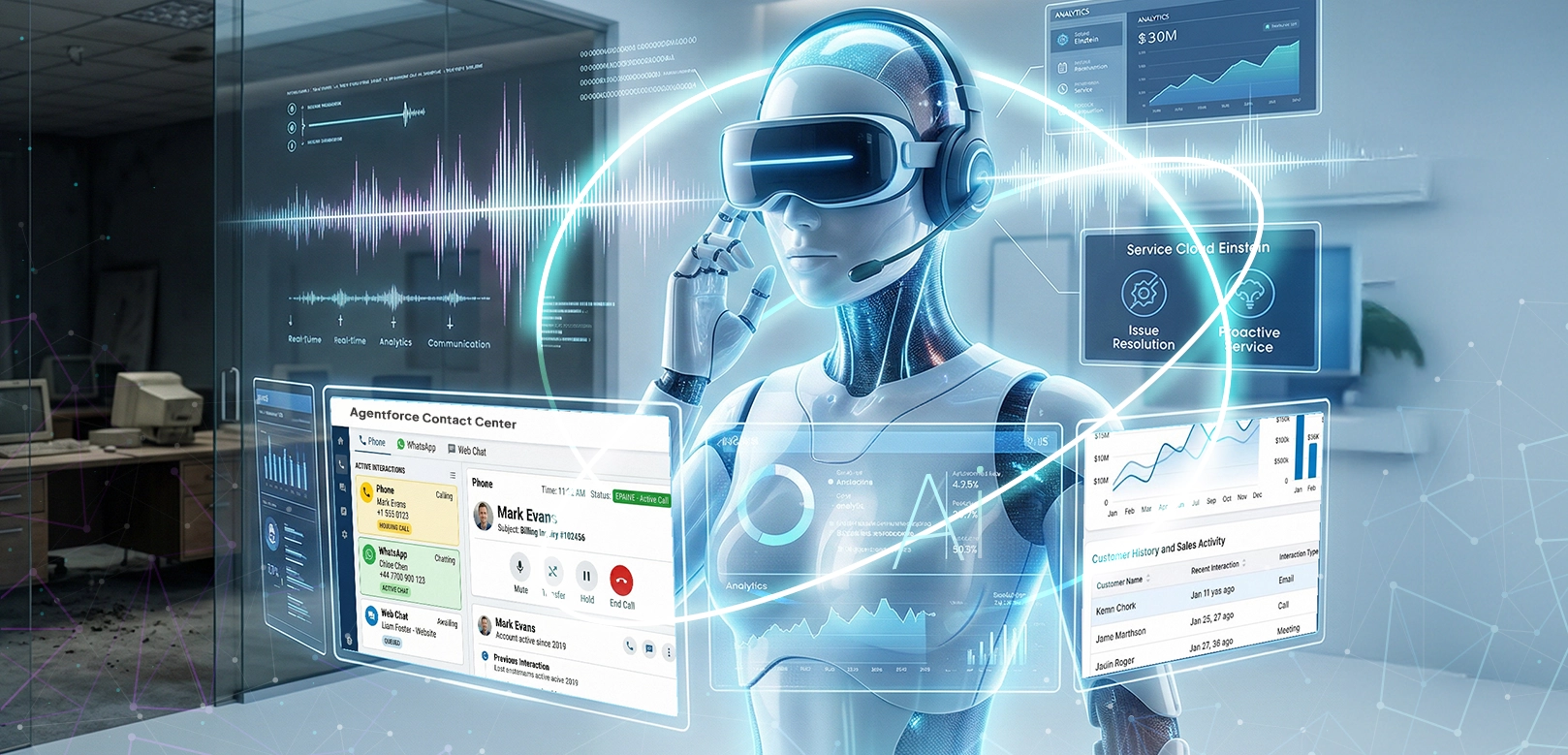
Introduced as the next-gen Service Console, Agentforce 360 is Salesforce’s blueprint for unifying the agent experience. The platform has been designed keeping in mind the need to improve both customer experience (CX) and agent experience (AX).  

What is Agentforce 360? 

Agentforce 360 is not merely an updated user interface; it represents Salesforce’s fundamental shift toward AI-powered, unified service delivery. 

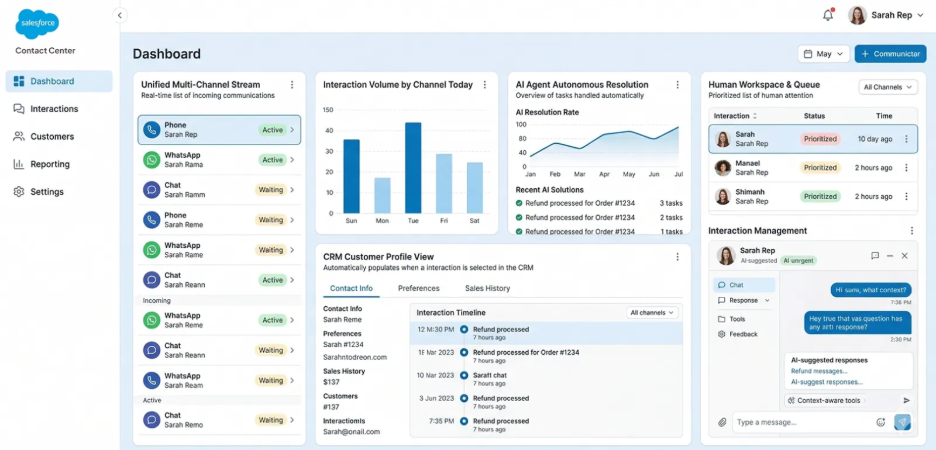
Agentforce 360 is the formal name for the completely re-imagined, next-generation Service Console built by Salesforce. Its primary goal is to centralize every tool, data point, and AI capability an agent needs into one cohesive workspace. 

Salesforce’s vision for next-gen AI service is simple: to transform every service agent into a super agent. This means using Data Cloud and generative AI to surface perfect, context-aware information before the agent even needs to search, thereby shortening resolution times and increasing agent satisfaction. The vision is to make customer service predictive, personalized, and efficient enough to dramatically increase Customer Lifetime Value (CLV). 

Difference from Traditional Service Console 

The traditional Service Console, while effective, largely acted as a single-view container for existing tools and data tabs. Agentforce 360, by contrast, is a unified workspace that actively uses AI to orchestrate the workflow. 

FeatureTraditional Service ConsoleAgentforce 360 (Next-Gen)
Agent FocusMulti-tasking, manual data gatheringFocused resolution, workflow automation
Data SourceSeparate related list views, manual searchSingle view powered by Data Cloud
SummarizationManual text entry by agent
AI-generated summary/wrap-up
GuidanceStatic scripts and knowledge articlesReal-time agent coaching

Key Components of Agentforce 360 

Salesforce Agentforce 360 is made of various capabilities, specially crafted to maximize output for agents while minimizing friction. 

  1. Unified Workspace: This is a single, customizable screen and a foundational component that unifies all information from different sources into one contextual view. 
  1. AI-Generated Insights (The Service GPT Layer): Agentforce 360 has got the power of generative AI that helps to process raw customer data, real-time sentiment, and chat history to provide reps with quick answers and suggestions for the next-best actions. 
  1. Automated Workflows (Intelligent Automation): This helps to automatically trigger repetitive, multi-step administrative tasks according to the conversation history, thus helping agents to focus on the problem and reduce Average Handle Time (AHT). 
  1. Real-Time Agent Coaching: AI maintains a constant monitor over any conversation, chat or voice, helping agents with instant guidance. It can help with knowledge articles, suitable tone, or compliance reminders.  
  1. Predictive Case Routing: Salesforce Agentforce 360 is backed by the power of AI and machine learning, which enables it to access historical data and real-time sentiment to route the case to the most suitable agent with the needed skill set. 

Strategize your move to the next-gen console now.

Why Salesforce Launched Agentforce 360 

The launch of Agentforce 360 is not a spontaneous upgrade; it’s a strategic response to overwhelming pressure from market dynamics, evolving customer behavior, and technological maturation. Salesforce recognized that the existing Service Console model was simply not equipped to handle the demands of the modern, digital-first contact center. 

1. Rising Customer Expectations for Instant Support 

Today’s customers have zero tolerance for waiting. Thanks to the convenience offered by giants like Amazon and Google, the expectation for service is now instant, accurate, and available 24/7 across any channel. When a customer reaches out, they expect the agent to already possess full context and history. This “now” culture demanded an AI-powered system that could instantly surface context and accelerate resolution, rendering the legacy, manual-search model obsolete. 

2. Surge in Digital Channel Volume 

Service interactions can occur over multiple digital channels, whether it is SMS, chat, social media, call, or WhatsApp, making it different for service agents to keep track of all channels simultaneously. They need a promising tool that can automate conversation summaries across all channels and provide agents with response suggestions in real-time. This is the kind of Salesforce AI automation that traditional service consoles miss out on.  

3. The Critical Need to Reduce Agent Burnout 

Agent attrition is one of the single biggest costs facing contact centers. When agents spend half their day manually searching systems, logging data, and summarizing cases (the “swivel-chair” effect), stress and burnout skyrocket. Agentforce 360 was launched with a massive focus on Agent Experience (AX) that helps to automate administrative burdens using AI-driven workflows, significantly boosting job satisfaction and reducing costly turnover. 

4. The AI Evolution and the Agentforce Ecosystem 

The maturation of Generative AI provided Salesforce with the necessary technological muscle to power this new console. The Agentforce ecosystem leverages the Data Cloud for unified data storage and the Einstein GPT layer for intelligence. This combination allows for capabilities that were previously science fiction, such as auto-summarizing entire chat transcripts or generating complex code snippets for technical support. Salesforce built Agentforce 360 specifically to maximize the utility of these new AI capabilities directly within the service workflow. 

Want to ensure your AI investment delivers measurable ROI and agent satisfaction?

Across industry sectors like Retail, BFSI, and Healthcare, regulatory demands and consumer expectations are forcing companies to adopt AI-native service models.  Salesforce Agentforce 360 is Salesforce’s definitive statement to the market, ensuring their customers can lead this trend by deploying a solution designed from the ground up to be intelligent, predictive, and adaptable to rapidly changing industry compliance requirements. 

Essential Features of Agentforce 360 

Agentforce 360 is built upon a matrix of features that leverage Salesforce AI automation to solve the critical pain points of the modern contact center. These capabilities transform the console from a passive data viewer into an active, intelligent assistant for the service agent. 

1. Core Intelligence and Guidance 

The intelligence layer is the heart of Agentforce 360, providing real-time, context-aware assistance throughout the interaction: 

  • AI-Driven Salesforce Agent Assist: This feature helps in maintaining a track of the conversation history and the live chat, providing agents with prescriptive guidance in real-time. It helps agents with instant replies and a concise summary of customer issues, enabling them to analyze the issues and provide a quick resolution. 
  • Knowledge Recommendations: This feature helps agents by providing suggestions of relevant articles whenever they have to solve a case, saving them spending time searching through massive knowledge bases.  
  • Conversation Intelligence: This is a crucial monitoring tool provided by Agentforce 360. It is powered by NLP to quickly detect customer tone and sentiment in real-time, enabling agents to access the right cues to manage situations during chats or calls with customers. 

2. Workflow Automation and Efficiency 

The idea behind these features is to cut repetitive, manual tasks that end up in agent burnout. Here are some of the key features: 

  • AI Case Classification & Auto-Fill: Whenever a new case is created, AI predicts key case fields and classifies them according to the kind of product, service, department, or urgency. It then auto-fills all the necessary data points required by the agent, thus boosting case routing speed while eliminating the need to manually enter data points. 
  • Automated Case Summaries + Next-Best Actions: AI instantly monitors any interaction with customers and automatically generates a concise summary of the conversation and customer issue along with providing the agent with suggestions for the next best actions, helping them to act faster on cases.  
  • Smart Macros + Flow Automation: This feature enables agents to trigger complex workflows just with a single click. These intelligent macros help agents by automating tasks like updating customer data across different Salesforce clouds, saving them time for resolving customer cases. 

3. Unified Workspace and Predictive Service 

The workspace brings everything together, making data access immediate and service delivery strategic: 

  • Intelligent Workspace with Unified Customer 360: This acts as the single dashboard in which data from Commerce Cloud, Service Cloud, and Data Cloud is consolidated, thus providing a unified view. This helps to reduce tab fatigue, enabling agents to get complete context of cases within seconds. 
  • Omni-Channel 2.0: This is the next-gen routing, backed by the power or AI, unlike the skill-based routing, helping agents by dynamically routing cases based on several predicted metrics like agent load and agent that has the highest likelihood to resolve a case. 
  • Agentforce Bots (AI Agents): Salesforce Agentforce 360 has brough these powerful self-service bots with the capability to handle bulk of repetitive, tier-one queries. This helps in deflecting case traffic away from human agents, freeing them to handle more crucial and high-priority cases. 

Get the complete blueprint for unifying your service data with AI.

How Agentforce 360 Improves Agent Efficiency 

Agentforce 360 helps agents to deliver proactive customer experience through several tangible improvements: 

  1. Significant Reduction in Handle Time (AHT): Agentforce 360 has enabled agents to work with automated case summarization, providing them with a quick brief on customer issues, thus resolving issues quickly and achieving a potential reduction in Average Handle Time (AHT). 
  1. Faster Onboarding: It is no longer required to manually train new agents. Having quick access to real-time coaching and knowledge articles can enable new agents to get onboard quickly and meet performance targets. 
  1. Dramatic Improvement in Data Accuracy: Accuracy can take a serious hit when agents have to manually type summaries and case fields. Agentforce 360 features like Automated Case Summaries and AI Case Classification help to ensure the data is consistent and accurate across the system. 
  1. Higher First-Contact Resolution (FCR): Agents can now have quick access to all customer information and Knowledge Recommendations whenever they need to resolve cases. This helps in the percentage boost of first-contact resolution.  

The Era of AI-Powered Service Has Arrived 

With Agentforce 360, Salesforce has declared the end of manual, time-taking, and fragmented customer service. The platform is not just another service console, but a much-needed strategic shift that can make the service team intelligent and proactive. It’s a big move from manual support operations to AI-powered, guided case resolution. 

While Agentforce 360 provides the blueprint for this next-gen experience, its full potential is realized through expert strategic deployment. A specialized partner ensures these proprietary AI pipelines are configured for maximum accuracy, orchestrates complex automated flows, and provides the essential change management framework necessary to ensure agent adoption, guaranteeing that your investment translates directly into measurable ROI. 

How a leading global telecom firm cut AHT by 52%?

Agentic Enterprise: Salesforce’s Vision for AI at Work in 2025 

This year has definitely become a pivoting point for business transformations. We have now gone ahead of task automation and reached the stage of intelligent, autonomous systems. This is the core of AI transformation, demanding a fundamental redesign of how work gets done. But why the sudden, widespread shift? Because traditional automation can’t handle complexity or decision-making. Companies are now moving toward agentic workflow automation because they offer true scale and proactive intelligence. Leading this monumental movement is Salesforce, who has defined the architectural model for this new reality as the Agentic Enterprise.  

The vision is more than just product features; it’s the realization that AI must be grounded in trusted, unified customer data and built to collaborate directly with people. With the launch of the Agentforce 360 platform, Salesforce is providing the blueprint for how companies can seamlessly connect humans, intelligent agents, and data in one trusted ecosystem, making the Agentic Enterprise the default operating model for growth and customer success in the modern era. 

What Is an Agentic Enterprise? 

When we say Agentic Enterprise, we simply think of a business that uses AI for their operations, but it is actually way more than that. It’s a fundamental and strategic shift by businesses in how they get their work done.  

AI agents are becoming highly popular as they have the capability to reason, adapt, and act by themselves. AI agents are better than automation as they can make decisions by evaluating the data and take relevant action to get the needed outcome. Considering the agentic enterprise model, AI is the key partner in it. The goal of this model is to streamline operations and boost efficiency, enabling employees to focus on more important and complex tasks. 

The Shift from Prompt to Autonomous Workflow 

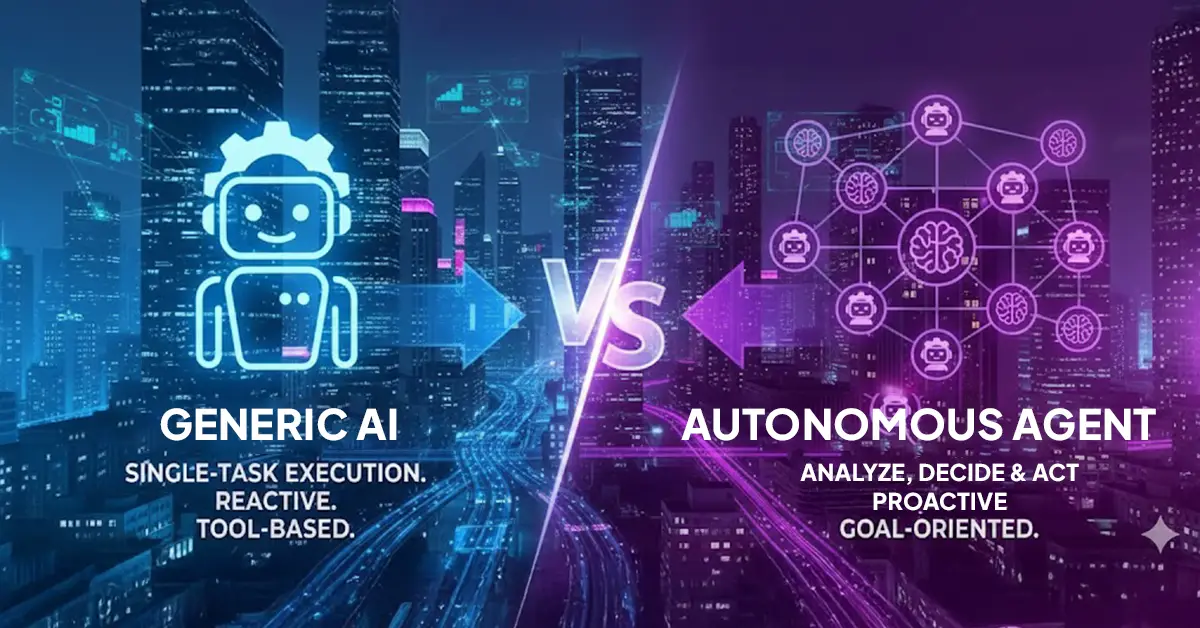
Traditional generative AI for business is prompt-based. A user types a command, and the AI executes that task. The Agentic Enterprise is more than that. 

It relies on Autonomous AI Agent, which is actually a software built not just to respond to a prompt, but to pursue complex goals, break them down into multi-step actions, and perform end-to-end tasks. 

Start building your autonomous, revenue-driving workforce today.

 
Machine-Driven Decisions with Human Oversight 

A key characteristic of this model is human-AI collaboration. The AI agents are given the authority to execute tasks and make minor, high-velocity decisions (such as when to send a follow-up email or assign a lead). This is the machine-driven decision-making component. 

However, humans retain control and oversight for strategy, ethics, and complex exceptions. They set the high-level goals, approve final creative materials, and monitor the agent’s performance through centralized dashboards. The human workforce shifts from performing repetitive tasks to becoming supervisors and strategists, leveraging the agentic workforce for scale and speed. This collaboration ensures that productivity soars while maintaining trust, compliance, and strategic direction. 

The Real Problems Businesses Face Today 

Before we move ahead to read what Agentic Enterprise has to promise business, let’s think of the current reality of the working sector. Despite so many digital transformation efforts, many firms still struggle with inefficiencies and less productivity. Here are some of the real-world challenges that you might relate to. 

1. Repetitive Manual Work is Slowing Teams Down 

The concept of automation isn’t always as effective as we expect. There are times when automation only picks easy tasks, leaving out the complex and tedious ones. The result is the same; sales reps are stuck with admin tasks. This not only leads to the waste of time, but also cause lost revenue and poor customer experience. 

2. Fragmented Data Across Systems 

It has become quite common for firms to rely on multiple applications to manage their work, but sometimes intead of helping, it just ends up in data sprawl. As a result, they fail to achieve a unified single source of truth that can be followed by the team members. Due to this, whenever a sales rep tries to access customer data, chances are he won’t be able to access accurate and update information. This would lead to delays in decision making and would also affect customer experience. 

3. Too Many Tools, Not Enough Unified Automation 

Tools used these days are just a stack of specialized apps that don’t actually speak the same language. Teams have to constantly work through switching screens, sometimes working on CRM, ERP, email, or Slack, which consumes a lot of time. These isolated systems never provide teams with a unified layer of automation, causing bottlenecks to take proactive actions. 

4. Teams Want AI, But Can’t Implement It Safely 

It has become a universal need for firms to work with AI but actually implementing it can be a daunting task. Most organizations don’t have internal skills to safely implement and customize AI models. Also, they lack an understanding of security and governance that can affect sensitive customer data.  

Salesforce’s Vision: The Era of the Agentic Enterprise 

Salesforce is not just participating in the AI race; it is defining the track. The company’s vision for the Agentic Enterprise is rooted in the belief that AI must be integrated directly into the flow of work, fueled by trusted data, and governed by enterprise-grade security. This strategic approach ensures that AI is not a separate project, but the operating system of the entire company. 

What Salesforce Means by “AI Agents” 

For Salesforce, an AI Agent (powered by the Agentforce 360 platform) is far more capable than a simple chatbot or script. These agents are intelligent, proactive entities designed for the CRM ecosystem. They are distinct because they have three core capabilities: 

  1. Reasoning: AI agents have the ability to analyze huge volumes of data (structured or unstructured) with the help of Salesforce Einstein 1 platform. 
  1. Memory: These agents have a record of all previous decisions and interactions through which they learn and take relevant decisions. 
  1. Action: These agents have the capability to take over autonomous tasks across different sections like sales or marketing, executing accurate end-to-end processes. 

Want to see Agentforce in action?

 
Unified Data Powering End-to-End Automation 

Unified data is the foundation of the Agentic Enterprise model. The unique advantage of Salesforce lies in Data Cloud, which helps to unify data from every source, whether it is in Salesforce or out of it. 

Unifying all the customer data is necessary for organizations as it helps to ensure that every AI-powered decision is grounded, accurate, and in accordance with the customer information. When an AI agent is assigned a task, it analyzes data from this unified pool of information and takes necessary actions to run end-to-end automation.  

AI-Driven Decisions with Einstein 1 

The intelligence layer in Agentic Enterprise is provided by Salesforce Einstein 1 Platform. It is embedded with different AI models supported by Salesforce, which helps in taking AI-driven decisions. Instead of using traditional and generic logic, Einstein 1 works on the grounds of generative AI for business and decides how the goal can be achieved on the basis of past successes, real-time data, and probability. 

How Salesforce AI Agents Actually Work 

The power of the Agentic Enterprise lies in its ability to transform complex business goals into executed outcomes, moving from static data logs to dynamic, autonomous action. Salesforce achieves this through the Agentforce platform, which acts as the operating system for this new digital workforce. 

Autonomous Task Execution and Multi-step Workflows 

Unlike simple automation that stops after one action, Agentforce-powered AI agents are designed for Autonomous Task Execution. This means you assign them a high-level objective, and they determine the necessary sequence of steps, reasoning through dependencies and executing them without human input. 

This capability is essential for Multi-step Workflows that span multiple systems and departments. For example, a single goal like “Onboard a new high-priority customer” can trigger an agent to handle the entire chain: 

  • Conversation Handling: Respond to the initial inquiry in Slack or Service Cloud. 
  • Case Creation & Data Update: Automatically create the onboarding case and update all relevant customer records in the CRM. 
  • Scheduling: Find a suitable time with the customer and schedule the implementation manager. 
  • Approvals: Initiate an internal approval process for discounted professional services. 
  • Follow-Ups: Schedule and send personalized follow-up emails, dynamically adjusting the tone based on the customer’s response history. 

Agentforce: The Enterprise Agent Platform 

Agentforce, the dedicated AI Agent Platform by Salesforce, is the power behind intelligent collaboration. Here are all the tools it provides to enable agents to work on scale. 

  • Agent Builder: It is a low code tool that helps developers and admins to create agents and grant them permissions to work on needed processes across different Salesforce clouds. 
  • Skills Library: This catalog consists of pre-built process flows and actions for agents to work with. 
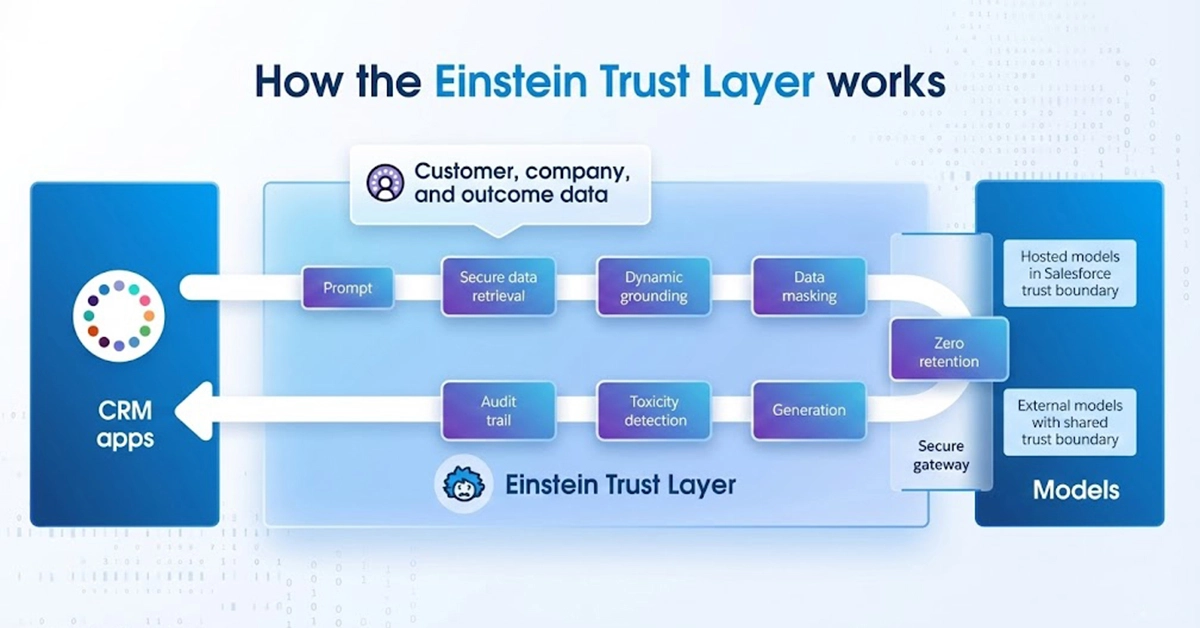
  • Guardrails and Safe Execution: This is Salesforce’s trust layer. It involves security and governance rules, which are embedded directly into the agent’s logic. This helps to ensure agents don’t take any unapproved actions in violation of data privacy policies. 
  • Monitoring and Optimization: Agentforce provides a central Command Center, so leaders can observe the performance and efficiency of every deployed agent. 

Get the blueprint for transforming it into proactive AI actions.

 
The Central Role of Salesforce Data Cloud 

No AI agent can act intelligently on fragmented, inconsistent data. This is why integration with Salesforce Data Cloud is non-negotiable for the Agentic Enterprise. 

Data Cloud ingests, cleans, and unifies all customer data—from website clicks to transactional history—into a single, trusted source. The AI agents rely on this foundation: 

  • The agent reads data (e.g., discovering a customer hasn’t bought a specific product yet). 
  • It makes suggestions (e.g., recommending a personalized upsell campaign). 
  • It updates records (e.g., logging the interaction and changing the lead score). 

This continuous cycle of reading, reasoning, and writing ensures that every autonomous action an agent takes is accurate, relevant, and directly aligned with the company’s single source of customer truth. 

How to Prepare Your Business for an Agentic Enterprise Model 

The Agentic Enterprise isn’t something you install overnight; it’s a future state you architect toward. Simply follow these five actionable steps to prepare your organization for the autonomous world and move towards becoming an Agentic Enterprise. 

Step 1: Fix Data Quality First 

AI agents are only efficient when they are working on a solid foundation of clean data. If your data is incomplete or fragmented, it will end up in agents making poor decisions. 

When you plan on deploying AI workflow automation, make sure to work on data cleansing and unification, ensuring you have a single source of accurate data. Work with Data Cloud to unify all your customer data, so all autonomous processes will be grounded on accurate data. 

Step 2: Identify Repetitive, High-Volume Tasks 

Many users make the mistake of automating all processes at once. Make a small start and automate such processes that help you save more time. Consider going for repetitive and time-consuming sales or service tasks. 

Automating simple and predictable tasks like case routing or lead qualification process can immediately free up your most valuable human assets for strategic work. 

Step 3: Implement Guardrails Before Deployment 

Trust is paramount when you are considering working with autonomous AI. This is why it is highly necessary to establish guardrails. These are the security and governance rules that define what an agent can and cannot do. 

Define strict permissions for your AI agents. What data can they read? What approvals must they obtain? Salesforce’s Agentforce platform provides these built-in governance features to ensure agents operate within your compliance boundaries, making safe execution a non-negotiable part of the process. 

Step 4: Upskill Teams for AI Adoption 

When you work with an Agentic Enterprise model, your role shifts from task performer to strategist. Your employees need new skills to manage, monitor, and optimize agents rather than just interacting with the CRM. 

Launch internal training programs focused on “agent management” and “prompt engineering goals.” You should encourage team members to learn to trust their new digital partners to achieve successful AI adoption. 

Step 5: Partner with a Certified Salesforce Consultant 

When moving to an Agentic Enterprise model, you need to focus on making complex decisions related to security, data structure, and process re-engineering. That’s where having a certified expert can help. 

Consider bringing a certified Salesforce consultant onboard who specializes in Agentforce and Data Cloud. They have the relevant knowledge and experience to accelerate your roadmap, ensure your architecture is scalable, reducing risk and maximizing your time-to-value. 

Agentic Enterprise: Your Future Operating Model 

Becoming an Agentic Enterprise shouldn’t be seen as just an upgrade, but a strategic move that can help a company grow in a competitive ecosystem, where customer experiences should be the prime focus. It’s time to move away from fragmented, manual processes towards a unified and intelligent system. 

Salesforce’s vision, powered by Agentforce 360 and grounded in Data Cloud, offers the only roadmap that connects this autonomous intelligence directly to your most valuable assets: your customer data and your CRM. By adopting this model, you don’t replace your people; you empower them to focus on strategy, relationships, and innovation, while the agents handle high-volume, cross-functional execution. 

The time to prepare is now. The early movers who commit to cleaning their data, implementing smart governance, and training their teams will secure a massive competitive advantage. Don’t let your business be defined by the old era of task automation. Embrace the future where every interaction is intelligent, every decision is informed, and every employee is amplified. 

Want to know Agentforce capabilities that orchestrate complex tasks?


logo WhatsApp Live Chat