
Talk to Us

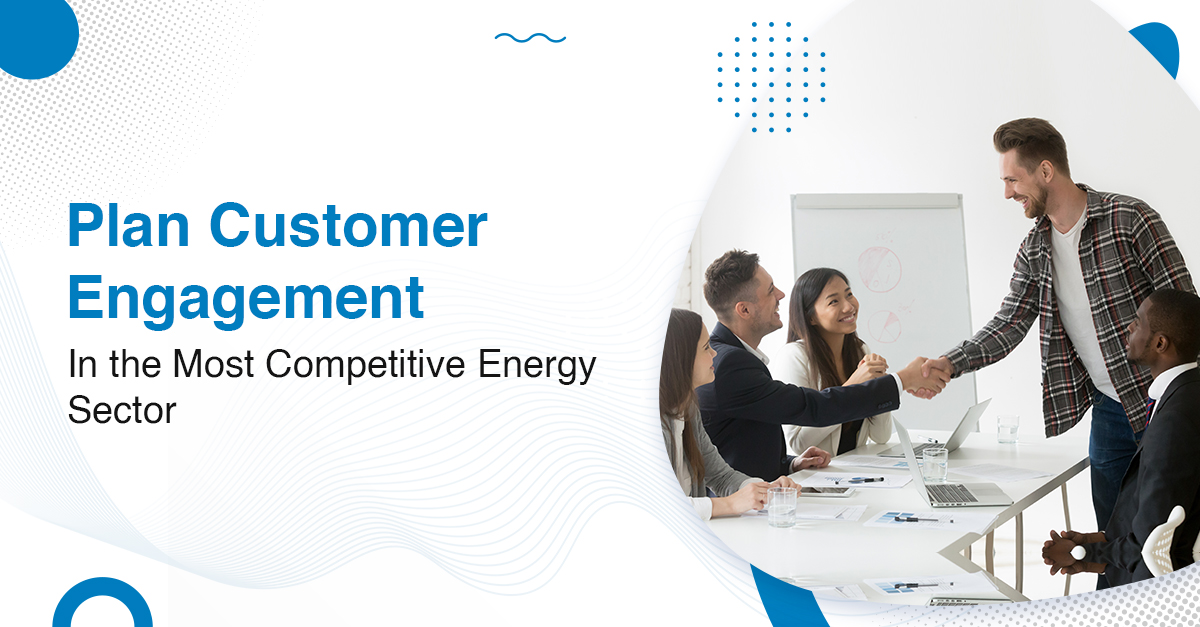
Plan Customer Engagement In the Most Competitive Energy Sector

Energy customers always to reach out their utility provider first whenever they have a question or complaint about the service. But the landscape today is rapidly changing, making customer engagement more important than ever for the energy sector.

There are utility providers who still handle the products and infrastructure for the latest innovations. Such reps always have their hands full supporting an increasingly distributed infrastructure.

It has become critical for utilities to identify and facilitate such opportunities to build and maintain the utility customer experience. 

Ways Utilities Can Plan Customer Engagement

Here we’ve listed three ways utility providers can conduct efficient customer engagement and maintain their trust as competition heats up:

1. Diversify Offerings with Non-Commodity Products

The demands of consumers are advancing with each day. They now require smart home products that can manage everything from air temperature to home security. This trend is coinciding with rising consumer interest in generating their own power. 

Consumers are essentially managing a growing number of energy supplier relationships, which are even outside of their utility provider. It is common to wonder: why can’t this be simpler? 

The good news is utilities are now working on gathering data that can be used to tailor solutions for customers, considering the way they live and work. 

For example, some utility providers are already delivering energy, broadband, smart home, and even insurance in just one easy-to-manage subscription.

That’s how energy companies are able to quickly configure and quote a wide range of products and services for delivering superior customer service and deepening relationships.

2. Work on Renovation

As customer preferences keep evolving and expanding, energy providers should stay more empowered to enhance their offerings. This is the reason providers are digitizing and rethinking their core functions so they can deliver a customer-centric experience.

Although this may sound like a long and risky project to reconstruct the entire system, utilities don’t have to completely rip and replace their legacy systems to get the system renewed and advanced.

What’s better is that they can go for a step-by-step approach to achieve digital transformation. Salesforce for energy offers purpose-built tools layered across existing technology that providers can use. 

This approach of renovating their system and operations can unlock new functionalities and further enhance the utility customer experience. It will help to:

  • Give employees a single and unified view of the customer data
  • Empower customers with guided self-service options
  • Streamline sales and service interactions

3. Achieve Seamless Customer Interaction Across Every Channel

Utility providers are aware of the fact that convenient processes like automated bill pay and mobile account access are table stakes. 

A report states that 62% of utilities consider improving the customer experience as their top priority. Still, delivering seamless, personalized experiences channels tend to take the center stage. 

Salesforce allows the energy service provider to connect with customers through multiple channels, delivering mobile and voice experiences.

Even better, with connected internal systems, the agent can be aware of the question the customer is really asking and quickly provide a resolution to it.

Enhance Customer Engagement for Better Utility Experience

Customers already depend on utilities for efficient electricity or oil and gas facility. But that’s not enough. Utilities need to embrace digital transformation to stay competitive in a world where customers want to have fair access to benefits and have a hand in creating a more reliable and sustainable energy future.

That’s where our certified Salesforce consultants can help you out. Reach out to us to learn what more we can do for your energy business. 

Automation to Advanced Architecture: Top Insurance Technology Trends

Web-enabled machines, self-driving cars, drones that capture data- these are only a few innovations that have been changing the way people are working and taking insurance. All these technologies are helping insurance companies to bring in new customers using insurance technology trends that could keep customers happy. 

But what about legacy insurance firms? How can they uplevel their operations to beat their competitors that are more agile?

The truth is that the business and technology strategies are the same for insurance companies of all levels. But the good news is companies with legacy systems don’t have to begin from scratch to work with the new technology. That’s where Salesforce for insurance can be helpful.

Top Insurance Technology Trends These Days

Let’s have a look at the insurance technology trends that are changing the game in the industry.

1. Offer Data-Driven Coverage

Gone are the days when insurers simply trusted the accuracy of using the information provided by customers. Today, they use telematics technologies like GPS and onboard diagnostics to get hold of accurate data.

From having access to real-time maintenance alerts to prevent unnecessary repairs to maintaining driver safety scorecards to promote worker safety, telematics is transforming the insurance business.

Insurers should take this as a wake-up call. Using datasets generated from drone images or carriers for better coverage can take their service to the next level. Cloud technologies and 5G networks work together with platforms like Salesforce, with the industry-specific clouds that can make it all possible.

2. Architecture That Works Well For Old Insurance Systems

Many insurance companies make the mistake of investing large sums of money into systems that are aging and require extensive customization. Ripping the system out will not just be expensive but also be exhausting and time-taking.

The good news is that you don’t need a rip-and-replace method for your insurance company— or even wise. A modular approach can work for you.

To start, consider your business aspects that require to be connected more efficiently. Think about your distributors if they are working seamlessly with underwriting? 

It is possible that your newly-remote back-office employees require a new solution. Perhaps they need a cloud-based platform that could allow them to manage their workflows better, seamlessly share information with partners, and easily surface actionable insights. 

3. Uplevel Automation Capabilities

It has been a long time since insurance carriers have been investing in automation to speed up their back-office functions like payment processing. But with the evolution of AI’s capabilities, they should look more for predictive analytics that can help disrupt service and underwriting.

For example, an insurer has to submit a standard policy application to underwriting. The agent does not have to wait for days to get the process going as automation makes it faster. AI-powered automation enables nearly instant responses.

In cases where AI can’t help to give a quick decision,  the agent’s inquiry will be routed to a human representative. 

Adopt Insurance Technology Trends for Better Policyholder Experiences

Salesforce is the platform that can help you and your customers at every step in the journey. Whether it’s about assessing risks, giving support agents a 360-degree view of customers, or finding the best distribution partners. 

Uncover new potentials for your insurance company with Salesforce. Contact our certified experts to know what works for your business. 

A Guide for Manufacturers Considering Direct To Customer (D2C)

Manufacturers can make the most of the exciting opportunity to augment distributor networks with their own digital commerce site. Choosing direct to customer (D2C) approach helps build long-lasting relationships with brands that customers crave. 

And when done right, D2C can help to boost business growth. Studies show that more than half of people who visit a manufacturer’s website, intend to make a purchase. But before going direct-to-consumer (D2C), you should know that it comes with a lot of questions as you shift focus away from a strictly B2B model. 

Tips for Manufacturers Going Direct to Customer

Let’s learn about some important tips that could help manufacturing companies make an easy move to the Direct To Customer (D2C) model. 

1. Complement Existing B2B Partnerships

Do some research to find potential channel conflicts and think about ways that could help you minimize them. It is important that you communicate your goals and D2C strategy with existing distribution partners ahead of time so you can strategize it all together. It will help to open the door to working together in new ways, gathering great ideas to reimagine channel management strategies, and building new partnerships.

When going D2C, these approaches can be helpful to you:

  • You can establish a market development fund
  • Work on having a special product line available on your site for purchase with access to selected partners
  • You can offer the exclusive ability to discount from the manufacturer’s suggested retail price (MSRP) to certain distributors
  • Emphasize more on adding relevant content on your D2C sites. You can include a store finder or detailed product information that can help consumers make purchase decisions easily.

2. Follow a Customer-Centric, Brand-First Approach

It is the content and experiences that help to bring consumers closer to your brand. Every measure you take should support the consumer journey. From discovery through loyalty, you should follow regular, personalized engagements that resonate with customers.

Your D2C channel will act as your hub to conduct engagements. You have to record and manage detailed product histories for each customer, descriptions, and how-to videos that could be helpful for customers.

3. Deepen Relationships with Continued Engagement

The customer expectations keep changing, you need to make continuous efforts to meet those. Keep Innovating continuously so your engagements meet consumer and market needs in a better way.

  • Content: Make sure to keep delivering a steady stream of high-quality content on your social, website, email, and SMS channels. You can choose to mix product imagery with content that positions your brand as a trusted authority. This can include tutorials and how-to videos.
  • Customer service: You can choose to empower consumers by using self-service options. It could help customers find answers to their common questions by themselves through FAQs and chatbots. If any case is too complicated and can’t be resolved by the customer, the bot will escalate it to an agent for necessary support.
  • Personalization: You can also leverage artificial intelligence (AI) to personalize e-commerce experiences at scale. AI will help you to determine the behaviors of each consumer and shows them relevant content. This will increases the chances of them making a purchase.

Go Direct to Customer with Certified Salesforce Experts

Moving to the D2C approach van be a crawl-walk-run approach but it will all be worth it when it will keep bringing more value to the company. Just plan the Direct to Customer or D2C strategy right with certified experts. 

Safely make the transition with our certified Salesforce professionals. Get in touch with our experienced Salesforce professionals to learn more about our services for the manufacturing industry. 

Create a Data Culture in Your Organization to Plan Data-Driven Strategies

For any company, data is the key to success. But for that, you need to know how exactly you could use all that data that you had been collecting. Even for senior leaders, consistently using data to make decisions could be difficult. This is where they need to work on instilling a robust data culture across teams to make that happen. It might sound easy but it’s definitely not.

How you can build a data culture in the company and cultivate it? How employees in different departments and on different levels can make good use of the data? These are just a few of the questions that can come to your mind when it is about creating a data culture. 

How You Can Work on Creating a Data Culture in Your Company

Let’s give some emphasis on how you can actually work on creating a culture in your organization that revolves around data. 

1. Normalize Working with Data-Driven Insights 

Always consider sharing these insights generously with partners, clients, and other third parties. This will help you to instill a transparent and outcome-based way of working in the organization. But that doesn’t mean you have to stand still with it. 

Make sure you constantly evolve your thinking. It is important that you don’t shy away from evolving the way you have been approaching and using data. You can always use AI-enabled Salesforce Einstein to smartly capture data, access it, and use it.

When you’ll be able to embed this into different and effective ways of working for everyone, you’ll achieve remarkable growth using data-driven insight the way it should be used.

2. Ask the Right Questions

Every company wishes to have a data culture, but what’s unfortunate is that not enough people are asking the right questions about data. Why do you want to have a data culture in your organization? What are you trying to answer or achieve with data? What business problems can a data culture help to solve? 

Teams should sit together and can probably come up with different reasons data matters to your organization, which could be different for different departments. No wonder taking action on those reasons might take a lot of time, but what’s necessary is to have the foundational questions that people make the mistake of skipping.

3. Use the Right Tools

Spreadsheets are still most people’s tools for data. And that’s insane. Try to introduce your team to a data visualization tool, for example, Tableau, and show them how easy it is to build a dynamic interactive dashboard from any data source.

It is unfortunate that people don’t have a clue how easy this is. Just try it out and you’ll know it’s a far better alternative to spreadsheets to manage your day-to-day records.

 4. Work on Training

Develop a company-wide data training curriculum. It is important to set a training curriculum to educate teams on new technologies and ways to use data wisely. 

The training has to be thorough and should include a session in which all can discuss their queries and get a better understanding of the data culture. You need to dedicate some time to set up a curriculum that’s quickly accessible and easy to understand by employees in your organization.

Transform to a Data Culture for Business Growth

The points above made it pretty clear how important it is to have a data culture in your organization and how you can actually work on having one. 

Having such a culture would improve your hold on data, giving you an understanding of how to make better decisions using it. Try to inculcate it and if you need any help, contact our team of Salesforce consulting services for better assistance.

How to Achieve Faster Salesforce Adoption

Implementing Salesforce is all fine but its real value will be witnessed with Salesforce adoption. After the implementation, the next you have to think of how end-users adopt and use Salesforce in a way that’s valuable to your organization.

Salesforce adoption relates to setting your org in a way that it’s intuitive, easy to use, and relevant to the organization and users. It’s all about how you’ll maximize your investment in Salesforce while achieving more value for your business. 

How to Enable Faster Salesforce Adoption

If your goal is to drive adoption and help your team use Salesforce for unlocking business value across your company faster, the best way is to get help from a reliable Salesforce consulting service and understand all about Salesforce with experts.

Meanwhile, let’s have a look at some points through which you can work on improving Salesforce adoption within your organization.

1. Get Salesforce Experts for your Team

The foundation for your success will be built when you’ll have professionals who know how to work well with Salesforce. You might hire in-house employees, or better, consider hiring Salesforce implementation services to get along with certified experts. 

The professionals will align with your technical objectives and provide you with personalized roadmap guidance to make sure you adopt Salesforce smoothly. Having such experts by your side can help to increase adoption by 52%.

2. Access Salesforce Accelerators module on Trailhead

You can always refer to Trailhead to learn how to work with Accelerators. You can easily access quick, personalized work sessions that would help you solve specific Salesforce challenges that you might be facing related to adoption.

You can also consider scheduling an accelerator session to help boost your employees’ productivity and get better results.

3. Get Feedback

Commitment and top-down platform adoption are important. But that doesn’t mean you can leave out bottom-up feedback. This is why it’s critical to show that you understand and respect the needs of your end-users, which could be effectively done through feedback.

Here are some ways through which you can obtain feedback from end-users. 

  • User committees: You can set up groups or committees of users to discuss what’s working, what’s not working, and what changes they might need to work on to access Salesforce easily.
  • User surveys: Consider giving your users a way through which they can provide you with candid feedback anonymously 
  • Adoption dashboards: You can also enable prebuilt adoption dashboards that are available on AppExchange. This is a great way to identify how your users are coping with Salesforce and where they might need some help.

Successful Salesforce Adoption with Certified Experts

Simply following the above-mentioned rules can’t guarantee a successful adoption, but they can prove to be a great help to get started. Try to work on inculcating these points in your Salesforce adoption strategy to save a lot of time and effort, meanwhile quickly learning to work with Salesforce.

What you can do to ensure successful Salesforce adoption is to hire the best Salesforce experts to guide your team. Get in touch with our Salesforce consultants to speed up Salesforce adoption.

Why Salesforce Implementations Fail and How Business Assessment Can Help You Achieve Success

The saying “no pain, no gain” came up a long time ago, but it seems like it was something that goes well for Salesforce implementations and other digital transformations. 

Whether it is Salesforce implementation, culture change, or system integration, anything like this could be a pain when you are not aware of what changes these will bring.

Without a deep understanding of your capabilities, you won’t know what needs to change in your business. And you certainly won’t know how to change. That’s where a value maturity assessment comes in.

When you don’t have an understanding of your business status and capabilities, you won’t get any idea about what things in your business requires to change. And certainly, that’s the kind of assessment for which you need Salesforce consulting service. All you need is certified professionals to conduct value maturity assessments for your business. 

Value Maturity Assessment Before Salesforce Implementations

Before you start implementing Salesforce, you need to define pragmatic and clear business goals to achieve the transformation you seek. This will further help you to identify the challenges and gaps that you could cover with the new system implementation. This kind of assessment is known as value maturity assessment.

Salesforce professionals can help conduct this assessment and help customers create a business value map with the following components:

Business goals: This will help determine the primary outcomes the business hopes to achieve with Salesforce implementation. 

Example: Improve customer satisfaction to achieve a reduction in attrition by 5%.

Business objectives:  It includes the strategies to be followed to achieve your business goals. These objectives should relate to the SMART framework — meaning they should be specific, measurable, achievable, relevant, and time-based.

Example: Provide excellent service and sell 5% more products in industrial widgets.

Business capabilities: It includes the capabilities of your company responsible to drive top-line and bottom-line value from your Salesforce implementation.

Example: Customer journeys with life events.

Success metrics: These are the quantifiable measures used to track progress towards your business goals and objectives.

Example: Average case resolution time.

Which Business Capabilities To Assess for Salesforce Implementations

These capabilities include:

  • Vision and strategy: It will be the North Star of the project that includes your business goals and objectives.
  • Operating model: Your decision-making process and team structure.
  • Governance: This will be the guide that reduces risk and allow your team to move the implementation swiftly.
  • Change management: The programs responsible to maintain and continue to develop new solutions and accommodating new Salesforce updates.
  • Architecture: The Salesforce solution design that the user needs to understand and adopt best practices
  • Business processes and value: Identify and understand the business processes and map them to your Salesforce capabilities to unlock additional value with the implementation.

Get the Right Help for Salesforce Implementation

Implement Salesforce ensuring a successful business assessment to understand how Salesforce work would for your company. 

Get in touch with our experts for reliable Salesforce implementation services and get professionals to thoroughly assess your business. 

How to Optimize Student Enrollment Process Using Salesforce

Senior enrollment management officers in educational institutions and universities often face many challenges to drive institutional and student success. Admission and enrollment time can be the trickiest time with a lot of workload and complex processes to filter applications. That’s where they need a way to optimize the student enrollment process to speed up admission. 

Online learning options, shifting demographics, and many other pressures are responsible for institutions to need for a long-term vision for enrollment. They need a platform that could cut down the complexities involved in the enrollment process. That’s something Salesforce for higher education institutions can help them with.

Steps to Optimize Student Enrollment Process

It is important that an institution should be aware of its key enrollment indicators that could help them realize its strategic plan and vision for success. 

Let’s have a look at the steps that can be followed to optimize the student enrollment process to speed up the operation. 

1. Define Enrollment Cohorts

Enrollment cohorts are the audiences or types of students that are currently studying in a particular institution or university. It even includes the new ones that an institution may seek to enroll in the coming session. 

There is no one-size-fits-all concept when it comes to enrollment cohort. What you need is to define the student type that could help filter applications quicker.

Salesforce allows you with discrete segmentation to filter the applications on the basis of the student type. Also, note that the fewest number of cohorts is best for an institution. Having too many cohorts might lead to diffusing strategies and a lot of confusion in the filtered results.

2. Collect Student Lifecycle Data

The next step for you is to collect data across the student lifecycle for all the identified cohorts. 

You have to bring in all the data together with related to each student’s journey. Salesforce for education helps connect different departments in the institution together, bringing all student information together, whether it is any previous query, student education history, grades, fee status, etc. 

3. Develop an Enrollment Model to Follow

After you have all your data together, you need custom objects to create an enrollment model that your Salesforce will follow. 

Get your Salesforce to filter the selected applicants on the basis of the model you have fixed. You can filter it on the basis of grade, any previous educational qualification, or any other factor.

Salesforce Experts to Optimize Student Enrollment Process

Whether you want to optimize the student enrollment process or start with online classes, Salesforce Education Cloud is your way to get all the information centralized for students and staff. 

There’s a lot that Salesforce can help your educational institution with. You just need the right team to guide you and implement the needed solution. Get in touch to know our services for Salesforce for education. 

logo Live Chat