

Talk to Us

Looking Forward to Sending Mass Emails Through Salesforce? Here’s the Solution

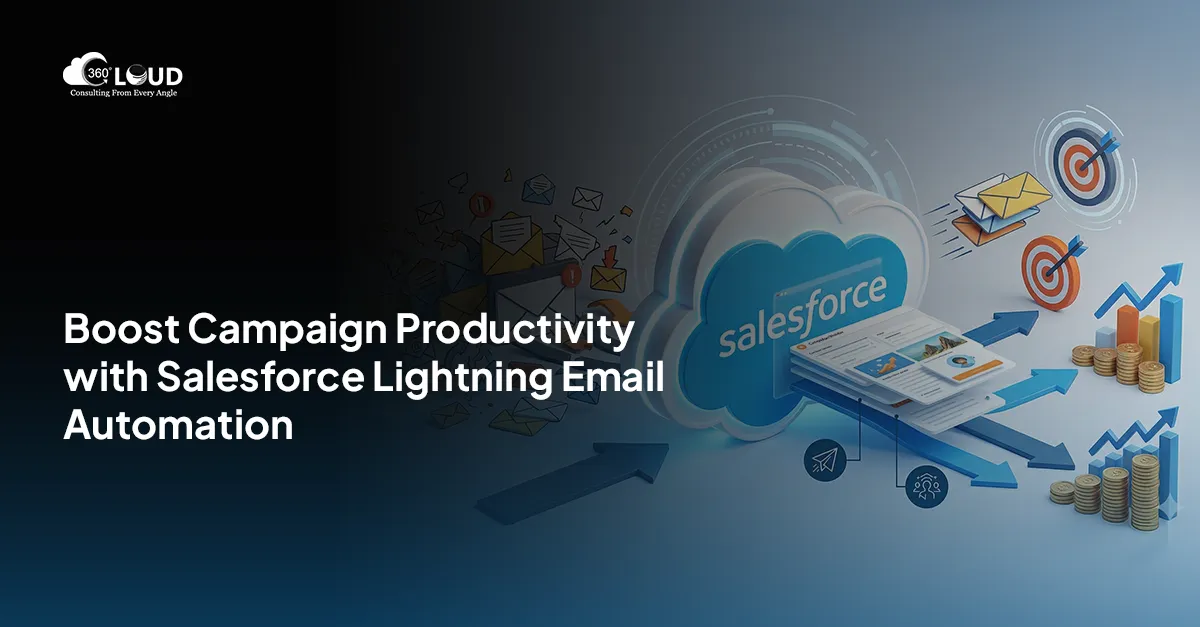
Businesses use email as their most effective tool to keep their audience engaged while generating leads, which eventually lead to conversions. Users who utilize Salesforce as their customer relationship management platform need to understand effective ways to run Mass Email Campaigns within Salesforce without running into restrictions. Salesforce provides built-in mass email functions, yet these features harm efficiency when you’re looking forward to sending mass emails through Salesforce to expand email marketing operations. This article will investigate Salesforce’s ability to distribute bulk emails followed by the 360 Mass Email AppExchange solution for enhanced capability and unlimited mass emailing benefits for business expansion.

Can You Mass Email Through Salesforce?

The answer to this question is yes, but there are some mass email limitations in Salesforce regarding usage. Salesforce enables users to email their contacts, leads, and campaign members, yet the platform restricts daily mail activities according to edition and licensing terms. Plus, Salesforce-native email functions do not support essential features such as automated processes, tailored communication, and real-time tracking capabilities that improve email marketing effectiveness.

These steps represent the necessary factors when deploying the built-in mass email solution from Salesforce:

  1. Email Sending Limits – Each Salesforce org must adhere to a restricted daily email sending capacity, which stands at 5,000 emails according to organizational limitations. The day-to-day limitations imposed on email-sending operations affect those businesses that rely on large-scale email marketing efforts, thus forcing such organizations to search for different solutions.
  2. Basic Personalization – Basic Personalization in Salesforce means you can insert merge fields, yet the mass email function lacks the ability to personalize content beyond simple elements. Businesses experience restricted potential for engagement because they cannot personalize messages through established customer behavior patterns or preferences.
  3. No Advanced Automation – The platform does not provide any advanced automation tools, thus preventing users from performing automatic follow-ups, scheduling drip marketing efforts, or initiating emails triggered by customer engagement. Businesses are compelled to handle their outreach activities manually when they lack automation, thus leading to time-consuming, labor-intensive processes that become burdensome for organizations working with large prospect and customer databases.

These constraints can make it difficult for businesses to execute large-scale email marketing campaigns effectively. This is where 360 Mass Email on AppExchange steps in to revolutionize your email outreach.

Sending Mass Emails Through Salesforce Using 360 Mass Email

360 Mass Email is a Salesforce-native application designed to remove the limitations of Salesforce’s standard mass email functionality. It enables businesses to send unlimited emails, run mass email campaigns in Salesforce, automate workflows, and track results in real time, making it an essential tool for companies looking to scale their email marketing efforts.

Key Features of 360 Mass Email:

  1. Unlimited Email Sending – Unlike Salesforce’s default limits, 360 Mass Email allows you to send an unrestricted number of emails directly from your Salesforce instance.
  2. Advanced Personalization – Customize emails based on customer interactions, preferences, and data stored in Salesforce.
  3. Automated Email Sequences – Set up drip campaigns, follow-up sequences, and event-triggered emails for seamless engagement.
  4. Real-Time Analytics – Monitor email performance with detailed insights into open rates, click-through rates, and recipient interactions.
  5. Pre-Built & Custom Templates – Create professional email templates or customize them to match your brand and messaging goals.
  6. Seamless Salesforce Integration – No need for external platforms—manage all email campaigns within Salesforce.

With 360 Mass Email, businesses can efficiently manage their email campaigns without worrying about mass email from Salesforce Apex limitations, making it the perfect solution for large-scale outreach.

Why Mass Mailing Without Limits is a Game-Changer for Businesses

Businesses that can send unlimited mass emails enjoy several key advantages:

  • Greater Customer Reach – With the ability to send emails in bulk without restrictions, businesses can connect with a broader audience and ensure their marketing messages reach the right people at the right time. Removing daily sending limits helps companies scale their outreach efforts effortlessly.
  • Higher Efficiency – Automating email campaigns means businesses can streamline their processes, reducing the need for manual intervention. This not only saves time but also ensures consistency in messaging and follow-ups, leading to improved engagement and response rates.
  • Improved Personalization – Sending targeted messages based on customer behavior, demographics, or past interactions increases the relevance of emails. Personalized communication enhances engagement, fosters stronger relationships, and drives better conversion rates.
  • Better Lead Nurturing – Businesses can design seamless email journeys that guide prospects through the sales funnel with automated follow-ups and nurturing sequences. By delivering the right content at the right time, companies can enhance lead conversion and customer retention.
  • Lead Generation – With the ability to send unlimited mass emails, businesses can efficiently nurture leads and drive them through the sales funnel. By leveraging targeted campaigns, automated follow-ups, and personalized messaging, companies can convert prospects into customers while maintaining consistent engagement.

Whether you need to send promotional offers, event invitations, or follow-up emails, Mass Email through Salesforce with 360 Mass Email ensures that your business communication is efficient, effective, and scalable.

Final Thoughts

If you’re looking to overcome Salesforce’s email limitations and send high-volume emails effortlessly, 360 Mass Email on AppExchange is the ultimate solution. With its ability to remove sending restrictions, automate campaigns, and provide deep insights into email performance, it’s the go-to tool for businesses aiming to optimize their email marketing efforts.

Take your email campaigns to the next level—explore 360 Mass Email today and unlock the true potential of mass email campaigns in Salesforce!
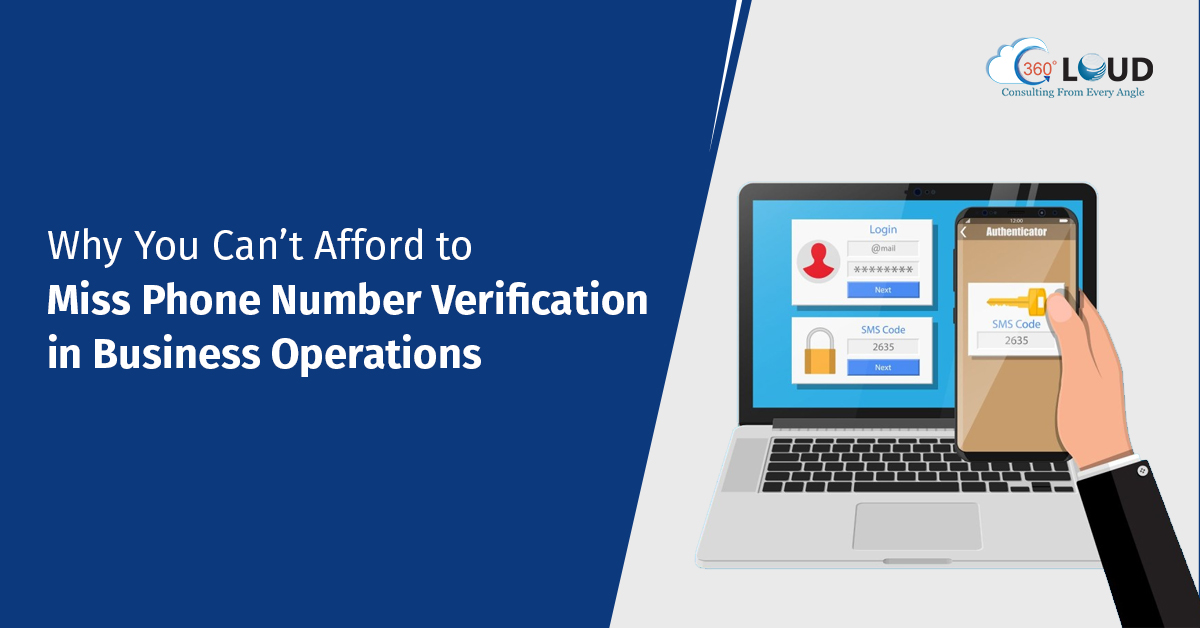
Why You Can’t Afford to Miss Phone Number Verification in Business Operations

Business success in modern digital environments depends on communication for both customer relations and sales together with marketing approaches. Phone number verification is essential for every business because it helps to verify new customers’ contact data, prevent fraud, and boost engagement rates. The necessity of phone number verification stands above all else because it builds data accuracy, improves SMS deliverability, and results in better returns. Your business success along with operational performance might be at risk when it omits phone verification process implementation.

How Can You Verify a Phone Number?

Multiple verification procedures need to be executed to establish the usefulness of a phone number along with determining its authenticity. The process typically includes:

Syntax and Format Check: A format and syntax test needs to evaluate that the particular number upholds standardized international dialing formats and contains appropriate digits.

Carrier Lookup: Identifying the number type (mobile, landline, or VoIP) and its associated telecom provider.

Real-Time Validation: The validation process checks if the number is active and supports both messaging and calling functions in real time.

OTP Verification: To confirm number ownership and accessibility, a temporary OTP (One-Time Password) Verification is required.

The phone number verification procedures enable companies to ensure they deal with legitimate contact numbers that are actually accessible. Human verification procedures for phone numbers require costly effort while also showing a high potential for human error. The automated phone verification service of Verify the Phone (VTP) substantially simplifies contact database cleaning by removing the need for manual phone verification. Businesses that employ VTP gain better text delivery performance, achieve better client interaction, and meet regulatory standards without friction. Businesses achieve greater operational success combined with better communication performance, thanks to this time-saving app.

Why is Phone Number Verification Crucial for Business?

The absence of telephone number verification allows businesses to face monetary losses and operational inefficiencies. The following explanation shows why business operators should never disregard Phone Number Verification activity.

Prevents Fraud and Fake Accounts:

Telephone numbers that lack verification become instruments for scammers allowing them to undertake malicious actions that result in account takeovers as well as deception schemes. Businesses eliminate fake and high-risk users through phone number verification processes when customers join their systems. Business platforms sustain only genuine customers with this identity verification system that protects customer data and reduces security threats.

Enhances Customer Communication:

Companies that maintain trusted telephone data can deliver important communications regarding order verification and support services without experiencing deliverability issues. Effective communications that happen on schedule result in satisfied customers who become loyal to businesses, thus leading to enduring business-client relationships.

Improves Marketing Efficiency:

SMS campaigns and promotional calls planned for nonexistent mobile numbers lead to a waste of marketing expenses. The phone verification process optimizes marketing efficiency by validating recipients numbers. The verification of telephone numbers leads to superior marketing performance because it yields better customer engagement alongside improved conversions that produce greater marketing ROI.

Ensures Contact Data Reliability:

A business that wishes to succeed requires a healthy and accurate contact database. Reliable contact information depends on numbers that are current and acceptable for telecommunications. The use of inaccurate numbers results in operating failures and missed opportunities together with less effective operation. Companies that verify telephone numbers gain accurate data which helps prevent customer outreach mistakes and sustains data reliability.

Leads to Better ROI:

When businesses invest in Phone Number Verification they ensure that all marketing attempts together with sales calls as well as customer outreach reach valid recipients. The investment leads to enhanced engagement levels and better ROI returns because businesses spend their resources on accurate contact numbers.

The Role of VTM/VTP in Phone Number Verification

The advanced phone verification solution, Verify the Phone (VTP) streamlines the process of phone number validation within Salesforce. The verification app helps you achieve better business operations through these key functions:

Real-Time Number Validation:

The VTP system instantly checks phone numbers to determine their capacity for call and SMS messages, thereby decreasing database inaccuracy caused by invalid numbers. Businesses can easily remove unresponsive numbers and improve customer communication. 

Carrier and Line Type Detection:

The VTP detection system not only verifies number accuracy but also verify telephone number type, landline numbers, and VoIP number therefore businesses can optimize their contact approach. Business operations can select the perfect communication channel for their clients by understanding their phone number types.

Bulk Verification for Large Databases:

Through VTP, businesses can execute large-scale number verification automatically, so they cut down operational expenses while saving time. Large organizations benefit from this feature because it creates a system that maintains precise and current information across their customer databases.

Automated Workflows for Continuous Validation:

Companies can benefit from an automated verification process on Salesforce to routinely check numbers which maintains accurate database information. Up-to-date contact data remains consistent because the risk of communicating with wrong numbers significantly decreases through this process.

Point-of-Entry Verification for a Highly Reliable Database:

Verify the Phone (VTP) also helps to verify correct telephone numbers before they enter into the Salesforce database. Multiple potential errors are avoided since incorrect contact information does not build up in the database resulting in improved data quality. Verified databases enable organizations to reduce pointless outreach attempts, therefore optimizing their operational effectiveness.

Web-to-Lead & Web-to-Case Verification:

B2B organizations collect customer details using Salesforce Web-to-Lead and Web-to-Case forms. Forms accepting incorrect phone numbers lead to a waste of follow-up attempts as well as reduced support operation performance. VTP Verify the Phone (VTP) lets your system accept genuine phone numbers directly from data entry points, thus preventing incorrect numbers data that diminishes both lead management quality and customer service performance.

How to check if a phone number is genuine?

You can check if a phone number is genuine using verification tools like VTP, which validate number activity, carrier details, and line type.

How to get a free number for verification?

Several online services provide temporary phone numbers for verification purposes. However, businesses should be cautious, as these numbers are often shared and unreliable.

What is the free app to verify phone numbers?

Apps like Truecaller and NumVerify offer basic phone number lookup services. However, for enterprise-level accuracy, solutions like VTP are recommended.

Final Thoughts

Phone Number Verification represents a critical operational step for improving call operations and SMS marketing campaign results. Through Verify the Phone (VTP), businesses can set up a verification process that stops fraud attempts to submit incorrect numbers while upgrading data quality. The present-day investment in phone verification systems creates a reliable database that leads to increased operational efficiency and campaign returns.

Contact our experts to get the best solution for verifying phone numbers and maximizing your returns.

Key Considerations for Salesforce Implementation in Financial Services

Financial services nowadays are not what they were yesterday. Customers these days expect hyper-personalized experiences from businesses. This is the reason financial services firms have to focus more on conducting frictionless interaction and providing them instant access to their financial information. If your company is still managing spreadsheets or isolated systems, you’re already behind. That’s where Salesforce implementation comes in.

Salesforce is more than just another CRM; it’s truly a big transformational solution for financial institutions looking to enhance client engagement, modernize and automate operations, and ensure they adhere to compliance. Now, let’s look at everything you need to consider to make Salesforce work for your financial services firm.

1. Defining Success: What Does Salesforce Mean for Your Firm?

You need to know what exactly you need Salesforce for before you start looking into its features.  Salesforce implementation for financial services is not just a new system to move on with, it could be a way you can overcome your existing business challenges.

– Do you want to simplify customer onboarding and do away with paperwork?

– Do you require improved visibility into client interactions across departments and advisors?

– Are regulatory reporting and compliance keeping your teams busy?

Having a clear vision enables you to set up Salesforce to meet your business requirements, instead of installing a generic solution that fails to tackle your pain areas.

2. Customization vs. Out-of-the-Box: Finding the Right Balance

One of the largest advantages of Salesforce implementation in financial services is that it is very flexible. However, there is a need to realize that over customization creates unnecessary complexity.

– Out-of-the Box Functionality

With Salesforce, you can take advantage of critical capabilities such as tracking financial goals, client profiling, and compliance tools. If your requirements fit these functionalities, little customization is needed.

– Customizaion Requirements

In case your company has specialized workflows, approval routes, or third-party integrations, a certain degree of customization may be unavoidable.

– The Golden Rule

Begin simple. Roll out Salesforce in phases, release with default features and incrementally tailor as feedback is received from actual users.

3. Data Migration: The Make-or-Break Factor

Bringing years (or decades) worth of financial information into Salesforce isn’t only a technical task, it’s strategic.

– Data Quality Check

Are you importing clean, structured data or transferring duplicates and stale records?

– Security Issues

Money information is extremely sensitive. Work with Salesforce specialists to make sure security measures are implemented.

– Phased Migration

Rather than migrating everything at one time, test migrate a small amount of data to discover potential flaws prior to full-scale implementation.

4. User Adoption: The Key to Long-Term Success

Even the most superior Salesforce implementation services can go awry if your team fails to utilize the system efficiently.

– Hands-on-Training

Spend on practical training that can be done in diverse teams—advisors, customer reps, compliance staff, etc.

– Leadership Buy-in

If leadership uses and champions Salesforce actively, employees will be more likely to do the same.

– Ongoing Improvements

Invite user feedback and adjust settings along the way to conform to real-world usage patterns.

5. Compliance & Security: Non-Negotiables for Financial Services

CCPA, GDPR, and PCI-DSS are some regulations that make security a top priority in the financial sector. Luckily, Salesforce implementation for financial services comes with robust security features, but you need to configure them properly.

– Role-Based Access Controls

Restrict employees from viewing only the data they require.

– Audit Trails & Reporting

Allow automatic logs to record each client interaction.

– Third-Party Compliance Integrations

If necessary, integrate fraud detection, KYC, and risk assessment tools to increase security.

A Smart, Strategic Salesforce Rollout for Financial Firms

Rolling out Salesforce isn’t just bringing in a new system for your business. It can be an entirely new system to transform the way your financial services company works. From setting objectives and finding balance in customization to protecting security and achieving user adoption, each step must be well-planned.

Through the proper Salesforce implementation services, your company can become more efficient, enhance customer interaction, and keep up with regulatory shifts, all while providing a seamless, digital-first experience that clients demand today.

Reach out to us and collaborate with Salesforce professionals who know the financial industry back to front and can guide you through this process seamlessly.

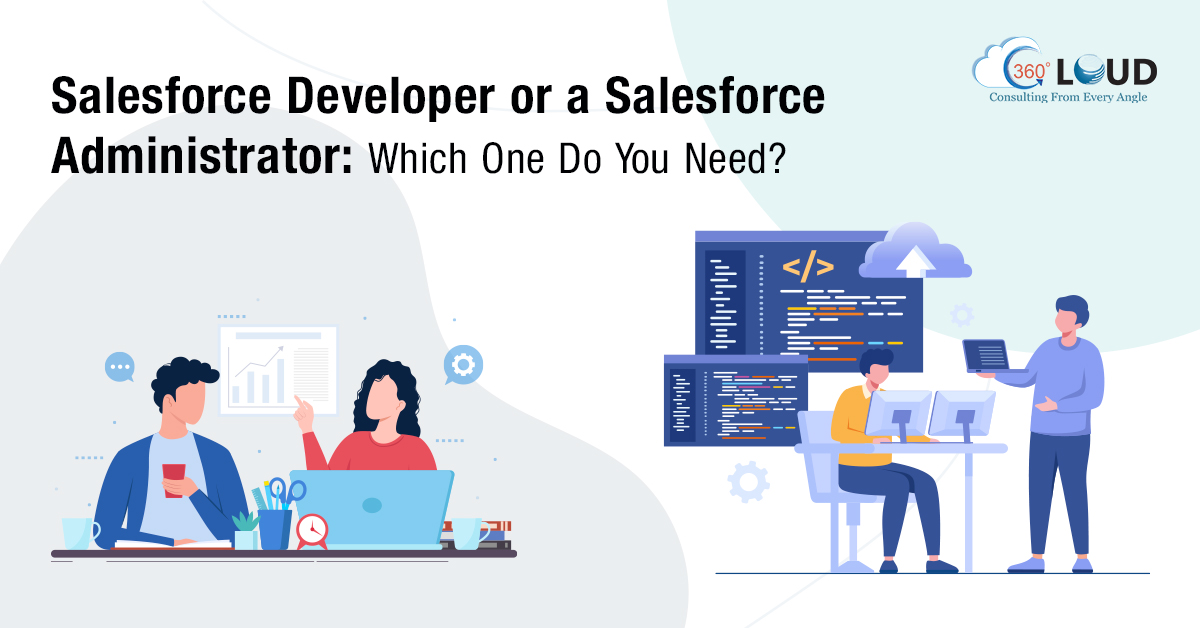
Do You Need a Salesforce Certified Developer or an Administrator? Understanding the Difference

If you’re implementing Salesforce (or are about to), you’re already aware of its vast potential to automate processes, improve customer relationships, and increase overall productivity. But the catch is—someone has to install it, run it, and maintain it in top form. Most companies are stuck with this exact question: Do you hire a Salesforce certified developer or a Salesforce administrator?

Do you require someone to develop custom solutions from the ground up, or do you need someone to set up and manage the platform? Ensuring that your decision is appropriate can save effort, money, and time as well as maximizing your Salesforce ROI.

This blog breaks it down for you—so you can confidently decide whether to hire a Salesforce programmer, a Salesforce-certified developer, or an administrator to best support your business needs.

Beyond Job Titles: Who Does What?

Both these job titles can be a bit confusing, so let’s have a look at exactly what they do:

– Salesforce Administrators are the architect and caretaker type of users, ensuring things function well inside the system and personalizing it via clicks (no coding) while upholding data integrity.

– Salesforce Developers are a bit like construction workers and architects, they develop and code original features that exceed the out-of-the-box experience of Salesforce to ensure that the system is comfortably integrated into your unique business paradigm.

Here’s how they contribute in real-world scenarios:

– In case you require workflow automation, dashboard customization, or security settings management, an administrator is there for you.

– In case you need custom-coded integrations, Apex triggers, or Lightning components, you have to hire a dedicated Salesforce developer.

– If your system is encountering errors or constraints due to excessive customizations, a Salesforce-certified developer can tidy up the backend and streamline processes.

How They Impact Your Business Growth

Operational Efficiency: The Admin’s Role

– Admins manage the daily Salesforce operations, ensuring that the efficiency is maintained.

– They help automate workflows for different teams whether it is sales, marketing, or service.

– They ensure that your Salesforce org is secure and easy to use, minimizing friction for employees, thus improving user adoption.

– A good admin makes sure that end-users are trained and feel comfortable using Salesforce.

Scalability & Customization: The Developer’s Role

– Developers assist you in scaling your Salesforce org through the creation of custom applications and features.

– They remove the limitations of a system by implementing code that makes third-party components and legacy systems integrate.

– Your Salesforce instance is made sure by developers to fit your specific business processes, which supports long-term growth.

– If you require AI-powered automation or sophisticated data analysis, developers make that a reality.

Making the Right Investment: What Should You Do?

When to Hire a Salesforce Administrator

You need to pick a Salesforce administrator when you:

– Need to manage the system configurations, reports, and user management.

– Need a professional who can train and assist your teams.

– Intend to utilize Salesforce primarily with default features and little coding.

– Need an expert in workflow automation, security, and data management with no intensive development efforts.

When to Hire a Salesforce Programmer or Developer

You need to pick a Salesforce certified developer when you:

– Need to create custom applications, integrations, or automation beyond what’s available in Salesforce out of the box.

– Need API integrations with outside systems such as ERP, finance programs, or online stores.

– Required to create custom Lightning components, Apex, or Visualforce pages.

– Need a professional who can manage your Salesforce to keep up its performance and scalability.

It is ideal to hire Salesforce developers who can develop and maintain customized solutions for companies that require a lot of customization. 

The Best Strategy: A Balanced Approach

Though Salesforce admins and developers fulfill different roles, both combined can make a huge synergy. A developer constructs long-term solutions and integrations, while an admin facilitates day-to-day operations smoothly.

For growing businesses that need to prepare, having both an experienced admin and a committed developer can provide the best of everything. You obtain efficiency as well as scalability without unnecessary choke points.

Which One Do You Need Today?

The key here is to analyze your business first, so you can know what kind of professional you really need. If you need someone to manage users, optimize workflows, and keep up the security, you need to pick an admin. If your requirements involve deep customization, automation, and coding, hiring a Salesforce programmer is your best bet.

Looking for the right Salesforce talent? Contact us and hire Salesforce developers or administrators today and unlock the full potential of your CRM investment!

logo Live Chat