
Table of Contents
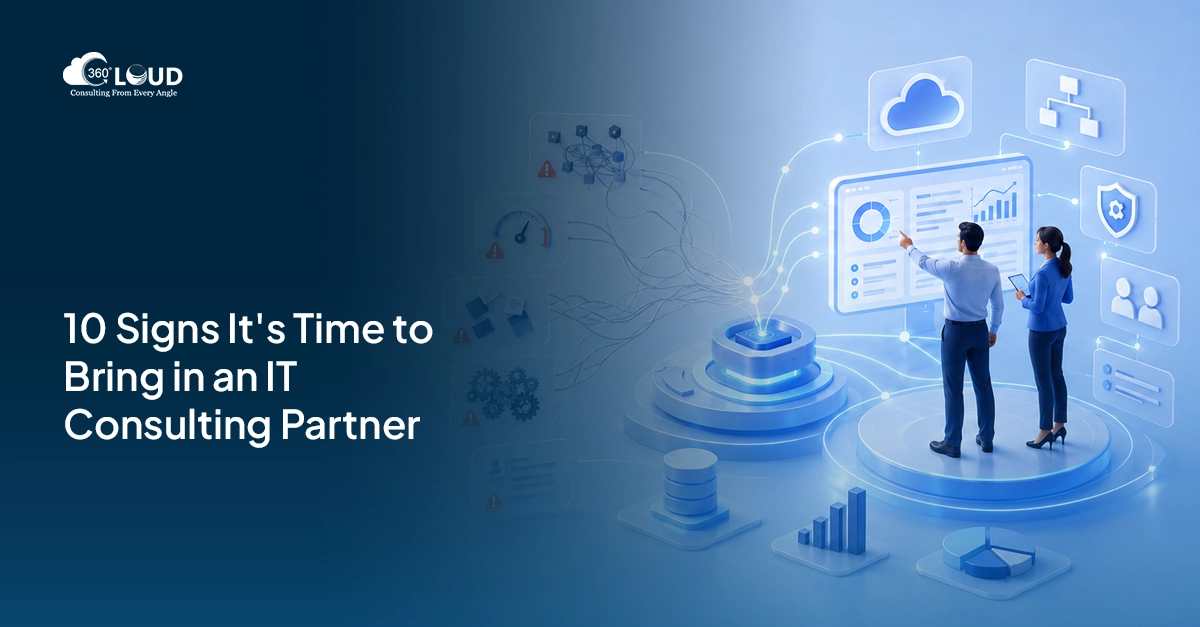
We are no more in those times when technology was just a back-office function. Now it’s the thing that decides who wins the deal, who scales faster, who survives a bad quarter.
Here’s the problem: modern IT environments have gotten genuinely complicated. Cloud platforms, security tools, integrations, AI features nobody fully understands yet -it’s a lot for any internal team to keep up with, especially while also running day-to-day operations. Growing businesses feel this the hardest. The systems that worked fine at 20 people start creaking at 80.
At some point, internal IT teams hit a wall. Not because they’re bad at their jobs -because the scope of the job outgrew them. That’s usually when companies start looking at IT consulting services, and honestly, it’s often overdue by the time they do.
This piece walks through the signs that tell you it’s time, what an IT consulting partner actually does, and how to pick one that won’t waste your budget.
Tell us your setup. We’ll tell you what needs fixing first.

Table of Contents
What Does an IT Consulting Partner Do?
An IT consulting partner isn’t just someone who fixes your laptop when it breaks. It’s closer to a strategic advisor with technical depth.
Strategic IT planning sits at the core of it -mapping technology decisions to actual business goals instead of chasing whatever’s trending. Technology assessments come next, where a consultant looks under the hood of your current stack and tells you what’s working, what’s not, and what’s quietly costing you money.
Cloud consulting helps with everything from picking the right platform to actually migrating without breaking production. Cybersecurity consulting covers risk assessments, compliance gaps, and manages everything that internal teams don’t have bandwidth to monitor. Digital transformation consulting ties it all together, guiding the shift from legacy processes to modern, connected systems.
A solid IT consulting company does all of this with an outside perspective -which, frankly, is half the value. Internal teams are too close to the problem to always see it clearly.
10 Signs Your Business Needs an IT Consulting Partner
Sign 1: Your IT Problems Are Becoming More Frequent
If downtime is becoming a monthly event instead of a rare one, that’s not bad luck. That’s a system telling you something.
Slow systems, tickets that never quite get resolved, the same issue popping back up three weeks after it was “fixed” -these are patterns, not coincidences. When problems repeat instead of resolve, the root cause usually isn’t being addressed at all. It’s being patched.
Sign 2: Your Business Is Growing Faster Than Your IT Infrastructure
Growth is good. Growth without infrastructure to match it is a slow-motion outage waiting to happen.
Scalability challenges show up fast -systems built for 50 users start choking at 200. An expanding workforce needs more than just more laptops; it needs identity management, access controls, and systems that don’t fall over under new load. Customer demands rise too, and suddenly your team is stretched thin trying to keep both the lights on and the growth moving.
Sign 3: Cybersecurity Risks Are Increasing
Ransomware isn’t a hypothetical anymore. It’s a Tuesday for a lot of companies.
Compliance will continue changing based on the specific industry, and not only are you looking at paying a fee for this issue but also suffering reputation damage as well. Security audits will help identify areas of weakness before they can be exploited, and good risk management will ensure you do not discover a potential threat on the very same day it becomes an actual problem. This is one of the best reasons why you should look into your IT strategy consulting service.
Sign 4: You’re Planning a Cloud Migration
Moving to the cloud sounds simple until you’re the one doing it.
Infrastructure modernization means more than lifting and shifting servers -it means rethinking how systems talk to each other. A real migration strategy accounts for dependencies, data integrity, and timing. And minimizing downtime during the actual cutover is where most in-house attempts go sideways, because nobody’s done it enough times to know where the landmines are.
Sign 5: Digital Transformation Projects Keep Stalling
Every company has one. The transformation project that’s been “in progress” for eighteen months.
Usually it’s an unclear roadmap -nobody agreed on what done looks like. Sometimes it’s resource constraints, where the team assigned to the project also has a full-time job doing something else. And project delays compound fast once momentum stalls, because stakeholders lose confidence and budget gets harder to justify.
Sign 6: Your Internal Team Lacks Specialized Skills
Nobody expects a generalist IT team to also be AI implementation experts.
Cloud architecture, DevOps pipelines, Salesforce expertise, workflow automation -these are deep specialties, not side skills. Enterprise IT consulting exists specifically because hiring five specialists in-house doesn’t make financial sense for most companies. You need the expertise for a project, not a full-time headcount forever.
One conversation. A clear read on where your IT stands.

IT Costs Continue to Rise Without Better Results
Sign 7: IT Costs Continue to Rise Without Better Results
This one’s frustrating because it’s invisible until someone actually audits the spend.
Inefficient spending piles up in licenses nobody uses and tools that overlap. Outdated systems cost more to maintain than replace, but nobody’s run that math. Lack of optimization means paying premium prices for infrastructure that’s running at half capacity. And technology debt -all those quick fixes from three years ago -eventually comes due, usually at the worst time.
Sign 8: Your Business Systems Don’t Integrate Well
Disconnected applications force people to do manual work that software should handle. Copy this number from system A, paste it into system B. Every day. Forever, unless someone fixes it.
Data silos mean your sales team and your finance team are looking at two different versions of the truth. Workflow inefficiencies pile up quietly, and by the time someone notices, it’s been eating hours every week for months.
Sign 9: Your Team Spends More Time Fixing Problems Than Innovating
Reactive IT management is exhausting. It’s also a trap -the more time spent firefighting, the less time exists for actual strategy.
Operational bottlenecks build up when the same three people are the only ones who understand a legacy system. And without strategic planning, IT stays a cost center instead of becoming the thing that actually drives the business forward.
Sign 10: You Need an IT Roadmap for Future Growth
Business expansion needs infrastructure that’s ready before the growth hits, not scrambling to catch up after.
AI adoption, cloud strategy, long-term technology planning -these decisions get expensive to reverse once made. A clear roadmap, built with actual IT strategy consulting behind it, saves a company from making short-term decisions that become long-term headaches.
Benefits of Working with an IT Consulting Partner
Access to specialized expertise without the overhead of hiring five different specialists. Faster project delivery, because consultants have done this before and know where the traps are. Improved cybersecurity from people who monitor threats as their full-time job. Better technology decisions grounded in experience across dozens of similar businesses, not guesswork. Lower long-term IT costs once inefficiencies get identified and fixed. And a scalable technology strategy that grows with the business instead of constantly playing catch-up.
IT Consulting vs Hiring an In-House Team
Cost comparison usually favors consulting for specialized or project-based work -you’re not carrying a full-time salary for a skill you need twice a year. Expertise tends to run broader with a consulting partner, since they’ve seen more environments and more edge cases. Flexibility is a real advantage too; scaling a consulting engagement up or down is much easier than hiring and firing. Scalability follows the same logic. And speed to implementation is often faster, since consultants arrive with playbooks instead of a learning curve.
None of this means in-house teams are pointless. Most businesses end up running both -an internal team for daily operations, and a business IT consulting partner for strategy, specialized projects, and the stuff that needs outside expertise.
How to Choose the Right IT Consulting Partner
Industry experience matters more than people think -a consultant who’s worked with businesses like yours already understands the constraints. Technical expertise should be verifiable, not just claimed. Service offerings need to actually match what you need, not just what’s easiest for them to sell.
Communication approach is underrated. If a consultant can’t explain a technical decision in plain language, that’s a red flag for the whole engagement. Security and compliance knowledge should be non-negotiable, especially in regulated industries. And client success stories, real ones with real outcomes, tell you more than a sales deck ever will.
Common Mistakes Businesses Make
Waiting until systems fail before calling anyone. Choosing consultants based only on price, which almost always costs more later. Ignoring long-term strategy in favor of quick fixes. Underestimating cybersecurity risks until there’s already a breach to clean up. And failing to define business objectives clearly, which leaves even a good consulting partner guessing at what success actually looks like.
Start with the Right IT Partner
Technology needs to be fostering growth, rather than being the silent reason behind its failure. Early intervention through proactive consultancy will ensure that things are fixed before they turn out to be too expensive to handle. It is the companies that make IT strategic advantage part of their competitiveness, who move ahead of others.
Choosing the right IT consulting partner isn’t just about solving today’s problem. It’s about building a technology foundation that supports where the business is headed next.
Categories

Solve It with Salesforce. We’ll Show You How.
AI. Apps. Experts. Everything you need to win with Salesforce under one roof.Frequently Asked Questions
What does an IT consulting partner do?
Think strategy first, fixes second. A good IT consulting partner handles planning, assessments, cloud work, security, and digital transformation consulting, basically acting as the outside brain your internal team doesn't have time to be.
How do I know if my business needs IT consulting?
Honestly? If downtime, rising costs, or stalled projects feel normal now instead of rare, that's usually the sign you need IT consulting services.
What is the difference between IT consulting and managed IT services?
Managed IT consulting keeps the lights on day to day. IT strategy consulting is bigger picture, it's about where your technology should be heading, not just what's broken today.
Is IT consulting worth it for small businesses?
Often, yes. IT consulting for small business gives you access to expertise you could never justify hiring full-time. That's kind of the whole point.
How much do IT consulting services typically cost?
Depends. Project-based, hourly, retainer, it varies a lot by scope. Most technology consulting services firms will give you a real number after they've actually looked at your setup.
When should I hire an IT consulting company?
Before things break, ideally. But if you're already firefighting daily, that's still a fine time to bring in a business IT consulting partner.
Can IT consultants help with cloud migration?
Yes, and it's one of the most common IT consulting solutions companies ask for. Strategy, execution, minimizing downtime during the actual move.
How do IT consultants support digital transformation?
They build a roadmap that doesn't fall apart six months in. Digital transformation consulting means aligning tech with business goals and keeping projects from stalling out, which, let's be honest, happens constantly without one.
What should I look for in an IT consulting partner?
Real industry experience. Technical chops you can actually verify, especially for enterprise IT consulting engagements. And someone who explains things in plain English, not jargon. That last one matters more than people think.
Can IT consultants improve cybersecurity?
Yes. Security assessments, compliance guidance, ongoing risk management, it's usually baked right into most IT consulting services from day one.

About the author
Editorial TeamThe Editorial Team at 360 Degree Cloud brings together seasoned marketers, Salesforce specialists, and technology writers who are passionate about simplifying complex ideas into meaningful insights. With deep expertise in Salesforce solutions, B2B SaaS, and digital transformation, the team curates thought leadership content, industry trends, and practical guides that help businesses navigate growth with clarity and confidence. Every piece we publish reflects our commitment to delivering value, fostering innovation, and connecting readers with the evolving Salesforce ecosystem.
Recent Blogs
 Salesforce Services
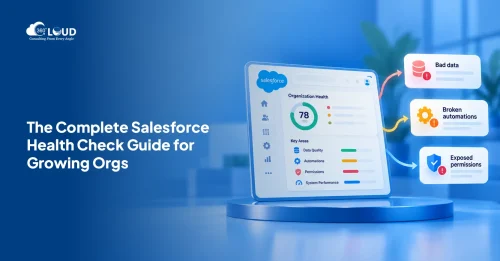
Salesforce Health Check: What It Is, What It Covers, and What You Should Do with the Results
Picture this. A VP of Sales asks why the pipeline number in Salesforce is $2.3 million, but the finance report shows $1.8 million. Nobody has…
Read More Salesforce Clouds
Salesforce Just Added Something New. Here’s How to Put It to Work.
Winter ’27 is live. Dreamforce just added more. Is your team using any of It? Two big drops landed in one month, and most teams…
Read More Salesforce Services
Salesforce Technical Debt 10 Signs Your CRM Needs a Strategic Overhaul (and What to Do About It)
Three years ago, the Salesforce org your team implemented was clean. Logical field names. Documented Flows. A handful of integrations that actually made sense. Today?…
Read MoreReady to Make the Most Out of Your Salesforce Instance?
Our Salesforce aces would be happy to help you. Just drop us a line at contact@360degreecloud.com, and we’ll take it from there!
Subscribe to our newsletter
Stay ahead with expert insights, industry trends, and exclusive resources—delivered straight to your inbox.