
Talk to Us

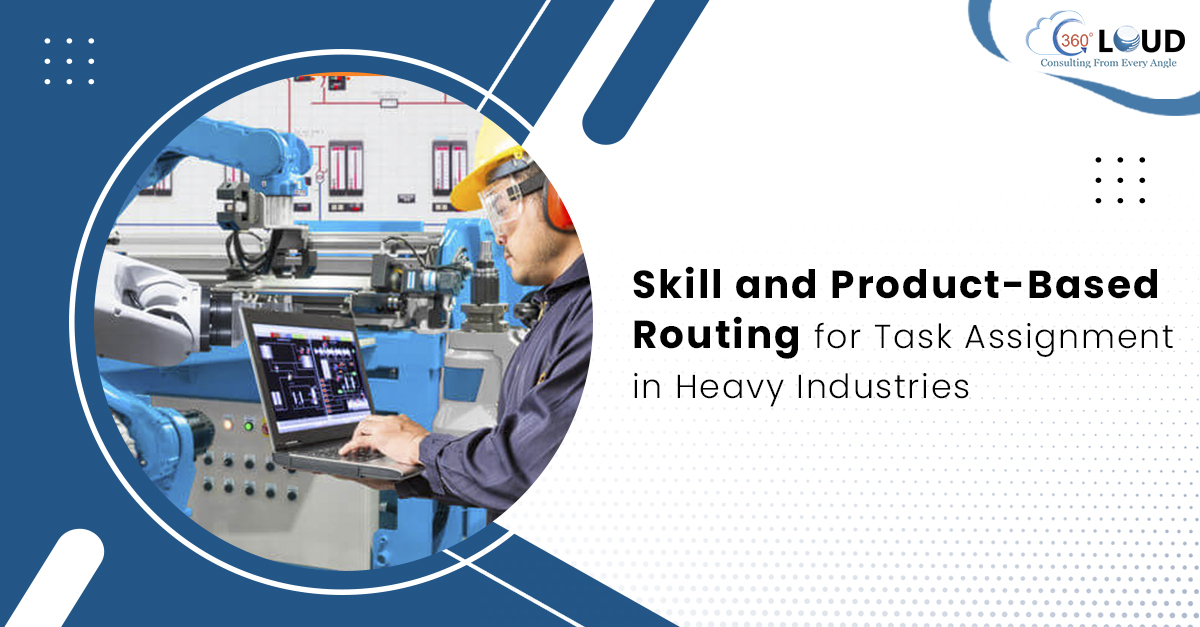
Skill and Product-Based Routing for Task Assignment in Heavy Industries

Managing task distribution and assignment is basic for any company. But for a large company with a huge workforce, it can certainly be trouble. Talking about companies belonging to heavy industries like oil and gas, locomotive manufacturing, mining, or machine tool building, there can be many tasks and even more employees. Manually assigning tasks won’t work. That’s where you need skill and product-based routing to achieve task assignments. 

Thanks to the Salesforce Omni-channel feature, such companies can route work to agents in real-time based on the routing configuration that would be predefined. Not just for task assignment, the feature can also be used to route leads, social posts, cases, custom objects, etc., to the respective users. 

Skill and Product-Based Routing

Skill-based routing is generally accepted by companies as a modern way of routing calls to agents with the right skills in call centers. But its effectiveness is not restricted only to call centers. Even in companies belonging to heavy industries like manufacturing or oil and gas, the time-intensive and crucial tasks can be divided among team members according to their skills and availability. 

Skill-based routing can also be aligned with product-based routing. It allows task assignment to agents having knowledge and understanding about a respective product. These strategies of routing tasks will make sure that the task is assigned to the right person for it, which increases the chances of getting it done within the timeline and with quality. 

Why Heavy Industries Need Skill and Product-Based Routing

Skill-based and product-based routing helps to alleviate a lot of stress for employees. It helps streamline and divide work among a huge workforce, ensuring that each task is assigned to someone who can do it well. 

The last thing any business related to heavy industry needs is inefficient work or having to perform a task again due to lack of accuracy or quality. It would just delay the product delivery, leaving the partners and stakeholders frustrated. 

It can be difficult to configure a simple omnichannel setup to route records to employees. The process can even become more complex when trying to route records to employees based on their skills. You need the help of trusted and certified Salesforce developers to implement the feature and align it with your architecture. Also, to enable the same, you require the following-

  • Enable Omnichannel
  • Enable Skill-based routing
  • Create Skills
  • Create Service Resources for employees
  • Assign respective Skills to Service Resources
  • Route Work Items using Skills

Simplify Task Assignment with Skill and Product-Based Routing

For a large-scale business, any mistake can cost a lot to the company. Such costly mistakes can be avoided on the first level by ensuring the respective tasks are assigned to skilled and knowledgeable employees. Skil and product-based routing can transform the process of task distribution, cutting down a lot of manual work while increasing the efficiency of work. 

Benefit from this Salesforce omnichannel feature to speed up work distribution in your company. Talk to our experts and discuss your business requirements so you can get the help of the best certified Salesforce professionals.
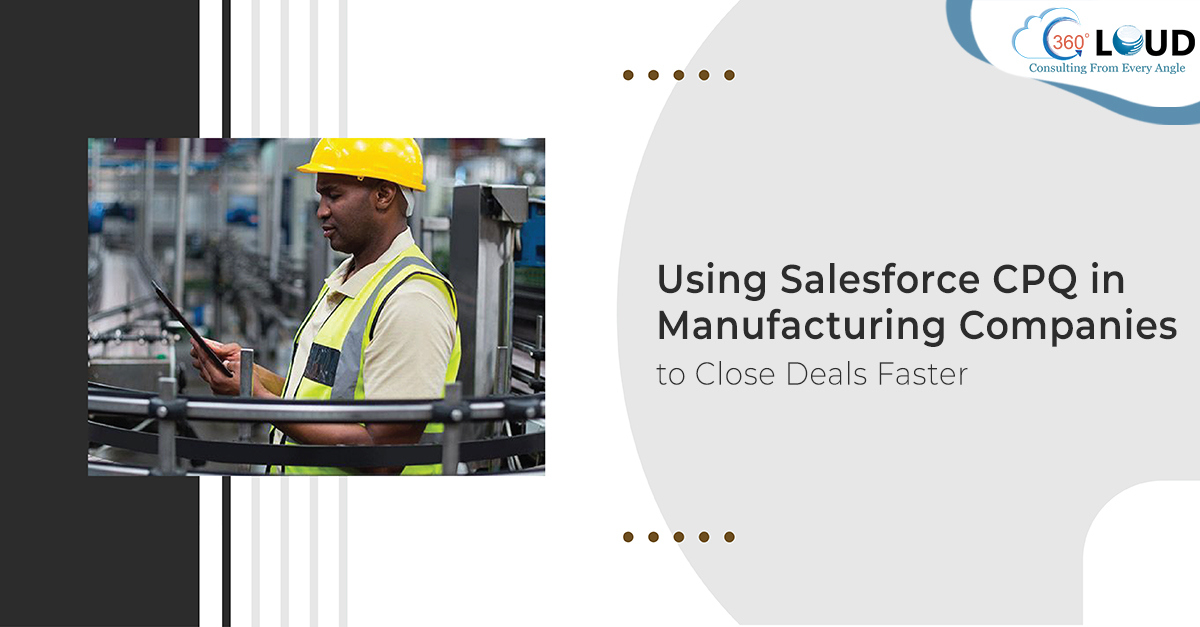
Using Salesforce CPQ in Manufacturing Companies to Close Deals Faster

One of the realities of a manufacturing company is that your sales cycle is different from a cut-and-dried model. You won’t have fixed pricing for all customers. For a manufacturing company, it is common to manage a massive product catalog, many options of customization, and different quotations for each customer. That’s where using Salesforce CPQ in manufacturing companies can simplify the work. 

Without the right technology, managing multiple quotations for customers can be extremely difficult and time-consuming. Salesforce CPQ can create a world of difference here. 

How Using Salesforce CPQ in Manufacturing Company Can Be Helpful

Salesforce CPQ helps manufacturing businesses manage pricing rules and complex quoting. We have mentioned some ways in which using CPQ can be beneficial and help to close deals faster. 

1. Customize Complex Product Bundles

When the product is made-to-order, the flexibility of Salesforce CPQ will have a lot to offer. You can set up all the needed features as bundle components, so whenever any representative will create a quote, he would have access to all the available customizations. It will help keep the customization handle for a representative when needed for generating a quotation. 

2. Multi-Layered Discounting Logic

Using CPQ can allow manufacturing companies to use multiple tiers of discounts. The solution help teams to control the order in which these discounts would be provided. You can set limits to discretionary discounts and apply them to a contracted price only. So, your firm will always have the flexibility to create discount offers, allowing you to price competitively but still protecting your margins. 

3. Organize Large Catalogs

Manufacturing companies with an extensive product catalog can benefit from the dynamic bundling and filtering logic of Salesforce CPQ. It would allow employees to manage the array of products with little back-end legwork. This feature can help save days of effort to reconfigure the whole catalog every time a new product is added to it.

4. Advanced Approval Process

Salesforce CPQ also allows teams to use advanced approvals to route quotes to the right representative for a quick sign-off. You can easily involve multiple teams like finance, sales, or QA, irrespective of whether the quote comes from an external party or any internal employee. 

The complex routing logic of advanced approvals helps cut down the time to take a quote through different teams. You can share the quote with different teams at the same time. 

5. Access Through Communities or Portals

Salesforce CPQ helps to expose quoting pages to partners and customers through portals, websites, or communities, making it easier to access them. With CPQ, all the tools would be available to customers and distributors at their fingertips, allowing them to create their quotes.

Speed Up Deal Closure Using Salesforce CPQ in Manufacturing Companies

Turning to Salesforce CPQ can help shorten sales cycles for manufacturers and also help to improve quoting accuracy. Speedy quotation generation will ultimately decrease the waiting time for clients and save them from frustration, keeping them satisfied. 

Boost the billing efficiency in your manufacturing firm. Contact us to hire the best Salesforce expert to implement Salesforce CPQ.

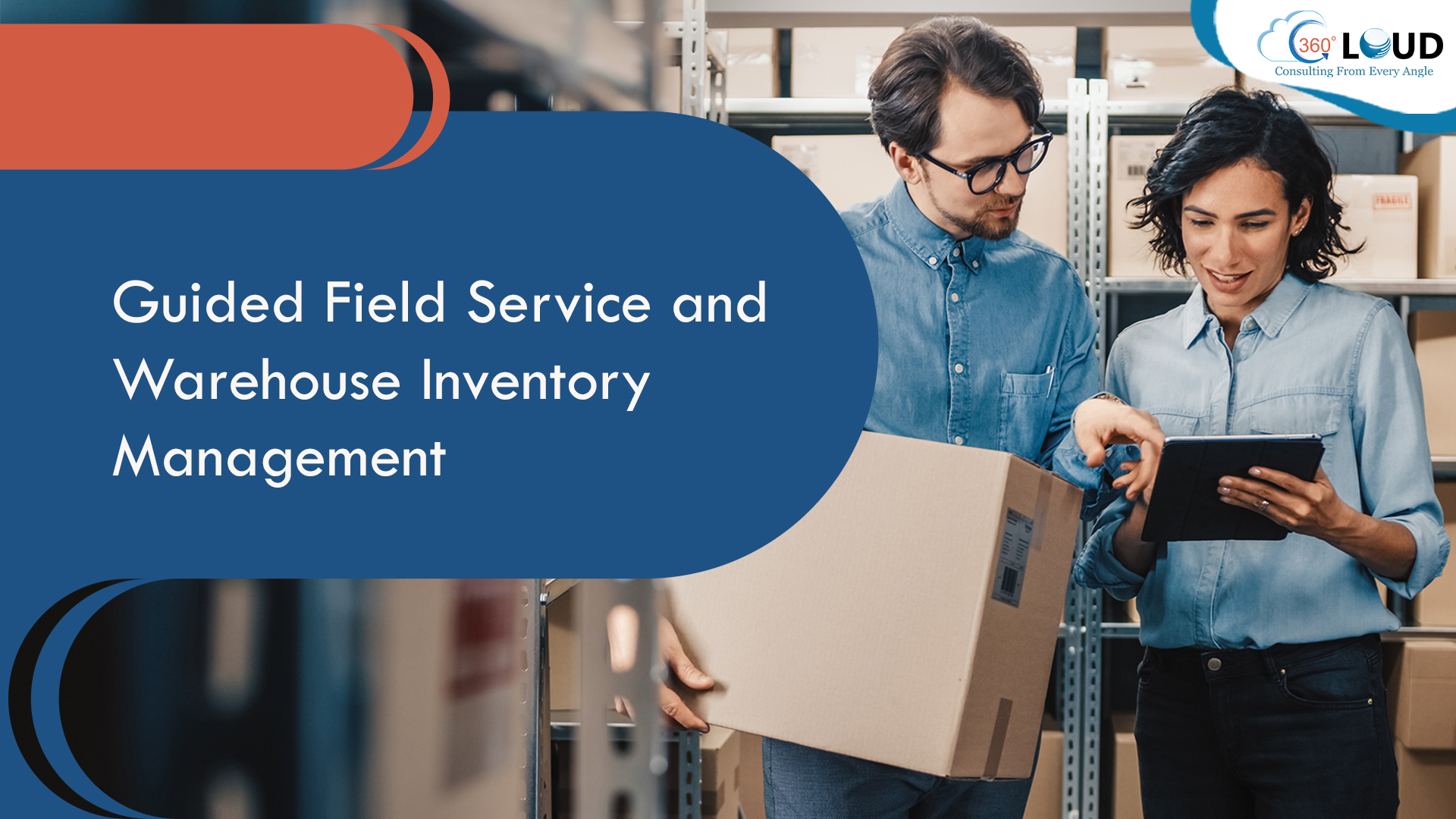
Guided Field Service and Warehouse Inventory Management

Salesforce Field Service Lightning is the Salesforce product that works best for any business that involves people working in the field for repairs, maintenance, deliveries, or installation. But that’s not all. The effectiveness of field service can also be seen in inventory management. Guided field service and warehouse inventory management can now be brought together.

For a company that needs to manage inventory, it is important to track teams, trucks, distribution centers, and warehouses. Using field service, the lifecycle of products can be tracked within a single platform, making it easier to manage. 

Benefits of Aligning Guided Field Service and Warehouse Inventory Management

For SMBs and large-scale companies, managing stock in the warehouse can be a struggle. Guided field service can simplify the process to manage warehouse inventory. Here we have listed some benefits of the same. 

  • Track inventory locations like customer sites, warehouses, work vehicles, and stockrooms. 
  • Track product details like model category, serial numbers, asset state, and stock availability. 
  • Manage financial information like invoice number, vendors, asset cost, cost center, etc.
  • Manage product requests with notifications to stay updated when stock is running low.
  • Manage contractual data related to assets and track details like warranty expiration date
  • Track shipments to know when products are in transit between locations and the expected delivery date.

All of these benefits make it easier to stay updated on warehouse inventory details and manage deliveries and production accordingly.

Bringing Guided Field Service and Warehouse Inventory Management Together

Salesforce field service has simply transformed the way an inventory can be managed. Guided field service allows you to track inventory at every stage of the lifecycle. Here’s how warehouse inventory management can be improved using field service. 

1. Manage Stocks

You can create field service locations for all the places where you have your inventory, like warehouses. This makes it easier to track your stock and be prepared for renewal before the stock goes out.

2. Track Service Providers

You can add products in the work orders, work types, and work order line items. This would make it easier for you to track your orders and service providers. 

3. Track Inventory Consumption

Using guided field service, you can build line items for products and materials to be consumed for production. This is how you can always stay updated on the consumption of your inventory products. 

4. Manage Transfer of Goods

You can easily track and manage the transfer of goods between your company warehouse and different locations for storage. You can create shipments to store information related to relevant transportation. 

Get Guided Field Service for Warehouse Inventory Management

As your business keeps growing, it can be difficult to stay updated on the current stock in inventory, so you never get low on material. Bringing guided field service and warehouse inventory management will simplify it for you, managing everything virtually, with timely alerts related to stock.

Upgrade your inventory management with Salesforce. Reach out to us to know more about how you can make inventory management easier.

Integrating Production Runs and Forecasts for Manufacturing in Salesforce

Salesforce has come up with many functionalities that help manufacturers unite prediction and planning with the production process. This helps to maintain greater collaboration and transparency across the company. Integrating production runs and forecasts helps to achieve a unique level of business visibility. It even allows better collaboration among service and sales teams. 

Forecasting and predicting through Salesforce is very helpful in companies. It empowers the team to have a better customer view with the ability to track account-based predictions to analyze future sales. But the feature has an efficient role to play in manufacturing companies too to improve production. 

Integrating Production Runs and Forecasts

Bringing production and forecasts together can cut down a lot of time and effort to plan production strategy and amount. It even brings enhanced transparency to the process. Here we have listed how integrating production runs and forecasts with Salesforce can help a manufacturing company. 

1. More Accurate Surface Insights

Salesforce helps you to generate precise predictions so all the data can be visible in a consolidated view. It allows you account-based forecasting to see both net-new business and run-rate. 

You can align the production work with sales and operation units to collaborate in real-time. You can always be updated about any changes in client preferences and other trends that could impact production. 

2. Unified View of Agreements

Salesforce makes it easy to maintain relationships with better collaboration through the unique and authentic source of truth. It helps you access all agreements and reports centrally so you can always be updated about duration, prices, and planned quantities. 

You can easily forecast and view real quantities of material available and the material required from your inventory. You can even maintain insights and build custom activity tracking to measure production and performance.

3. Leverage Einstein Analytics

With Salesforce, you can access and cover actionable business insights using Einstein Analytics. It increases the power of Salesforce to capture intelligent insights and forecasts and use them to improve the production process. It even allows you to uncover insights into account strength, sales agreement compliance, product performance, and pricing. 

4. Transparent Collaboration

Salesforce allows you to facilitate real-time collaboration with partners, employees, and customers. You can drive AI-inspired insights to forecast demands, pricing performance, and production timeline and communicate the same to the team and stakeholders. This way all teams would have access to insights that could allow them to take powerful actions. 

Empower Your Business by Integrating Production Runs and Forecasts

The manufacturing industry is adopting digital transformation these days, making it important for companies to implement advanced methods to speed up production with minimal downtime or error. Salesforce allows you to enhance the quality and pace of your production using insights obtained through forecasting. 

Get access to these features for your manufacturing business with certified experts. Get in touch with us to know more about how Salesforce can help your manufacturing business grow.

Integrating Production Runs and Supply Chain for Manufacturing in Salesforce

Although there are different kinds of businesses and all of them varied from each other, one thing that’s a common issue is the lineal supply chain. And mostly it is the manufacturing companies that suffer the most from traditional supply chain management. Lack of collaboration between production and supply chain end up leaving a lot of loopholes. But all of the issues can be resolved by integrating production runs and supply chain with Salesforce CRM. 

Lack of synchronization between production and supply chain can lead to delays in delivery, and reduced visibility and collaboration between processes. Integrating production runs and supply chains can bring different teams in a manufacturing company together through a centrally managed platform. 

Benefits of Integrating Production Runs and Supply Chain

Bringing the supply chain and production department in a manufacturing company together is a great way to fill in the gaps between teams, providing everyone the viability of processes in production as well as the supply chain.

To elaborate on this, we have mentioned some benefits of integrating production runs and supply chain with Salesforce.

1. Better Collaboration with Suppliers

Salesforce allows keeping communication transparent between internal teams and suppliers. It provides consolidated collaboration, case management for operational issues, and access to supplier self-service portals.

2. Simplified Onboarding Process

Salesforce integration allows teams to use workflows and automation to create vendor networks that would accelerate the supplier onboarding process. This allows in-house teams to evaluate their needs and look for suppliers according to their requirements. 

3. Access to Supply Chain Analytics

Using Salesforce, you can easily benchmark and compare supplier analytics with multiple systems of record. You can access actionable insights using AI for supplier stratification and risk recognition, ongoing performance management, and timely monitoring and alerting about the supply chain process.

4. Forecasting

Connecting production and supply chain would help teams to be updated to their stock and material usage for production. Using analytics teams can forecast the quantity of supply that would be required to keep the production in line. It even helps to plan future product and supply change according to the expected market demand.

Increase Productivity by Integrating Production Runs and Supply Chain

Fill in the gap between your production team and supplier with Salesforce that would help you maintain transparency of information on both parts. Salesforce can help to keep the in-house teams and suppliers on the same page to work together and boost business.

Find out more about implementing Salesforce for manufacturing businesses. Contact us to learn more.

Guided Selling and Complex Billing in Manufacturing with Salesforce

For a manufacturing company, preparing professional and accurate quotes is just as important as other operations. It may sound easy, but as the number of clients increases and demands custom pricing and packages, the billing process becomes even more complex. In such cases, companies would look for solutions that could help with guided selling and complex billing. That’s where Salesforce comes in to help manufacturing companies with pricing. 

Salesforce has its product to simplify the time-taking and complex task of generating billing with CPQ, i.e., Configure, Price, Quote. It’s a total lifesaver for companies as it streamlines the billing processes and generates automated quotations. 

Simplified Guided Selling and Complex Billing Process

For any company, serving its customers efficiently is the most important process. No company can afford to do anything that might frustrate its customers. Thus, there is constant effort to cut down the waiting time on complex billing. With Salesforce, billing is no more time-taking. Here are some ways Salesforce can simplify the billing process for manufacturing companies. 

1. Quote Generation

Quotations provided to clients are a way to present how professional your company is. It leaves an impression of the brand. Salesforce helps manufacturing companies leave a good impression on clients with customizable and smart quoting templates. 

These quotation templates can be used to create and send quotations, professional proposals, and invoices, helping to close deals faster.

2. Guided Selling

The selling process of manufacturing business can be optimized using the feature of guided selling by Salesforce. Guided selling helps sales representatives to add information acquired from prospects and acquire optimal or custom product packages that suit the customer the most. The feature helps to cut down on effort and time invested by representatives on manual quoting. This helps to find the best fitting services and products for any customer.

3. Automated Reporting and Intelligent Analytics

With the help of Salesforce CPQ, you can easily integrate your sales process with the applications you use to increase sales profitability. You can use inbuilt tools like Einstein AI to apply logic and identify what’s wrong in your sales process and work on improving it. The tool even analyzes data and generates automated performance and profitability reports with accurate information. 

4. Subscription Billing and Management

Many companies work on products and services for which recurring bills are prepared. Salesforce can simplify work with recurring bills. It helps to streamline the recurring billing and revenue management process by automating the process of subscription billing. You can also use Salesforce to manage free trials, discounts, renewals, refunds, all in one place to easily offer flexible billing terms.

Ease Up Guided Selling and Complex Billing with Certified Experts

A sophisticated tool that can simplify the billing and quote generation process for a manufacturing company is always worth the investment. Automate your mundane administrative tasks and focus more on revenue generation with Salesforce. 

Simplify the process to evaluate customer interests, preparing quotations, and evaluate billing with Salesforce. Contact us to know more about automated billing with Salesforce.

Asset Management for Private Equity in Salesforce

The demand for private equity organizations for asset management has increased a lot over the years. There is a massive increase of assets to be managed and operation transformation with new emerging business models in the industry. And to manage the complex operations for asset management, there are many capabilities for private equity in Salesforce, which makes it easier for agents to manage work and information. 

Salesforce has become a preferred choice of CRM for private equity companies when it comes to asset management. It is great for fund managers to streamline fundraising, manage portfolios, and achieve a competitive edge in the market. Customizing Salesforce according to your business needs could prove to be a helpful fund and asset management platform for your company. 

Managing Assets and Funds for Private Equity in Salesforce

Forward-thinking firms these days know the benefits of implementing Salesforce within their organization. In the same way, private equity companies are also choosing Salesforce to power their tech stack and improve operations. We have listed some ways using Salesforce can help with fund and asset management. 

1. Data Intelligence

For a private equity firm, data is the biggest asset. But agents in such firms should know how to make the best use of customer data available. With Salesforce, it’s easier to harness data and derive insights and intelligence out of it. 

Salesforce is powered with AI to obtain actionable intelligence from data, which can be used to get insights to optimize and automate processes. 

2. Investor Onboarding

For private equity firms, it is important to bring in potential clients who could increase business for the company. Salesforce helps them create a smooth and quick onboarding process for investors, automating processes like documentation, KYC approval, and other formalities. 

3. Case Management

Agents in private equity firms can use Salesforce for its excellent case management features like automatic service request routing, email to case, and live chat support. Using Salesforce can simplify managing cases from emails and record them centrally. It also provides alerts as triggers to make sure cases are resolved within a specific timeline. 

4. Reports and Dashboards

Salesforce provides private equity employees with a complete view of their operations and processes managed within the firm. With all the information available in a single view, it becomes easier to create custom reports and dashboards for a combined view of investors, operations, and portfolios. 

5. Manage Pipeline

With a lot of workload and potential clients, it can be difficult to manage lead generation for private equity companies. Salesforce allows managing the complete process making it easier to handle and track end-to-end conversion, from inquiry to deals.

Simplify Workload for Asset Management for Private Equity in Salesforce

For the growing and evolving need for funds and asset management in private equity firms, there is a dire need to implement a customized CRM solution. Salesforce implementation is a way to bring all customer data in a private equity firm together, speeding up the process of inquiry and lead generation.  

Implement Salesforce within your private equity firm with the help of certified Salesforce professionals at 360 Degree Cloud. Contact us to learn more about Salesforce, so we can help you better.

Using Salesforce to Manage Accounting Journeys

Many companies falsely believe that accounting is not related to customer services and business growth, making the mistake of improvising the accounting section. However, the truth is that it is as important as other operations of the company. Many firms have been using Salesforce to manage different aspects of the business. It’s time to bring out the advantage of Salesforce to manage accounting journeys too. 

The accounting department is a fundamental aspect of any organization, representing the money flow, which determines the profit made by the company. Thus, it is important to make sure that accounting journeys are managed right, and the information related to them is available in an aggregated form.

Ways to use Salesforce to Manage Accounting

For the accounting department, both accuracy and efficiency matter a lot. You can’t miss out on new opportunities as you are spending time managing accounts manually. You need to balance it out, and this is where Salesforce helps a lot. Check out these points that cover the importance of using Salesforce for managing accounts.

1. Financial Forecasting

Salesforce allows you to maintain and use historical data to forecast upcoming costs and anticipate cash flows. All this information allows teams to make strategic decisions on managing the profits and understand how each investment can prove to be valuable for the company.  

2. Scheduling Payments and Invoices

Manually managing accounting tasks can bring in the risk of missing out on payments. With Salesforce, you can eliminate the risks by working on automated invoicing and reminders so you’ll always stay updated on important transactions and never miss out on any renewal plan for any client. 

3. Instant Reporting

Accounting teams can use Salesforce to segment data in ways that they can view revenues and costs according to different categories and in different periods. This frees the agents from creating reports manually, which can be time-taking and even create chances for errors. 

With easier real-time reporting of Salesforce, you don’t have to create complicated formulas in spreadsheets. 

4. Better Collaboration Between Departments

For any successful company, different departments must be able to communicate easily with each other, ensuring that all teams stay on the same page when it is about customer information. 

Collaboration between teams is important as if the accounting team has not received any payment from a client, the sales team should be aware of it so that no further sales would be made till the balance is cleared. Salesforce allows teams to stay connected through a central platform with real-time customer information, updating each team about any changes with customer data. 

5. Unparalleled Accuracy

Using Salesforce to manage accounting journeys allows companies to manage master customer records, through which you can generate an invoice for a sales opportunity. You have to manage a single dataset, making data management easier and accurate. Having just one system of records also improves managing audits and compliance processes.  

Implement Salesforce to Manage Accounting Journeys with Certified Experts

When structuring your company in the best way, only focusing on your review-generating operations will not work. Departments like accounting are equally important, and any mistake or error can cost you a lot. Manage all your teams centrally with Salesforce and improve efficiency and productivity.

Contact us to learn more about using Salesforce for accounting with certified Salesforce experts at 360 Degree Cloud. 

logo Live Chat