

Talk to Us

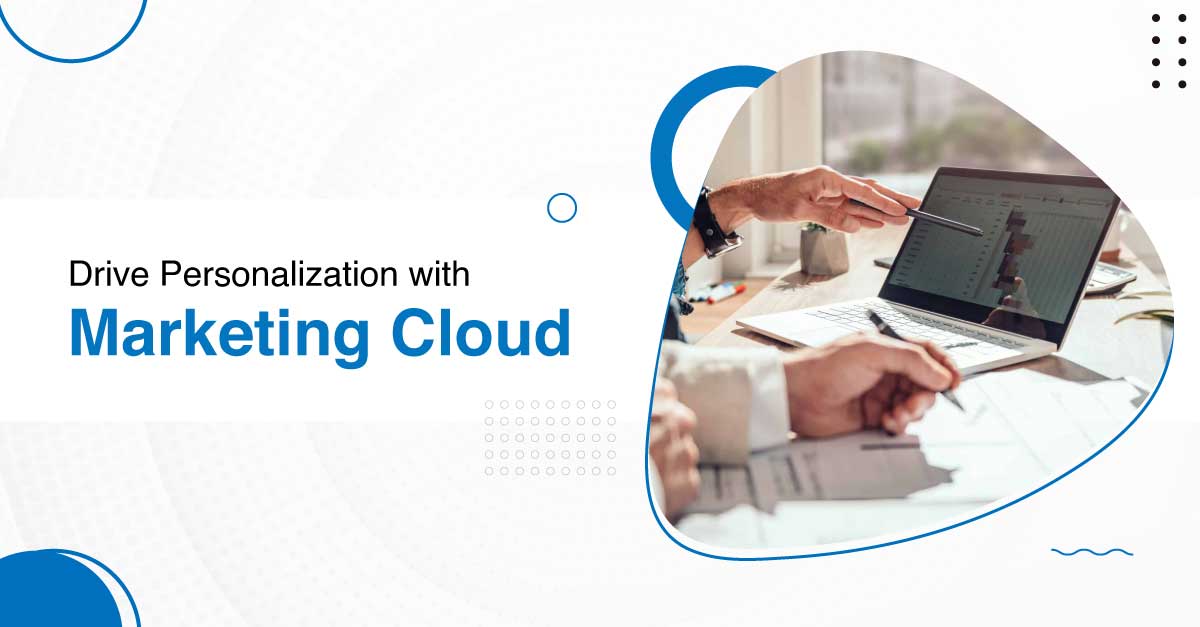
How to Drive Personalization with Marketing Cloud

Today’s customers are all-digital. And to reach them out, you need to work on something that is personalized for them. The good news is you can drive personalization with Marketing Cloud; you just need to know the way it’s done. 

According to the State of the Connected Customer Report, 66% of consumers expect brands to understand what their unique requirements are. The artificial intelligence capabilities in Marketing Cloud make it all possible. 

Ways to Drive Personalization with Marketing Cloud

Now the question is how exactly you would use Marketing Cloud to drive personalization. Well, we’ve listed here some of the features that will help you drive personalization with Marketing Cloud. 

1. Einstein

Marketing Cloud comprises many AI capabilities that will help you build smarter messaging journeys to drive more and more engagement with the right channel and at the right time. 

  • You can use Einstein Send Time Optimization for single-send journeys. 
  • Einstein Engagement Frequency can be integrated with Journey Builder to predict a suitable number of emails you can send to each customer. 
  • You can use Einstein Engagement Scoring for Mobile Push.

2. Customer 360 Audiences

You can use the Customer Data Platform (CDP) to capture, segment, and unify your marketing data. This will help you access a single source of truth, thus helping you to personalize data for customers at every touchpoint. 

3. Interaction Studio

Marketing Cloud allows you to use Interaction Studio to create audience segments according to the unique customer actions and interests. These segments can be activated in Journey Builder, allowing you to access one-to-one content depending on the audience. 

It even allows you to access engagement scoring and affinity modeling features that will help you to make sense of all data you’ve collected for each customer. 

4. Datorama Media Planning Center

Using this enhancement, you can optimize your media budget allocation by using analytics for advanced planning. You can use AI for forecasting performance and to make data-driven decisions to set campaigns that could bring the best results. 

5. Pardot Email Experience

If you are a Pardot user, you can access a more user-friendly and streamlined email experience. These are some of the most exciting features:

  • You can gather in-depth metrics on emails using the Lightning Content Builder
  • You can use the drag-and-drop builder to create email templates
  • You can gauge the performance of the email at the sending level
  • You can access the email content level to see the aggregated metrics of different sent emails. 

Get Experts to Drive Personalization with Marketing Cloud

It’s clear that Marketing Cloud holds a lot of features that take care of personalizing your marketing campaigns, ensuring you get the most attention from your target audience. From email to social media marketing, there’s always something you can benefit from. 

And if you want to know more about what Marketing Cloud has got for you, feel free to get in touch with our certified Salesforce professionals.


Top Reasons to Make an Investment in Sales Operations

It doesn’t matter in what industry your business is, your sales crew will always be the unsung hero of the sales process. But many business leaders make the mistake of thinking of sales operations as a cost instead of identifying them as a potential revenue driver. That’s what makes it important to make an investment in sales operations.

According to the State of Sales report by Salesforce, around 89% of sales representatives believe that sales operations play a major role in the growth of any business. This number clearly denotes how essential it is to have efficient sales ops in an organization. 

Why You Should Make an Investment in Sales Operations

If your company is not having a sales ops team yet, here are some reasons that will justify that you should invest in one.

1. Free Up Your Time and Energy

If you have a strong and productive sales op team, your sales team will eventually be productive too. Sales ops professionals will help to analyze and streamline your process, thus making the work easier for the sales team. 

Also, the sales ops team would help to enable process automation of sales activities, thus helping the sales team so they won’t have to handle tasks manually. 

2. Enable Funnel Visibility

The sales ops team not just helps the sales team to sell more but also enhances the visibility of the sales funnels for different departments in the company. 

There are lots of questions that the sales ops team can answer, such as:

  • What customer segments are actively buying your product? 
  • What factors to consider when doing competitor analysis? 
  • Where are deals getting stuck in the sales cycle? 
  • Are the deals in the discovery, proposal, or negotiation stage? 

3. Increase Scalability

Many companies make the mistake of thinking that the same go-to-market strategies will be effective as they keep growing, but that’s not the case. 

That’s where hiring a strategic ops leader will help you to think through how to build a scalable, repeatable, predictable sales revenue. While the sales team stays a lot busy. Sales ops professionals would dig into the data to create strategic and scalable sales plans.

4. Communicate and Minimize Risks

Sales operations leaders are capable of identifying such risks that the sales reps might miss. The sales ops team is always laser-focused on closing deals and thus always recommends the right strategies to mitigate risks. 

There can be times when your sales team keeps missing the targets, but even then a sales ops person would be able to analyze the situation and would suggest suitable solutions. 

It’s Time to Make an Investment in Sales Operations

To sum it up, having sales ops teamwork along with your sales team will give a tremendous boost to your deal closure. With their help, the sales team would be able to identify potential problems and would suggest the right solution.

Even better, you can leverage Sales Cloud along with having a sales ops team with the help of our certified Salesforce experts.

Top 8 KPIs for Email Marketers to Follow

No email marketing would ever work if the mentality is “set it and forget it.” When it comes to email, it is important to figure out what’s working and what needs improvement. You should be active enough to analyze your email campaigns. And the key to it is different KPIs for email marketers that can help improve campaigns. 

The right KPI for your company is dependent on the nature of your business. There can be different terms and understanding of the word success for each company 

KPIs for Email Marketers

We’ve filtered some baseline KPIs that almost every email marketer should be using to enhance the ability of their email marketing campaign by making adjustments to boost success.

1. Delivery Rate

The delivery rate mentions the percentage of emails delivered.

It is important to make sure that your intended audience received your email. This is where everything starts when are reviewing your campaigns. If your emails aren’t successfully delivered to inboxes or are going to spam, your offers and content are not being received, regardless of how compelling they might be.

2. Click-Through Rate

The click-through rate denotes the percentage of clicks once an email has been opened.

It involves the percentage of email recipients who not just opened your email but also clicked on at least one of the links that you’ve mentioned in your email. This KPI is used by marketers to measure the strength of the email’s content or offers. 

3. Event Lag

Event lag denotes the average time between the click and sending time.

So we will know if someone has clicked and on what exactly they’ve clicked. But you also need to measure how long did it take for them to get there. That’s where event lag will help you to measure the effectiveness of your subject lines and the content of the email. 

4. Bounce Rate by Bounce Type

The bounce rate denotes the percentage of messages rejected by the email client. 

No wonder delivery rate is an important KPI for email marketing, it doesn’t tell the whole story. If your email isn’t reaching your customers’ inboxes, you need to use bounce rate by bounce type to understand why is that so. 

5. Unsubscribe Rate and Complaint Rate

The unsubscribe rate denotes the percentage of unsubscribes per delivery. On the other hand, the complaint rate denotes the percentage of complaints per delivery. 

When a subscriber flags the email as spam, it leads to lodging a complaint. Many marketers take unsubscribes as demoralizing but they can learn a lot from it. 

But if you are facing high unsubscribes and complaints about a specific email, or over a specific time period, you need to track your unsubscribers, take the notice of what’s wrong with your email tactics, and fix it.

6. Web Traffic and Conversions

Web traffic and conversions can be considered to be the bread and butter of email marketing. Almost every email campaign is to lead customers to some kind of conversion. Yet marketers make the mistake of leaving it untracked.

That’s where you can add UTM parameters to email links to easily harmonize emails with web pages in your web analytics tool. It will help you track the percentage of recipients who completed the email’s intended purpose, such as converting online to visit or make a purchase,

7. Campaign Performance

Emails are usually never ad-hoc. They’re part of a larger customer journey. There can be times when a single email will be used in multiple journeys, at different stages, or for different audiences. So, this makes it important to always be aware of your campaign performance.

No matter the case, it’s critical that email marketers don’t evaluate performance in isolated silos. Instead, they should review results by campaign and drill down into the performance of each individual email—an approach that platforms like Marketo email marketing support through unified reporting, attribution, and lifecycle-based insights.

You always have to be aware of your subscriber list. Is it growing? Is it stagnant? Or is it declining? You need to track the health of your various lists and segments to know how your emails are performing over time.

Note These KPIs for Email Marketers

While the tricks and tactics of email marketing keep changing, the core principles have remained the same, which is to give your customers something of value.

So, keep delivering value whilst tracking your success. While these email marketing KPIs can help get you started, make sure you don’t stop here. Always keep evolving and our Salesforce consultants can help you with this.

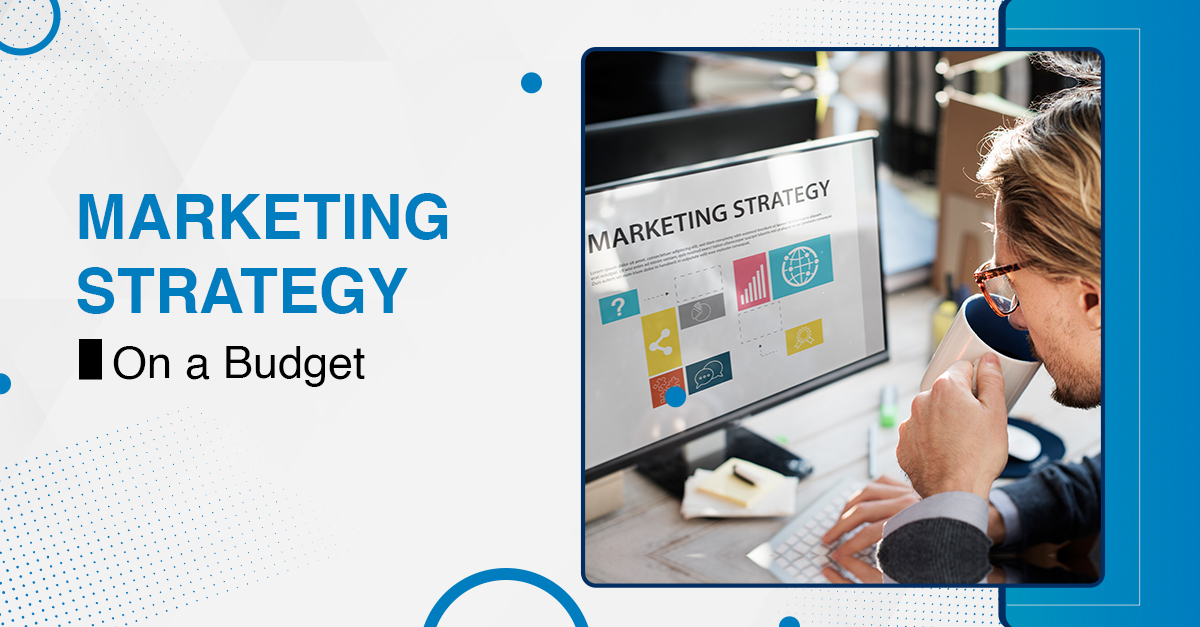
Marketing Strategy On a Budget: 2026 Ideas for Small Businesses

Since the pandemic hit, the last two years have been tough for small business marketing. It brought a sudden economic halt due to which many small and medium businesses (SMBs) have been operating with tightened budgets and reduced staff. SMB leaders now need a marketing strategy on a budget to bring them back into the game.

If you are running a small business, it’s time to get your marketing strategy in order. Limited resources don’t mean scrapping plans — you just have to work on adapting. Here’s how to think about marketing your business in 2026.

Tips on Marketing Strategy on a Budget for Small Businesses

A lot has been changed during the pandemic, so firstly you need to reflect on it. Have any of your competitors closed? Have other businesses expanded? Or have other businesses just stepped in to fill the void? 

Moving forward here are some strategies that you can follow. 

1. Know your customer

You can start by doing some localized market research. Find out what your customers want and see how your business is delivering to their expectations. 

Just like your business got disrupted, so have your customers’ lives. This makes it a good time to check in with them.  Take time to listen to what they like, don’t like, and what they expect more from you. 

2. Take a look at your ROI

You need to conduct an audit of all your current marketing activities. This will help you to stay informed about where you’re currently investing your resources, and what return you’re getting back.

Evaluation of your marketing strategy, current programs, and spending will allow you to determine the appropriate marketing budget for the marketing investments you’ve planned for future campaigns.

3. Launch (or relaunch) an email marketing program

Work on creating a lead nurturing program. The idea here is to develop strategic messaging to maintain effective relationships with customers at every stage as they research or make their purchases. 

You can even collect your customers’ emails and plan to send the same to them on a regular basis so your business always stays on the top of their minds. 

4. Optimize the way customers can reach you online

The ongoing digitization and advancements bring out one question front and center: How approachable are you online?

There are some easy ways that can help you enhance your online presence and make it easier for your customers to reach out to you. Try adding a contact form or even better, if you work with Salesforce, consider using a web form to lead routing.

Also, stay active on your official social media profiles to quickly react to people who connect with you and comment on your posts.

5. Emphasize social media marketing

When you are aware of where a majority of your customers are online, it makes it easier to invest in those channels for effective communication with customers. 

You can make AI videos or do lookalike targeting (aimed at prospects who are similar to your customers) even with a small budget that will help you reach new audiences and potential customers. 

6. Start hosting web events

From Instagram Live to Zoom, broadcasting has never been more mainstream. You can host a digital event that will attract new customers and even celebrate existing ones. 

You can always make it fun! Get creative and plan interactive virtual events — giveaways are always appreciated and well-received.

Run Your Marketing Strategy on a Budget with Experts

Conducting marketing for a small business takes time and work, but it doesn’t have to mean a big budget. These marketing tips will help you to get started under your budget. With some disciplined editing, careful thought, and using a few new digital marketing skills, you’ll have a budget-friendly marketing plan at the ready.

And if you need more help for planning your marketing strategy on a budget, feel free to get in touch with our certified Salesforce experts to help you strategize your marketing in an effective way.

Relationship Intelligence: A Surefire Way to Accelerate Your Sales

Sales are all about understanding your customer. So it is important to know them before you can actually start conversing with them. The key to understanding them is data, which includes everything from their experience with your business to their relationship networks. And that’s something that forms the base for relationship intelligence. 

Managing a relationships network isn’t a new concept, but these days it goes by a new name: “relationship intelligence.” It is fair to call it intelligence, considering how far our abilities have reached to capture, analyze, and use the data.

Use of AI-powered relationship intelligence tools 

Such tools can help amplify the impact of everything you do by bringing data they find into the CRM. This ultimately enables the entire sales team to access this information whenever required.

AI-powered relationship intelligence tools provide incredible value for your business in the following manner:

  • Disparate Data Analysis: It helps you discover unanticipated relationships with data acquired from search engines, social profiles, news articles, and more.
  • Network Analysis: You can easily view connections in your network and sources that define the relationship.
  • CRM Enhancement: You can have the ability to enrich contact records with relationship data in real-time within your CRM.

Relationship intelligence tools to accelerate sales

Do you know? Salespeople actually spend less than 36% of their time actually selling. Why? Because they need to research prospects and accounts before they start selling. 

They have to research to know if the prospect influences decisions. They have to identify if they share any contacts with the prospect. They have to learn about what problem their prospects are facing and which of their product or service solves that problem. 

All of this research takes up a lot of time. Salespeople have to dig through customer relationship management systems (CRMs), news articles, Google, LinkedIn, documents, productivity apps, and other data sources to get all the needed data.

Any successful sales organization would know that relationship intelligence is the secret to reaching key decision-makers while saving all the time and effort. It helps keep all the data in their CRM, enabling the whole organization to access it from anywhere and anytime. 

Many businesses are even using artificial intelligence (AI) along with relationship intelligence. It enables a lot of features like:

  • New AI tools help to better scour search engines, social profiles, articles, and more.
  • It easily identifies connections with prospects and insights related to them. 
  • Who did they go to the institution with? Where they have worked? What projects have they led? What values do they focus on? AI helps gather such details that could lay the groundwork for a more personal connection. 
  • It even helps salespeople to create a more compelling pitch that can help to achieve greater sales.

Introducing Einstein Relationship Insights

When focusing on relationships, the solution you need to learn about is Salesforce’s Einstein Relationship Insights (ERI) as it delivers on all the requirements. In fact, it goes beyond it:

  • Native Design: ERI helps to pull external data directly into your CRM. You can quickly see the big picture as ERI connects the dots for you.
  • Unstructured Data Analysis: ERI helps you explore all relevant data sources by reading natural language automatically. In other words, it can understand unstructured data.
  • Contextual Learning: ERI helps you identify the key passages of text, explaining how your prospects and contacts know each other.

Leverage Relationship Intelligence to Boost Your Sales

Companies that use relationship intelligence would understand how it represents a new generation of customer data collection and use it efficiently. If you know to harness this power, you’ll uncover the key to driving sales and business growth. 

Reach out to our Salesforce consulting service and we’ll help you unlock new network opportunities and grow with your customers.

From Mobile to Social: 6 Customer Service Channels for Your Reps To Work On

Service teams always work to meet customer expectations fast and flexibly, and they use digital customer service channels to do so. 

When there is an unprecedented increase in customer queries, digitally managed customer service channels can help the team to manage it all. The team can also use FAQ pages, chatbots, mobile, and web chat to reduce call volumes, enabling self-service.

Customer support has now become all-digital, available for customers all the time. According to the Salesforce State of Service report, channels like messenger apps, online chat, and video support have witnessed a double-digit adoption gain in 2020 from 2018.

Top Digital Customer Service Channels You Should Know

Customers nowadays have become smart and have increased their use of digital channels to connect with a brand. Because of this shift in customer service engagement, organizations have to rethink their channel mix, or they might risk falling behind.

Here are some of the top digital customer service channels that you can consider for your business.

1. Engage on Mobile to Keep the Conversation Going

Mobile devices have become the asynchronous service option that keeps the conversation with the customers going. Mobile help to record past interactions and streamlines conversation,  thus making it a convenient option for customer service. 

Agents also use mobile to deliver personalized customer experiences. It allows agents to work with multiple customers at one time, enabling them to refer back to past interactions on mobile options. 

You can also automate routine customer requests using chatbots on SMS, WhatsApp, and other messengers.

2. Social Customer Service to Nip Potential Problems

You can connect your service and marketing with social customer service channels that would give you a complete view of the customer data. This will help agents with the consultation before they have to respond to any customer request. 

Social channels help with quick case resolution. As soon as a customer replies to a post with a complaint or issue, your team would get aware of it and could immediately work to resolve that case. 

3. Enable Self-Service Channels for Quick Questions

Many service professionals have found that customers are increasing their use of self-service. Self-service channels can include your, FAQ page, help center, knowledge base, and customer portals. 

Such portals allow customers to log in and access their information like purchase history. It is important that you keep your self-service channels up-to-date. You must regularly review your case information. What are customers ask routinely? Are you aware of any new trends? Track all these insights to create content that can help address common customer requests. 

4. Chatbots for Personalized Digital Support

You can consider adding a free AI chatbot as the extension of your self-service. It helps you to analyze data with artificial intelligence (AI) to quickly resolve common issues. Many customers these days prefer using chatbots to ask simple questions, like checking their order status. 

Service agents can use chatbots to offer a personal touch to digital customer service channels. You can use natural language for programming them. 

5. Use Voice Capabilities to Deliver Connected Service

Voice holds among the most-used channels by businesses. You can consider combining your CRM with CTI using Service Cloud Voice to make voice a digital channel for your business. 

This technology puts all customer and calls information on the agent’s screen. It also transcribes the interaction carried out with customers so that agents don’t have to scribble notes. 

6. Video for Face-to-Face Interaction

One-on-one support for routine requests these days has been simplified with Visual Remote Assistant. It can allow agents to handle anything from how to reset a home TV to a system reboot.

Being easy to use, this channel is very much preferred by customers. It enables remote assistance without having to go to service centers.

Leverage All Customer Service Channels for Better Service Delivery

While you use all the above-mentioned customer service channels, regularly review your data to ensure your teams always meet expectations and deliver fast and quality service. Also, which channel you choose depends entirely on your business; what works well for a retailer may not work for a manufacturer. 

And if you need help to know what works for you, get in touch with our certified Salesforce professionals.
Top Sales Forecasting Tips for Predictable Revenue

Predictable growth is helping businesses to achieve consistency year over year, and it is the forecasting where it all begins. Following the right sales forecasting tips is helping companies to make critical business decisions, manage budgets, plan the headcount strategy and investment, and know future earnings, thus helping businesses to set the North Star. 

The right sales forecasting techniques can lead to predictable revenue and accurate, actionable data. The best sales forecasting techniques are able to provide answer these two simple questions: How much does the business plan to sell? And when will the business is going to deliver those numbers?

4 Accurate Sales Forecasting Tips

To help you better sell from anywhere, we have brought some tips that could be fruitful. It answers the most common questions we hear about sales forecasting from sales reps and leaders.

1. Get Answers to These Questions

Your team should concentrate on these simple questions when building their forecasts:

  • Who? Sales teams should make forecasts based on who their prospects would be. They need to identify if the prospects are the decision-makers or just influencers, as it will determine if the forecast will be more or less exact.
  • Why? Identify why is the prospect or existing customer considering your new services? Is there a big event that you should be aware of? It is important to know this answer as without a forcing function, the deal may stall.
  • What? Your forecasts should be related to what solutions you plan to sell. Base those solutions on problems your prospects have mentioned, which your representatives can uniquely solve.
  • Where? You need to know in what location is the prospect making their buying decision. Sales teams can identify better accuracy when they get closer to the center of the action.
  • How? You should know how this particular prospect is making purchasing decisions. If you’re not accounting for how your prospects have done it in the past, it may be fuzzy math for you.

2. Negative Forecasting Can Highlight Business Risk

You can also use your sales forecast to assess the current risk to your business, and this is called negative forecasting. 

For example, you can add a COVID-19 field in Sales Cloud to tag deals and see the pandemic impact. The two key benefits of this approach will be:

  • The sales team can expedite deals involving a customer who needs products related to COVID-19. 
  • You can track deals lost or pushed due to the crisis.

Negative forecasting can help you gauge possible risks, thus making your forecast evolve with your business.

3. Sales Forecasts for All, Not Just for the Sales Team

Every department relies on sales forecasts. Not a single part of the organization goes unaffected when forecasts don’t prove to be accurate.

For example, using the sales process business can prepare a plan to ship products, strategize marketing, and hire needed employees. Accurate forecasts help companies make better investment plans, like hiring a needed number of Salesforce developers or opening a new sales office in the prime territory if the requirement is identified.

On the contrary, if the sales forecasts are off, likely are the chances that the company would face challenges across all business functions – from pricing to product delivery. Everyone relies on the ability of the sales team to pull off an accurate forecast. So never underestimate the importance of your forecast.

4. Forecasts Can Change in a Flash. Keep Tracking It

Extreme weather, global pandemics, economic crisis, and any other such factor can be responsible to bring a dramatic change to your forecast. Even if you thought that you knew about expected revenue growth with Salesforce, all of it can suddenly flip within an instant.

This makes it important to track the accuracy of your forecasts with changing conditions and markets as you would never want to risk your strategy failing because of inaccurate forecasts.

Follow These Sales Forecasting Tips for Sustainable Growth

A good sales forecast helps you make better decisions about the future. You just needed to know the right tips that can take you across. With accurate forecasting, you’ll know if you should prepare for a rainy day? Or will you just need sunglasses and smooth sailing? 

Become a forecasting pro to put resources and energy in the right places so you can continue to thrive with the help of our Salesforce consulting services, offered by certified and experienced professionals.

Uncovering Digital Process Automation to Modernize Financial Services

Professionals from growth-minded industries know that consumers also expect seamless transactions on whichever channel they’re using. Whether you are in wealth management, insurance, or retail banking, financial institutions always need seamless data access, and that’s something digital process automation can help with.

Financial services nowadays need to enable workflow orchestration right in their CRM using digital process automation (DPA). That’s the secret of saving agents from the abrupt jumping from screen-to-screen and system-to-system to deliver services intelligently.

Digital Process Automation and Workflow Orchestration

Let’s take some time to look at ways digital process automation can simplify transactions while eliminating app clutter through reusable, rules-based automation.

1. Open a Bank Account

DPA helps to enable a guided conversation to streamline the processes while remaining within the regulatory bounds. The guided conversation enables bankers to understand customers in a better way.

It gives bankers the clarity of information that forms the basis of the relationship. Using the data processing engine, bankers can even gain insights into the best recommendations for each customer, while picking the next best steps for them.

2. Integrate Credit Checks without using Customer Coding

How often do you require access to credit scores as part of a customer transaction? Until now, Salesforce Administrators have been encoding rules for each process that requires a credit check. 

But by enabling digital process automation, you can simply set up a decision table with an “if this, then that” function. It allows you to work with declarative statements with clicks, not code, thus making it easier to configure all the rules that involve credit checks.

3. Dispute a Transaction on a Debit or Credit Card

Customers who tend to call the support team with a problem are often anxious. Bumping worried callers from one person to another in the support team isn’t reassuring and makes them feel dissatisfied.

In this case, DPA helps financial firms to cut the repetition and provide solutions in real-time. It even allows agents to generate documents to confirm the case and the customer stage. Thus, DPA enables one call, one person, and one activity stream. 

Leverage Financial Services Cloud to Enable Digital Process Automation 

DPA when working together with Financial Service Cloud can help to make your Customer 360 view better and orchestrate your workflows and simplify document generation. Here are a few key benefits that you will discover:

1. More Focus on Customers

It helps you unify the data in your business to give you a complete view of each business or household. It would help you learn about the relationship in depth. Also, having a unified view can also help you make new connections quickly, helping you personalize conversations the right way.

2. Declarative and Low-Code Workflow Tools

With Financial Services Cloud, you can get the power to remember rules as part of work orchestration. You can access many procedures that can help to streamline processes for low-volume actions in context, and can help you in cases like a credit check or fraud detection.

3. Digital Experience with Data

You don’t have to hop from screen to screen and from system to system anymore. With the help of OmniStudio, you can see the information from multiple sources in one place, thus making data access easier.

4. Better Experience

You can enable Flexcards to get a simple branded user interface (UI). This kind of UI would just need a click to configure and deploy. This will help make the experience good enough for both your employees and customers. 

Improve Your Workflow with Digital Process Automation

Digital process automation can be mentioned as the missing piece that helps to bring workflow orchestration to your CRM. The result? It offers you a more cohesive customer experience, better customer insights, and enhanced customer retention.

We constantly work to make the lives of your financial services clients of every size easier and easier. Reach out to us to know how our Salesforce consulting services can help your financial organization.

logo Live Chat